Nature
 PUBLISHED




Welcome to the ocean, home of all manner of creatures: from the cutest dumbo octopus, to the predatory power of orcas, and everything in between. One creature has captured the imagination of many, from stories of ruined ships to giant tentacles emerging from the deep – but what’s really going on with the colossal squid?
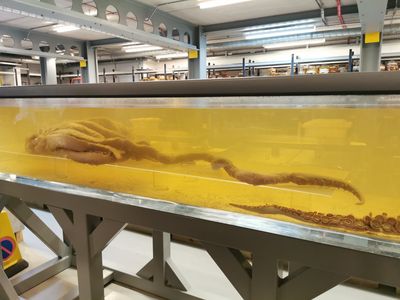
To start off, the colossal squid is more than just a villain from a novel. It is a real species called Mesonychoteuthis hamiltoni, which lives in the deep sea in the Southern Ocean surrounding Antarctica. The species is large and especially elusive, leading to all the mystery surrounding them. They are so elusive, in fact, that the Natural History Museum London writes that there are no photographs of a living colossal squid in its wild habitat.
Instead, everything we know about colossal squid comes from the very few specimens that have ever been seen or caught. The first colossal squid was seen in 1981, and the Museum of New Zealand Te Papa Tongarewa in Wellington has three colossal squid specimens in its collection.
How big is a colossal squid?
The colossal squid is a multiple world record holder, taking the title for the world’s largest invertebrate and also having the largest eyes of any species on Earth. A study in 2017 suggested the eyes of the colossal squid are so large – approximately 27 centimeters across (10.6 inches) – and forward-facing to give them much better vision at the 2,000-meter (6,562-foot) depth at which they live to spot potential predators, such as sperm whales.
With tentacles and arms combined, the colossal squid is thought to measure 14 meters (46 feet) and weighs at least 500 kilograms (1,100 pounds), according to Oceana. The largest members of this species are actually the females.

Compared to the giant squid, which has longer arms and tentacles but a shorter body, colossal squid still weigh the most, but giant squid are longer overall thanks to those big old tentacles.
What does a colossal squid eat?
All squid species, including the colossal squid, have a hard beak for eating their prey with. They also have rotating hooks on the ends of their tentacles. It is thought that their diet consists of large fish such as Patagonian toothfish (Dissostichus eleginoides) and sleeper sharks (Somniosus pacificus), as well as other squid species including possible cannibalism, writes the IUCN.
And sometimes, sperm whales are found with unusual marks on their skin that suggest they have been trying to consume a colossal squid.