Nature
 PUBLISHED


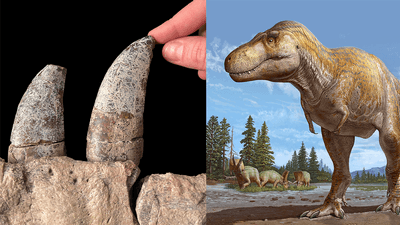


Tyrannosaurus rex is arguably the most famous of all the dinosaur species, with starring roles in pretty much every dino movie ever made. However, scientists have identified a new subspecies of Tyrannosaur, Tyrannosaurus mcraeensis, older and more primitive but still the same size as a double-decker bus. This new species also helps researchers understand where T. rex and other Tyrannosaurs might have originated from, a question that has puzzled palaeontologists.
The new species was discovered when the team took a closer look at a museum specimen of a 71-73 million-year-old partial skull. The skull was discovered in the Hall Lake Formation, New Mexico, USA in the 1980s and is currently on display at the New Mexico Museum of Natural History & Science (NMMNHS).
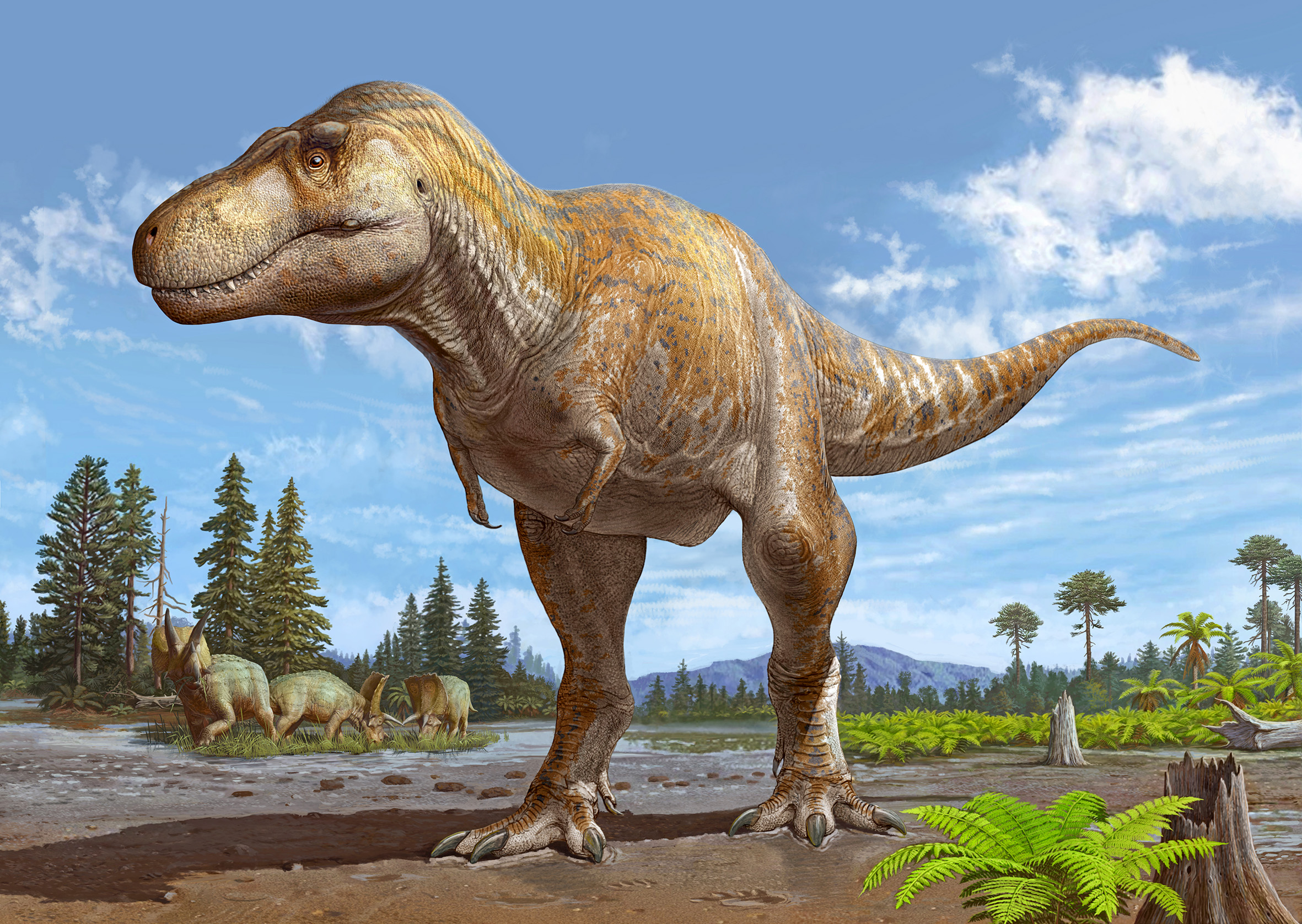
“[The] skull/jaw was originally described and assigned to T. rex in 1986," Dr Spencer Lucas, one of the authors of the new paper and Curator of Paleontology at NMMNHS, told IFLScience. "Decades later, much has been learned about T. rex through newly discovered fossils. The anatomical differences between the McRae fossil and other T. rex now stand out as likely taxonomic differences, hence the need for reinvestigation”
Close analysis of the skull revealed that not only was it not a Tyrannosaurus rex skull, but it represented a whole new species, now named Tyrannosaurus mcraeensis, thought to have lived 71-73 million years ago – around 6-7 million years before T. rex was roaming about. It also sheds light on the idea that tyrannosaurs were living in North America millions of years earlier than palaeolontologists previously thought.
“New Mexicans have always known our state is special, now we know that New Mexico has been a special place for tens of millions of years,” Dr Anthony Fiorillo, Executive Director of NMMNHS, said in a statement seen by IFLScience.
Given that T. rex is so famous, this helped the team identify key subtitle differences between the bones within the skull of a T. rex and the skull of the new species.
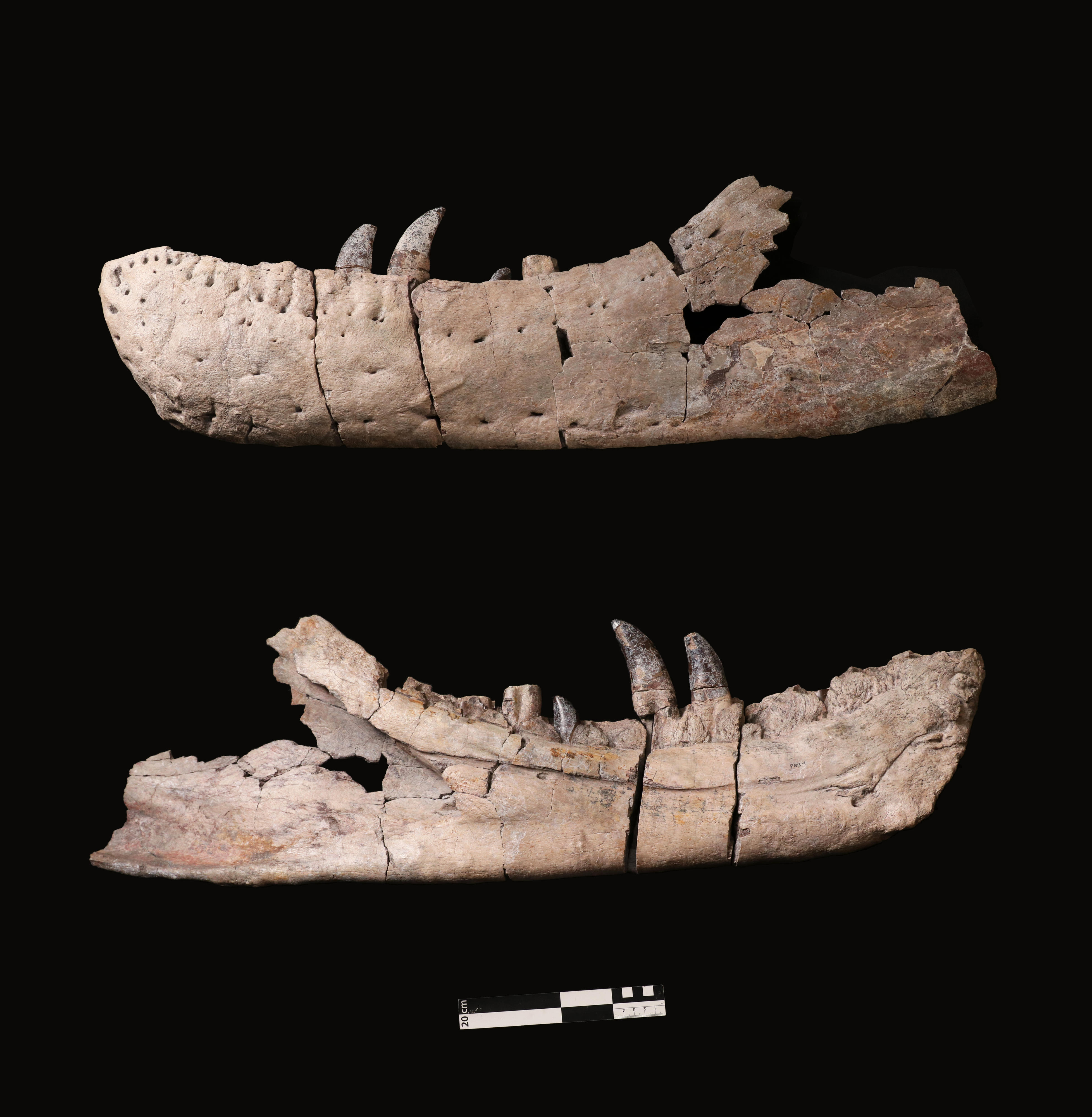
“The differences are subtle, but that’s typically the case in closely related species. Evolution slowly causes mutations to build up over millions of years, causing species to look subtly different over time,” said Dr Nick Longrich, a co-author from the Milner Centre for Evolution at the University of Bath, UK.
Dr Lucas told IFLScience that the longer and shallower jaws in the new species suggest that it “likely had less bite force than in a T. rex.” Regardless it was still an impressively large dinosaur, roughly the same size as a T. rex, which measured up to 12 meters (40 feet) from head to tail and 3.6 meters (12 feet) tall. Given the dates of the fossil, it shows that tyrannosaurs grew to a giant size near the end of the Campanian (toward the end of the Cretaceous period). Like its more well-known cousin, both species would have consumed a largely meat-based diet.
Phylogenetic analysis also suggests that the species could be a sister species to the T. rex making it the closest known relative. According to Dr Lucas, it could even be a “plausible ancestor”, though the paper notes not a direct one. The discovery suggests that Tyrannosaurs may have evolved south of an island continent called Laramidia that existed between 100 and 66 million years ago. This island was extremely large and would have stretched from what is now Alaska to Mexico. Towards the end of the Cretaceous period, the team posits, Tyrannosaurus started spreading north, alongside other giant species like Triceratops.
The paper is published in Scientific Reports.