Nature
 PUBLISHED
 5
5


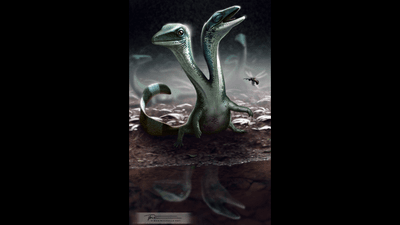


In 2006, a study published in the journal Biology Letters described a fossil unlike any ever seen before. It captured a prehistoric reptile that lived around 125 million years ago. That, in itself, wasn’t terribly surprising, but the fact that it had two heads really, really was.
Bicephalism describes a quirk in animal development that results in an individual with two heads. We’ve seen remarkable examples of it in wild animals, such as this southern black racer snake that was found to have independent brains that disagreed with each other.
To think just how rare bicephalism is in the world today, combined with the fact that fossilisation is incredibly rare, this fossil is truly exceptional.
Dr Dean Lomax
As we know, fossilization is a treatment only granted to a select few of the animals that have ever lived on Earth. You’ve got to die in just the right way to become a good fossil, meaning the animals we retrieve from the rock today represent only a snapshot of their ecosystem.
It’s rare, then, to end up being a gorgeously preserved fossil. Even rarer still to become one that captures a physiological quirk like bicephalism.
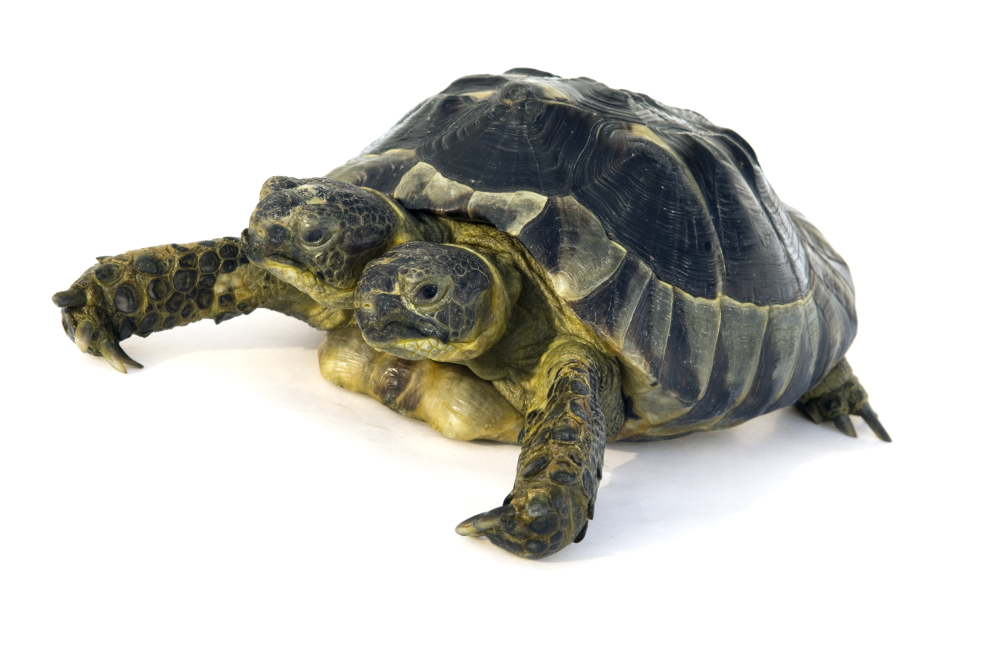
Palaeontologist, author, and science communicator Dr Dean Lomax was particularly taken with the fossil, which he explains in his new book The Secret Lives Of Dinosaurs is a prehistoric reptile called Hyphalosaurus lingyuanensis. So taken by it, in fact, that it became the cover star of that book (catch a “Giant T. rex Penis” snippet of it in our September issue of CURIOUS). So, we asked him how it felt laying eyes on it for the first time.
“In one word, mesmerised,” said Lomax. “I have seen a living two-headed snake before, and am fully aware of other, often rare examples of bicephalous animals, but having an actual fossil is next level.”
“It is extraordinary. To think just how rare bicephalism is in the world today, combined with the fact that fossilisation is incredibly rare, this fossil is truly exceptional.”
The hyphalosaur was retrieved from Early Cretaceous rock in the Jehol Biota fossil beds of Liaoning Province, China, that is estimated to be between 120- to 125-million-years-old (and you can see photos of it here). The region is famous for churning out remarkably preserved specimens, some complete with feathers and soft tissues, but a two-headed reptile really takes the biscuit.
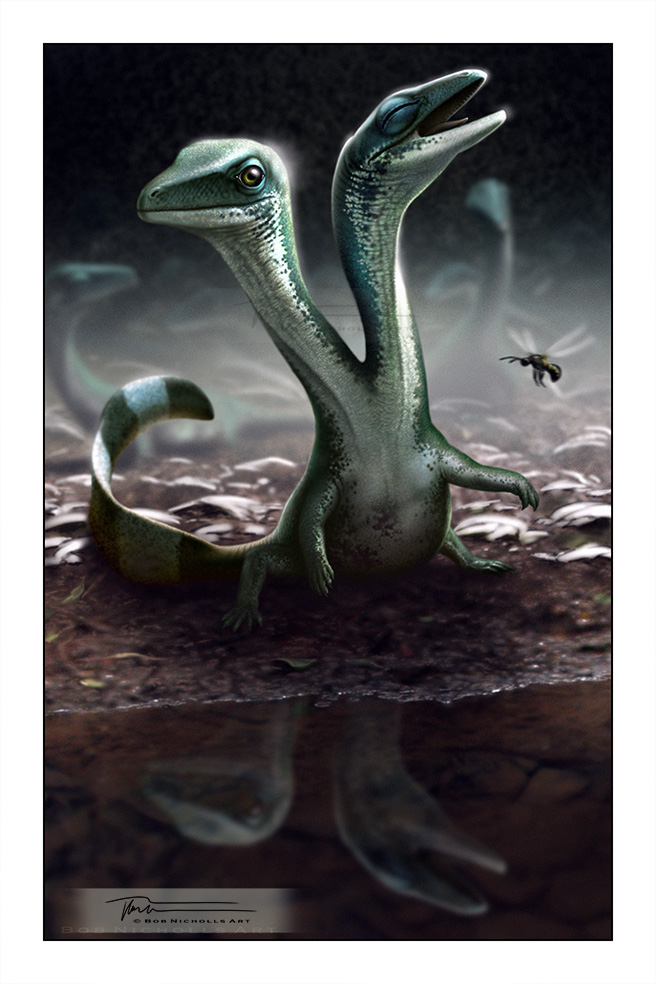
If you’re scoffing at this obvious “fake”, it may interest you to know that its authenticity has already been questioned and investigated, and to date, nobody’s found any evidence to suggest it isn’t real. The mineralized remains clearly show two heads and two necks that are attached to the body.
If I really had to narrow it down, I’d have to go for something cliché like a Tyrannosaurus or a Spinosaurus, because the two giant heads would look incredible.
Dr Dean Lomax
As for the fate of our very special hyphalosaur? It’s possible that it lived for a short while before its death and subsequent fossilization, as it was about 7 centimeters (2.8 inches) long and wasn’t found near an adult.
So, it just goes to show that although exquisite fossilization is rare, it does happen, and sometimes it captures some truly remarkable animals. It’s also possible, then, that we could find more two-headed animals in the fossil record, which got us wondering: If you could choose any dinosaur to see with two heads, what would it be?
“Oooooh, that is a question!” said Lomax. “There are just so many choices. If I really had to narrow it down, I’d have to go for something cliché like a Tyrannosaurus or a Spinosaurus, because the two giant heads would look incredible (of course, if they reached adulthood!).”
“However, part of me also ponders what something like Diplodocus or Brachiosaurus might look like with two heads. Would they grow to the same length, I wonder. Given the giant, intimidating size of these dinosaurs in general, seeing one with two heads would be pretty terrifying.”
The Secret Lives Of Dinosaurs is published by Columbia University Press and is available now.