Nature
 PUBLISHED


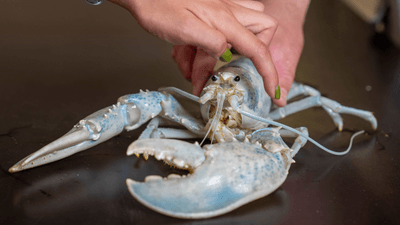


Scientists in Maine just landed a real-life shiny as a 1-in-100-million lobster has taken up residence at the University of New England (UNE) Arthur P. Girard Marine Science Center. Named Casper, the rare Pokémon is a white lobster, sometimes known as “ghost lobsters”, and represents the rarest of rare lobster colorations found in nature.
Your typical lobster Is a greenish-brown or mottled grey color. Many of us associate them as being red, but this is actually a posthumous transformation you only get when they are boiled.
A boiled lobster turns red because the heat causes proteins called crustacyanin to unwind, releasing a pigment called astaxanthin that’s red. Crustacyanin is blue, which is why wild lobsters have a darkish tinge to them that helps them to better blend into the environment.
That is, unless you’re Casper.
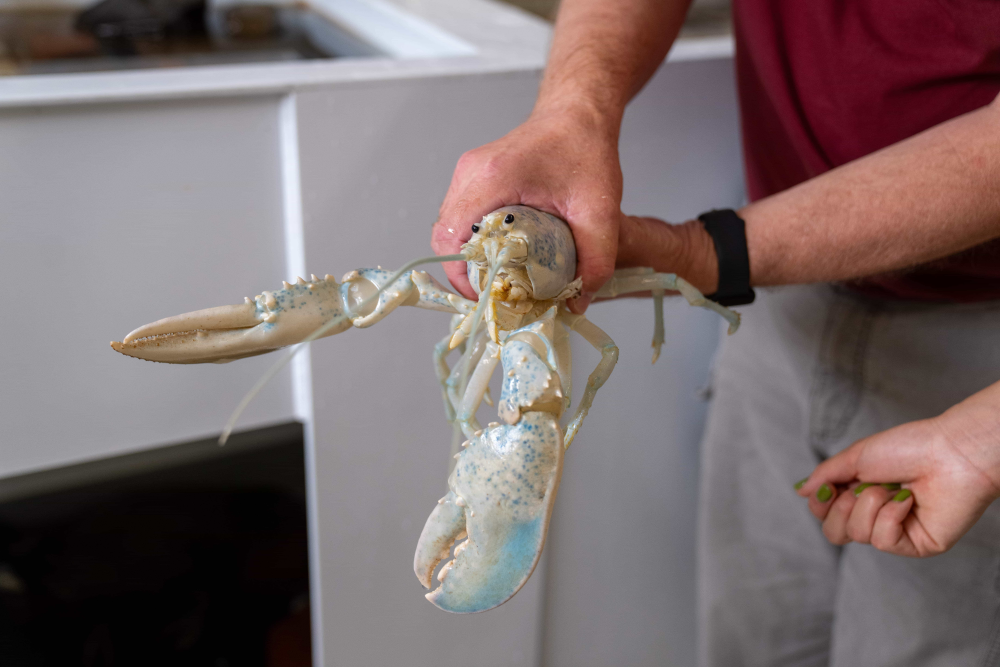
Casper is an example of a white or ghost lobster, which are characterized by a lack of pigment. If pigmentation is completely absent, it’s a form of albinism, or it may just be partially absent as in leucism.
A crystal-colored lobster like Casper represents the rarest of the rare colors seen in wild lobsters. Other variations include orange, blue, yellow, purple, calico, and even lobsters with color that splits down the middle, many of which can be found at UNE.
With just 1 in 100 million estimated to be ghost lobsters, Casper is now their rarest catch and will be enrolled into a first-of-its-kind study that aims to investigate the genetic underpinnings of unusual coloration in lobsters.
“Animals like Casper capture people’s attention because they are so rare and beautiful,” said Markus Frederich, director of the Invertebrate Physiology Lab at UNE, in a release. “But, for us, they also provide an amazing opportunity to ask fundamental biological questions.”
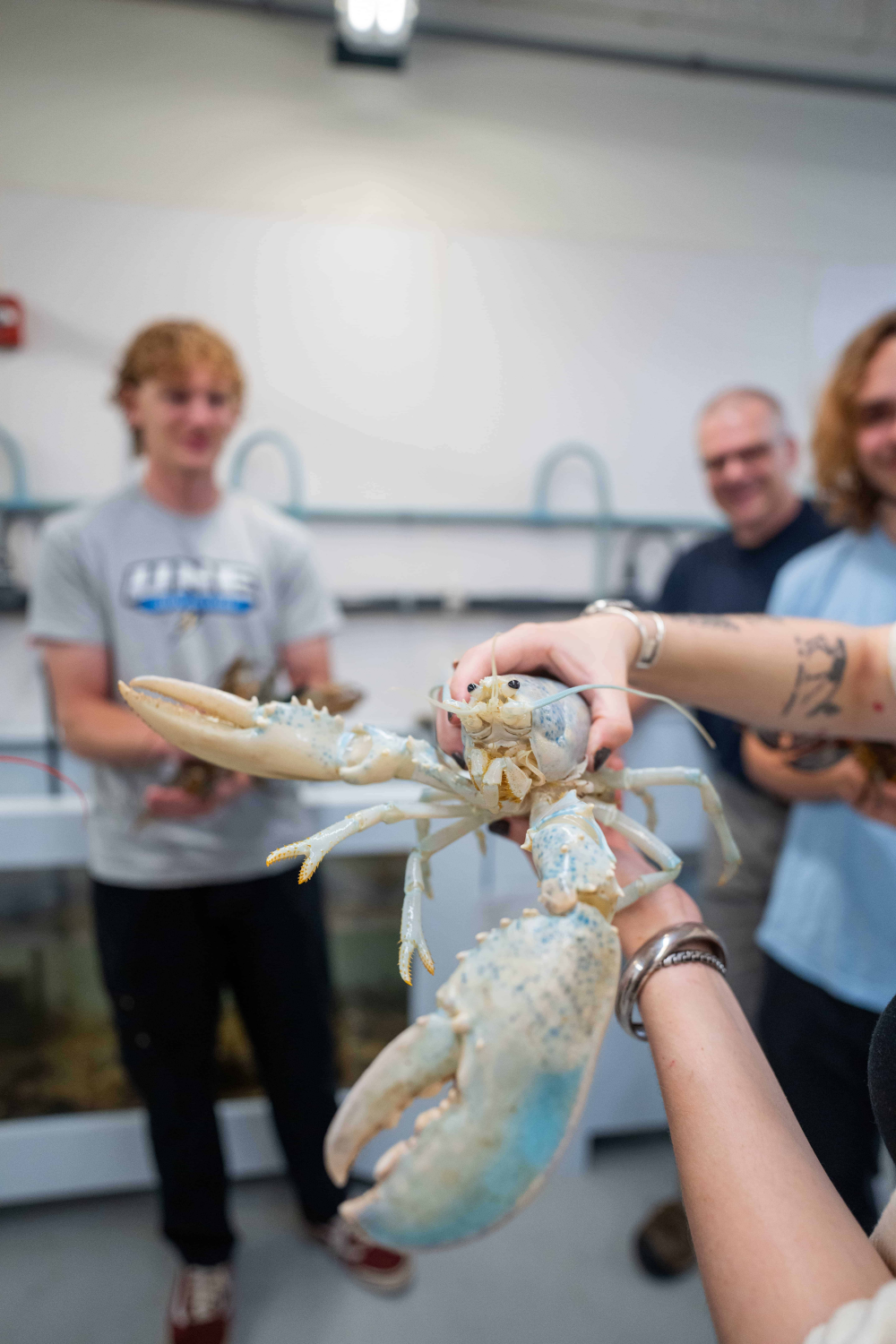
To date, we only have theories as to why certain lobsters develop these multicolor variations. Now that Casper is at UNE alongside Banana (yellow), Currant (blue-brown split), and Fig (purple), it’s hoped we could soon have some answers as to what makes them so special.
Crucially, their investigations are centred around non-invasive testing methods. Not only are their residents rare, but they’re also capable of feeling pain, and as lobster fishers and aquariums continue to deliver rare catches to their doorstep, UNE want to treat their research partners well.
“What makes this research especially rewarding is that our undergraduate students are involved in every step of the process, from working with these incredible animals to analyzing their genes and helping uncover the mechanisms behind their unusual colors,” said Frederich.
“That combination of discovery, hands-on research, and student mentorship is really at the heart of what we do at UNE.”
With Halloween on the horizon, Casper marks a fitting new addition to UNE's investigations. Enjoy your secrets while they last, bud. We're onto you and your spooky hue.