Health and Medicine
 PUBLISHED
 1
1




In 2023, a 6-month old boy was taken to hospital after he developed a cough. The doctors performed an antigen test, which confirmed he had COVID-19. In response, he was prescribed favipiravir, a broad-spectrum antiviral medication that is typically used to treat influenza in places like Japan and Thailand. This medication has some known side effects, which includes diarrhea, nausea, and vomiting, but this little boy experienced something very unusual: his eyes changed color.
Around 18 hours after he was given the treatment, his mother noticed that his cornea – the clear dome-shaped covering at the front of the eye – turned bright blue in sunlight. Further examination found no other bluish discoloration to other parts of his body. After three more days, the effects disappeared and the boy was taken off the medication.
Although it is extremely rare, favipiravir has caused other people to experience temporary changes to their eye color. In particular, in 2021, the corneas of a 20-year-old man also turned blue when he started taking favipiravir for COVID-19. His vision did not blur, and doctors found no evidence of pigment deposits, corneal thickening or any other eye changes that may have caused the discoloration. Unsure what to make of the situation, the doctors advised the man to stop taking favipiravir – a day later, his eyes were normal again.
I am sure there are many people who would willingly opt in to having their eye color changed. Be it for cosmetic appeal, to keep up with social media trends or just to change their personal image, there are now surgical options that permanently change someone’s eye color, though they all come with risks.
But besides these elective options, eye color can be changed by other means as well, as the favipiravir cases demonstrate, as well as injuries, infections, and damage from the sun.
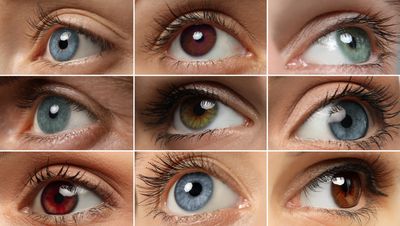
Rather than always being a fixed, defining physical trait, eye color can sometimes change in strange ways.
Baby blue?
One of the first times many of us will experience eye color change is during our very first year of life.
When we’re born, our eyes are still developing. This means that babies not only have poor visual acuity and light perception, but their eye color is also still unsettled. There’s a myth that all babies are born with blue eyes, but in reality the majority – according to the 2017 Newborn Eye Screen Test (NEST) study – have brown eyes (only around 20 percent have blue eyes, according to this test that focused mostly on white children).
Eye color is determined by genetics, but as babies age, their initial eye color can shift. That tends to happen at around one year of age but can occur as late as three years of age.
Eye color is determined by melanin, a natural pigment that is found in various tissues throughout the body. Its presence is most notable in skin, hair, and eyes. If the eye contains a lot of melanin, then the eye appears brown, then green if there is less, and then more blue tones if there is little melanin present.
According to a follow-up study conducted two years later, NEST researchers found that when babies’ eyes do change after birth, they tend to become darker. Out of a population of 148 children, only five (3.4 percent) had eye color that got lighter over time, from brown to hazel, hazel to green or green to blue, or partial heterochromia (two different eye colors) to blue, and from complete heterochromia to blue.
Surprisingly, there is very little research on childhood eye color, but what we do have suggests that by age 6, most children’s eyes have settled to one color (though some do experience changes all the way through adolescence).
Although we still do not know why some children will experience eye color changes as they develop, this transition is completely natural and healthy. However, there are some other factors that can impact eye color that are significantly less common, and some of them are far more worrying.
Medication and misadventure
As demonstrated with the favipiravir cases mentioned above, some medications can also unintentionally alter a person’s eye color. Some glaucoma eye drops, which are also often used to promote eyelash growth, have been known to permanently alter patient’s eyes. Although this side effect is rare, it has nevertheless been recorded on multiple occasions.
These medications are known as prostaglandin analogs, which means they mimic the natural effects of prostaglandins – hormone-like substances that affect how our body responds to injury and infection. They are generally used to treat people who have specific eye conditions that damage their optic nerve.
Prostaglandin analogs work by stimulating melanin production in a patient’s iris, which can cause them to gradually become darker over time, typically turning them green, hazel, or brown. People with mixed eye colors – green-brown or blue/gray-brown – are more likely to experience this transition.
When it comes to eye color changes, probably one of the most widely known examples is David Bowie, whose left eye looked distinctly darker than his right eye. This effect was caused by an injury to his pupil which became permanently dilated after he was punched in the head. This condition, known as anisocoria, is not actually a true example of eye color change but rather just an illusion caused by his pupil having been much larger than it should have been.
But trauma can alter eye color. Blunt force, penetration wounds, or even chemical burns can all cause this type of shift. For instance, if enough blood pools inside the eye after receiving an injury, it can stain the iris or cornea, resulting in a strong color change. Equally, pigment can become scattered within the iris or its surrounding tissues, which can thin some areas, making them look lighter.
Infections and eye color
In 2014, the eyes of Ian Crozier, a doctor working with the World Health Organization (WHO) in Sierra Leone, Africa, changed color after he contracted the Ebola virus. The doctor had undergone a difficult struggle with the disease after he was transferred back to the US. Although he had made an initially recovery, a few months later he experienced pains in his back, his Achilles tendon, and his lower legs. He also had problems with his eyes, resulting in him being prescribed new reading glasses. As time went on, he experienced more pain in his eyes, along with inflammation and other visual issues.
Subsequent tests on his ocular fluid carried out at the Emory University Hospital in Atlanta, found that although the Ebola virus was absent from blood tests, it had remained in his eyes. Interestingly, despite having the virus in his eyes, the doctor’s tears and the surface of the eye were free of it, so he didn’t pose a risk to others.
The infection had given Dr Crozier a condition called uveitis, a dangerous inflammation in the eyes that turned his typically blue eyes green.
Uveitis’ most obvious symptom is that the white part of the eye turns red along with the eye becoming more sensitive to light. The condition, which can be caused by infections, autoimmune conditions, and trauma, can change the pupil size and shape and, in severe cases, even lead vision loss and blindness. And, as in the case of Dr Crozier, uveitis can also change a person’s eye color.
This occurs when the inflammation impacts the uvea – the pigmented, vascular middle part of the eye including the iris, the sclera, and the choroid. The exact color change depends on the type of uveitis and the original color of the person’s eye.
For instance, Fuchs uveitis syndrome (sometimes Fuchs heterochromic iridocyclitis), is a type of uveitis that can cause pigment loss in the iris stroma. For people with light blue/green eyes, the loss of pigment in the pale anterior stroma can make the darker layer under it more prominent, resulting in darker eyes. For people with darker brown/hazel eyes, the reverse can happen – this darker pigment gradually disappears, leaving the eye looking lighter.
Another infection that can change eye color through uveitis is Herpes zoster, which is basically shingles in the eye. This viral infection is characterized by painful, burning or itching rashes which can manifest along affected nerves. It is caused by the varicella zoster virus – the same virus that causes chickenpox.
After we contract chickenpox, the virus doesn’t disappear but rather carries on living in our nerves where it is kept in check by the immune system. But as we age, our immune systems can weaken, which means the chances of developing shingles increases. Illness and immune-suppressing medication can also increase the risk of shingles.
Horner syndrome, a rare neurological syndrome that affects the eye and the surrounding tissue on one side of the face, can also produce heterochromia. Also known as oculosympathetic palsy or Bernard-Horner syndrome, it results from damage to the sympathetic nerve pathway connecting the brain to the face and eye. These nerves control involuntary functions, including sweating and pupil dilation and constriction.
Symptoms usually include drooping of the upper eyelid – known as ptosis – constriction of the pupil (miosis), and a loss of sweating on the face. But it can also change eye color, particularly if developed in infancy or early childhood. This is because the sympathetic nervous system regulates melanin in the iris, so when these nerves are damaged by the syndrome, the eye doesn’t develop the normal amounts of pigment, resulting in one eye being lighter than the other.
Thankfully, all of these eye color changing infections are pretty rare, so there’s little for most of us to worry about. However, if your start to notice any changes to your eyes, it may be worth seeking medical assistance to avoid any serious problems.
The content of this article is not intended to be a substitute for professional medical advice, diagnosis, or treatment. Always seek the advice of qualified health providers with questions you may have regarding medical conditions.