


 Nature
 PUBLISHED


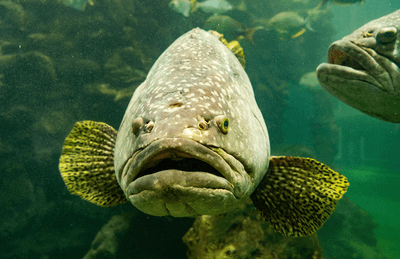


Except for the cast of Finding Nemo, it’s not often you can say a fish led an inspirational life, but it has genuinely been said about Bubba the Super Grouper. Abandoned as a youngster, this hulking big-headed grouper went on to make history as the first fish to receive chemotherapy and survive cancer.
Their story begins in 1987, when a young Bubba was left in a bucket outside the Shedd Aquarium in Chicago, accompanied by a mysterious note asking simply that the fish be given a good home. At the time, Bubba was female and no longer than 25 centimeters (10 inches). The aquarium placed the giant grouper (Epinephelus lanceolatus), also known as the Queensland grouper, in their "Wild Reef" exhibit, and she settled in.
By the mid-1990s, Bubba had grown to 1.37 meters (4.5 feet) in length and weighed 69.3 kilograms (153 pounds) – oh, and had also become male. This is because Queensland groupers are believed to be protogynous hermaphrodites, meaning individuals first mature as females before later transitioning to become males.
This remarkable life cycle isn’t unique to groupers. In many other fish species, sex change is triggered by social cues. When a dominant male is absent, for example, the largest female may step in and transition, taking over the role.
"He is such a character," Rachel Wilborn, one of his keepers, told the Washington Post in 2003. "He is so curious, always coming around to see what you are doing. If you give him a food item that he doesn't like, he spits it right back at you, then looks you right in the eye, waiting to see what else you can come up with."
But worrying signs started to emerge in 2001 when keepers at the aquarium spotted unusual pimple-like growths on Bubba's head. Initially mistaken for a bacterial infection, the lesions were originally treated with antibiotics, but they failed to clear up. In the following months, biopsies were taken from the growths, revealing that Bubba had malignant tumors.
In the fall of 2002, Shedd Aquarium's veterinary team joined forces with two specialist oncologists in a pioneering operation. They administered chemotherapy to a fish, marking a first in the history of veterinary medicine.
The victory, however, was short-lived. The cancer came back, and in spring 2003, the team went in again, this time cutting away wider margins of tissue in a bid to rid Bubba's body of more of the malignant cells. To encourage healing, medical-grade connective tissue implants were applied to the affected area, with chemotherapy delivered directly along the edges of the wound. Oddly enough, this is almost identical to how they treat people with this form of cancer.
And it worked like a charm; Bubba bounced back from the disease. After their recovery, Bubba spent their last years in a freshly made $43 million tank alongside their trusted companion, a golden trevally fish.
Sadly, in 2008, they passed away due to "problems related to his age and his medical history," the aquarium said. But even after his passing, Bubba’s impact endured.
"Bubba overcame some incredible odds over the years, and that's what made him so special to us. Every once in a while for the last three years we have been getting phone calls from kids with cancer or from their parents, wondering how he is doing," said George Parsons, director of the Shedd's Fish department, according to Underwater Times.
"It's going to be tough now, if I have to tell them he's no longer with us."

 1
1