Health and Medicine
 PUBLISHED
 1
1


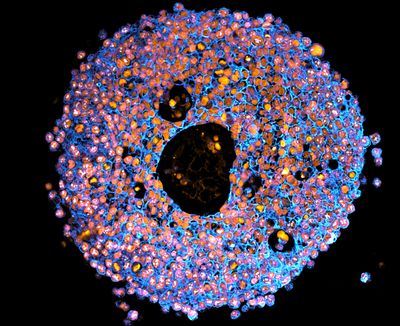


In a major breakthrough for pregnancy research, scientists have 3D bioprinted “mini placentas”. The miniature organs, or “organoids”, closely resemble human placental tissue, providing an accurate model for studying the early placenta – something that has been sorely lacking until now.
The placenta plays a vital role in supporting fetal development, and its dysfunction is linked to numerous pregnancy complications, including miscarriage, preeclampsia, preterm birth, and stillbirth. These conditions can also have long-term health implications for both mother and baby, increasing the risk of future cardiovascular, endocrine, and neurological diseases. Yet, treatment options are limited, as is our understanding of placental biology.
“Serious pregnancy complications like preeclampsia remain one of medicine’s great mysteries, largely because current animal and cell models cannot accurately replicate the human placenta,” Associate Professor Lana McClements, co-lead author of a study presenting the latest findings, explained in a statement.
“Obtaining first trimester placental tissue is not practical or safe, making early pregnancy challenging to study. By the time a baby is born, the placenta has changed so much that it no longer reflects what it was like in early pregnancy.”
This is where organoids come in. Organoids are 3D bundles of cells that mimic the structure, function, and biological complexity of organs but on a much smaller and simpler scale. In the past, scientists have created organoids from a number of human tissues – from “mini-brains” to testicles – and used them to model diseases and test drugs.
Placenta organoids were first described in 2018, grown from trophoblasts – a type of cell found only in the placenta. While they have been invaluable in studying placental development and complications in early pregnancy, current methods for producing them rely on animal-derived matrices, which introduce variability and limit reproducibility, therefore hindering their potential.
To address these shortcomings, the team behind the latest study turned to bioprinting – a type of 3D printing that uses living cells and cell-friendly materials to create 3D structures. They took trophoblast cells and mixed them with a synthetic gel before 3D-printing them in precise droplets.
The printed cells then grew into miniature placentas, and the researchers compared them to organoids made via traditional manual methods.
“The organoids we grew in the bioprinted gel developed differently to those grown in an animal-derived gel, and formed different numbers of trophoblast sub-types. This highlighted that the environment organoids are grown in can control how they mature,” first author Dr Claire Richards said.
“We showed these organoids were very similar to human placental tissue, providing an accurate model of the early placenta. This means we can start piecing together the puzzle of pregnancy complications and test new drugs safely.”
As a start, the team exposed their organoids to an inflammatory molecule found at high levels in people with preeclampsia, and then trialed a few potential therapeutics.
“As we refine these models, we move closer to a future where pregnancy complications can be predicted, prevented, and treated before they put lives at risk,” Richards added.
The study is published in Nature Communications.