Nature
 PUBLISHED


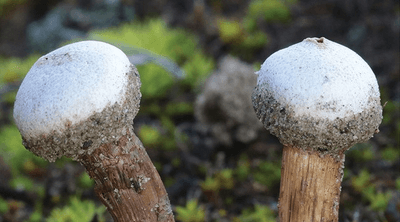


Years of sample collection on the Hungarian steppe recently revealed four brand new species of fungi, including one that scientists say bears a striking resemblance to an infamous sci-fi monster. Its worm-like body and sandy dwelling place led the team to dub the new species Tulostoma shaihuludii, after the Shai-Hulud sandworms that feature in Frank Herbert’s Dune novels and the movie adaptations.
All four of the new species belong to the genus Tulostoma, more commonly known by their decidedly non-threatening name of stalked puffballs. This moniker comes from the spherical fruiting bodies that they produce on the end of a stalk, from which their spores are released when disturbed by the wind or trampled by an animal.
In the case of T. shaihuludii, you can seek why the researchers made the connection with Herbert’s monstrous worms – but you needn’t go as far as Arrakis to find such unusual lifeforms.
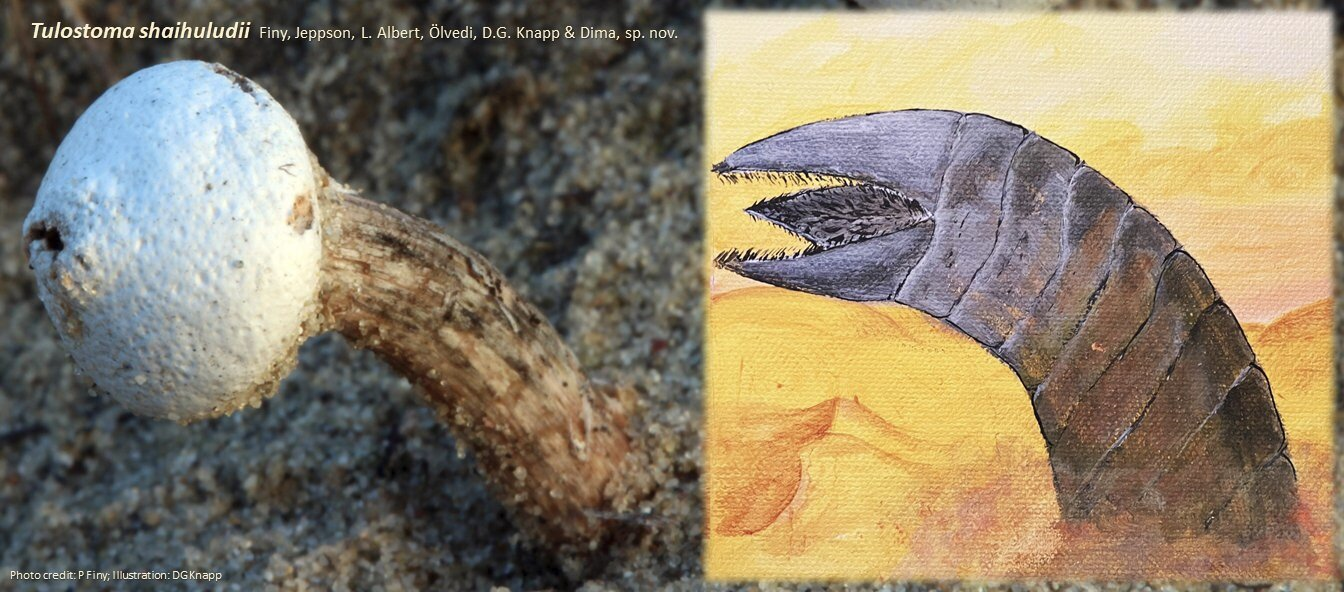
The vast Pannonian steppe in southern Hungary, close to the borders with Romania and Serbia, is known to be a hotspot for stalked puffballs. The sandy soil peppered with grassy thickets provides the perfect habitat for gasteroid fungi such as these, but conditions can be tough. The region sees little rainfall, and in summer and autumn the sand temperatures can soar, so Tulostoma species have had to evolve resilience.
The identifications, published in the journal MycoKeys, are based on samples collected in the area over 25 years.
“In Hungary, so far 19 species have been recorded, including the four new species proposed in this study,” the authors write, hinting that the land is yet to reveal all its secrets: “our ongoing studies indicate the presence of many more undescribed species of Tulostoma in Central Europe.”
Along with the new finds, the team’s comprehensive taxonomic research is an important addition to our understanding of this group of organisms. Sadly, as the authors point out, Tulostoma species are rare, with the majority being red-listed by the European Council for the Conservation of Fungi. Knowing the best ways to protect them starts with learning as much as we can about their diversity and habitat.
Incredibly, T. shaihuludii is not the only Shai-Hulud doppelganger to come to light recently – and the other one has the teeth to boot.
Research 15 years in the making has led to new insights into the anatomy of the elusive Kalahari dwarf worm lizard (Zygaspis quadrifrons). A species of amphisbaenian, these weeny worm-like critters live their lives under the cover of sand and soil, so observing them has proven tricky.

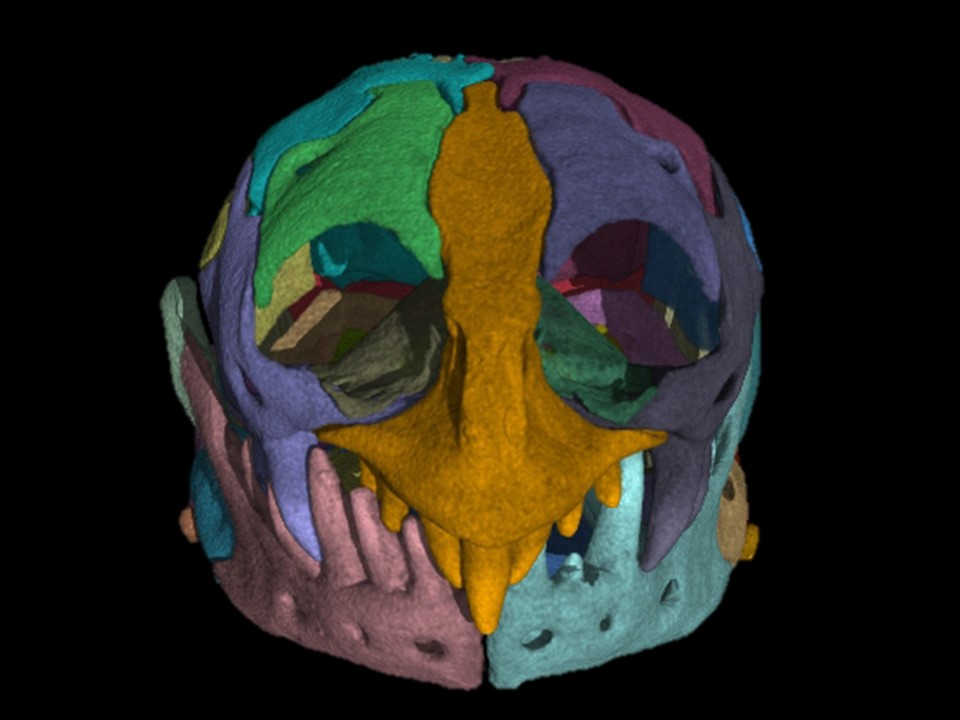
In one of two new papers on these animals in The Anatomical Record, University of Texas at Austin researcher Christopher J. Bell and colleagues describe the micro-CT scans they performed on 15 amphisbaenian specimens, culminating in a model of every cranial anatomical feature of Z. quadrifrons.
"You could fit three skulls of the Zygaspis quadrifrons on the nail of my pinky. We can now look at these really small vertebrate organisms in a measure of detail that we never had before," Bell said in a statement.
The second paper revealed another peculiar feature of the amphisbaenian skull. Like many reptiles, they're born with an egg tooth that lets them break out of their shell. These are usually temporary, but in Z. quadrifrons, they stick around.
Erupting puffball fungi and legless lizards with a penchant for hide-and-go-seek: who knows what other mythical monsters could be lurking just beneath the sand?
An earlier version of this article was published in December 2023.