


 Nature
 PUBLISHED


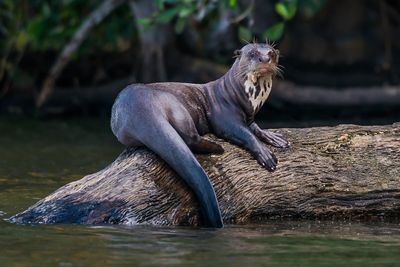


Otters look cute and cuddly and hold hands to stop themselves drifting apart in the sea, right? Well, you’re not wrong, but giant river otters might not be living up to the standard set by their sea otter cousins. In fact, giant otters have something of a reputation (as do sea otters but that's a different story).
Giant otters (Pteronura brasiliensis) are pretty big creatures; they can grow up to 1.8 meters (5.9 feet) long and weigh around 32 kilograms (70 pounds). In fact, they are the largest otter species in the world, twice as long and up to five times the weight of marine otters. They live primarily in Venezuela, Uruguay, and Argentina and are one of the largest carnivores in South America. Like many species in these countries, the giant otter has faced a reduction in range due to intense habitat modifications by humans and are now classified as Endangered by the IUCN.
.jpg "A giant otter with two curious young that look out at world.")
Their diet consists mostly of fish, including perch and catfish, but they will also eat amphibians. The otters are found in large rivers, lakes, and swamps, and build their dens along their banks. They are social creatures and live in family groups where only the alpha couple of each group reproduces. These groups can number from two to 16 individuals that all defend their territory by scent marking and warning vocalizations. Conflict is common between rival otter groups and can lead to serious injuries or even death.
Because of their reduction in habitat range and urbanisation in certain areas, occasionally, giant river otters and humans come into contact with each other. Otters may be killed for fun or fear, but mostly because of the belief that they compete with fishers, who blame them for depleting fish stocks.
The IUCN bulletin looked at otter attacks across species from 2011-2021 and found 20 reports of attacks, of which three took place in a captivity environment. There were no giant otter attacks found in this period in the wild, only in captivity, with one at a zoo in Germany and two taking place at aquariums in Texas.
Other species have also had a bad rap, as a woman was airlifted to hospital after an otter attack in Montana in 2023, and a woman in Malaysia was attacked by a group of 10 otters while running in a park and ended up in hospital with severe injuries.
As human activities encroach more and more into otter habitat, it's worth remembering that although attacks are very rare, these animals are large predators that will fight to defend their territory. Another creature who might also have a cuddly outside appearance but a more unexpected nature is the giant panda.


 1
1