Nature



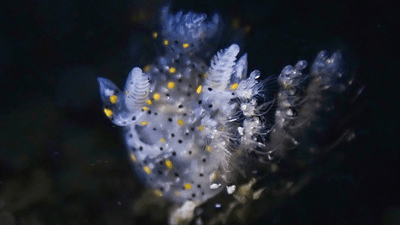


Come closer, can you see it yet? Under the waves near north-eastern Taiwan is a tiny surprise waiting for you. Meet Thecacera sesama, a teeny tiny new species of beautiful nudibranch, with perfect yellow and black spots on its tiny 3-millimeter-long body.
The new species stands out for its translucent white body with lots of black spots, a small number of large yellow spots, and five gills. Thecacera sesama is also significantly smaller – at a maximum length of less than 3 millimeters – than Thecacera pennigera, a similar-looking species.
Lead author Ho-Yeung Chan at National Taiwan Ocean University first saw the new species during a dive during summer 2019. At the time Chan didn’t recognize the creature as a new species; it was only when he consulted a sea slug expert on social media that he suspected it might be something not known to science.
Trying to spot a less-than-3-millimeter-long (0.1-inch-long) nudibranch is not easy at the best of times, but it was made harder by the challenging conditions of the Keelung coastline. Here, weather patterns create colder temperatures, frequent typhoons, and large waves. Nudibranch research is only possible for around four months of the year since diving is prevented on the north-eastern coast between October and April.
“Nudibranchs are one of the key players in the marine food web,” the team said in a statement. “They are extremely colourful and can be spotted on coral reef ecosystems. However, many nudibranchs are very small in size and are extremely difficult to spot underwater with the naked eye.”
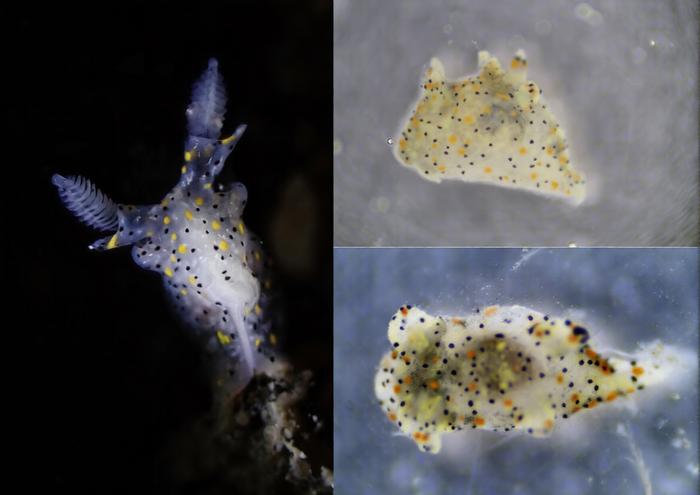
The specimens for this study were collected during multiple trips between May 2021 and June 2025 at a depth of between 18 and 30 meters in Mother Rock Bay. The animals were photographed in the waves to collect information on their color and behaviors.
Their DNA was then extracted, analyzed, and compared with the DNA of other known species to work out how the colorful critters fit into the family tree. This, combined with analysis of their shape, allowed the team to confidently identify it as a new species within the genus Thecacera, bringing the total number to seven.
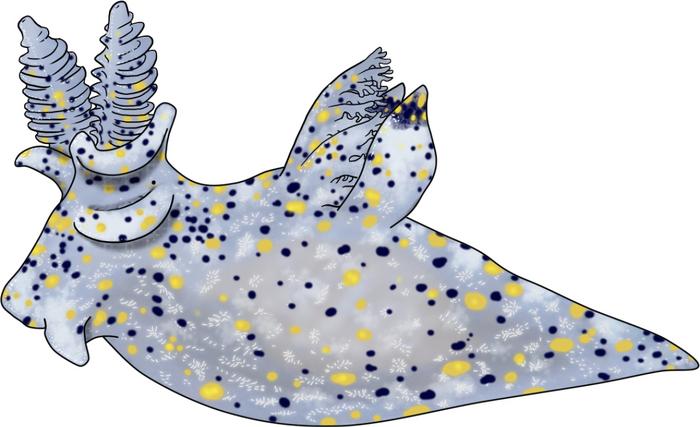
The name Thecacera sesama is given from the Latin word for sesame seed, and it refers to the small, rounded spots across the animal's body that resemble scattered sesame seeds.
Despite the challenges, the team was able to witness T. sesama feeding, searching, mating, and even laying eggs. The tiny nudibranch lays its eggs on bryozoans, also known as moss animals.
After observing the nudibranch and the bryozoans, the researchers think the specific one chosen by T. sesama might also be a new-to-science species. The team also witnessed the new species preying on only one species of bryozoan, suggesting it might be specialized to this one food source.
The researchers think that there might be many other Taiwanese species in the western Pacific region that are equally small and hard to discover, waiting to be revealed under the waves.
The paper is published in ZooKeys.


 1
1