


 Nature
 PUBLISHED





What you'll discover in this article
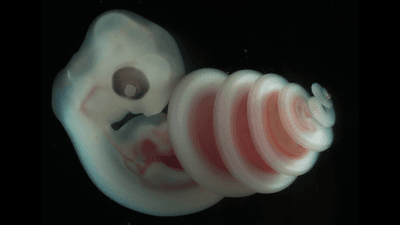
- Snake embryos coil as they develop, allowing them to reach long body sizes while still inside the egg.
- They appear to show a preference towards right-handed curling in the early stages, but nobody knew why.
- New research has demonstrated how a slow-growing gut tethers the snakes' rapidly growing bodies, causing them to curl up as they develop.
A new study has highlighted the importance of just taking a good long look at something when it comes to solving puzzles of biology. Most recently: how do baby snakes grow such long bodies while cooped up inside an egg?
We’ve known for a while that snake embryos spiral as they develop. It’s very sweet and, curiously, they even seem to have a right-handed preference.
A serendipitous discovery made during the COVID-19 lockdown has revealed how a previously unknown structure makes this happen. This is knowledge that – as previous discoveries of spiral forms in nature have shown – could go on to inspire everything from architecture to your next favorite pasta shape.
Lockdown discoveries
Back in 2020, senior author and team leader Dr Tetsuto Miyashita, an evolutionary biologist at the Canadian Museum of Nature, was stuck indoors. Desperate for a research project his students could investigate without having to go outside, he was reminded of his PhD advisor’s fascination with animal asymmetries.
Snake embryos, in particular, had captured Miyashita’s imagination. How did they spiral like that? And were they right- or left-handed in their coiling?
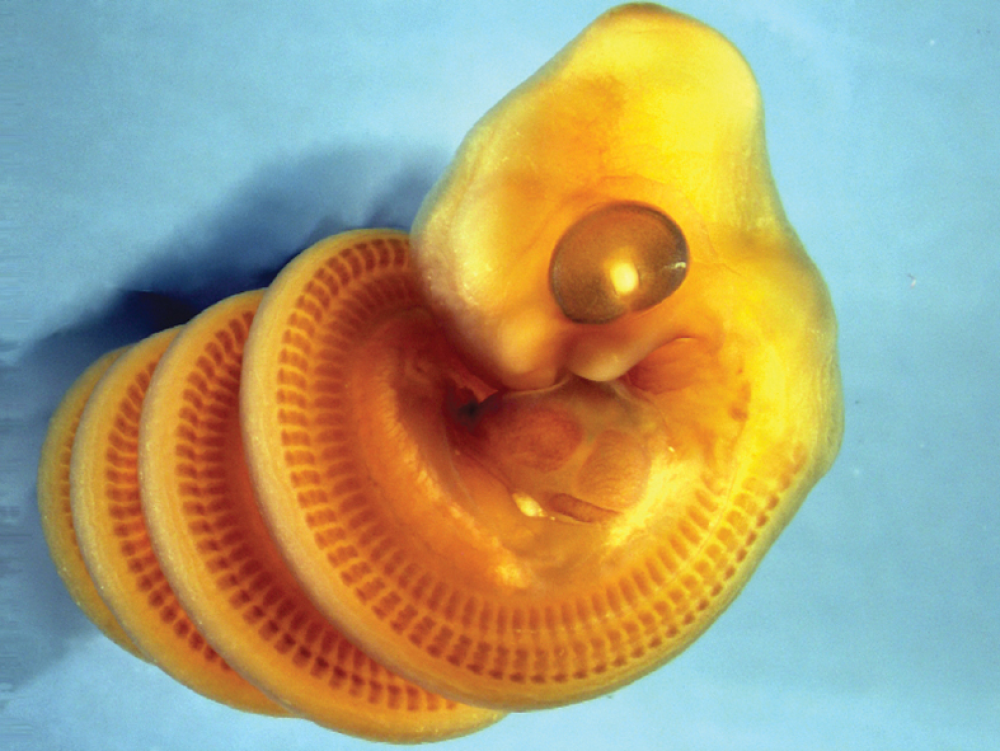
To find out, the team gathered as many snake embryo pictures as they could get their hands on. Their resulting database included 900 embryos and 39 species, including other long limbless reptiles.
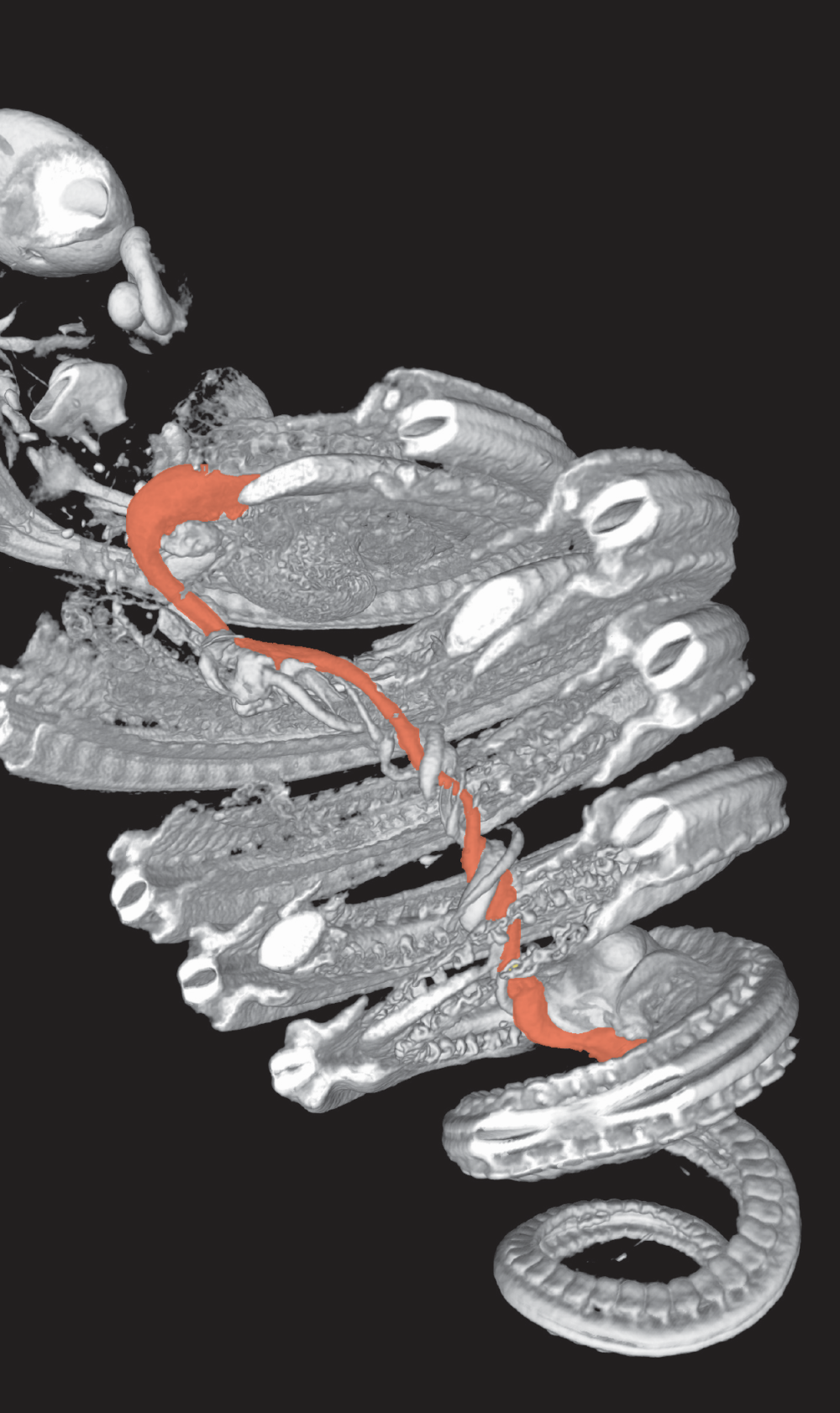
By looking at the images, they were able to identify a structure that had never been seen before: a detached section of gut and blood vessels that runs through the central axis of the coiling segment of the body, kind of like running a string through the middle of a Slinky. It’s shorter than the spine of the rapidly developing snake and so acts like a tether, causing the embryo to coil.
The ‘visceral pillar’ – the detached gut and vitelline vessels – forms because the gut doesn’t grow as fast as the spine early on
Dr Tetsuto Miyashita
Because the yolk is on the left, the tether pulls on the right, which is why most embryos appear right-handed in their spiraling. As the snake develops and gains control over its muscles, it can later reposition itself by coiling left – or any way it feels like.
Playing catch up
The coiling action all stems from the mismatch between the growth rates of different body parts in a developing snake. Unable to keep up with the spine, the detached gut – which is still connected to the outer coil via a kind of tissue called mesentery – creates tension that produces the spiral, but it does eventually find its way back into position.
“The ‘visceral pillar’ – the detached gut and vitelline vessels – forms because the gut doesn’t grow as fast as the spine early on,” said Miyashita to IFLScience. “It eventually grows long enough for the coiling body to pull it back via mesentery and incorporate it in the proper anatomical position, which is under the axial column.”
Snakes’ evolution has seen them rapidly increase in body length during their development, but somewhere along the line the gut fell behind. What’s most curious about this, says Miyashita, is that such a disparity between the growth of the body and critical body parts would typically have fatal consequences.
“In most animal development, it would be lethal to have such a drastic mismatch in growths of organs as we saw between the spine and gut in snake embryos,” he told IFLScience. “But here, snake body plan takes advantage of this seemingly grave deficit and use it to make a beautifully coiled, elongate body.”
We found this out not through sophisticated techniques of molecular genetics but by looking, counting, and measuring with numerous museum or lab specimens
Dr Tetsuto Miyashita
Much research has gone into making sense of how snakes’ unusually noodly bodies evolved, with a special focus on Hox genes – the master regulators of animal development. However, this new research demonstrates that sometimes all you need is a curious mind and a really good family album.
“We found this out not through sophisticated techniques of molecular genetics but by looking, counting, and measuring with numerous museum or lab specimens,” he told IFLScience. “This is a nice reminder that in biology there is still so much to discover by just looking.
The study is published in the journal Current Biology.



 1
1