Space and Physics
 PUBLISHED


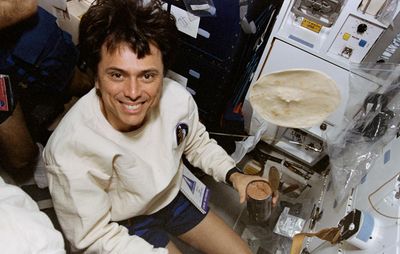


Missions going in orbit around the Earth experience microgravity due to freefall. The apparent absence of gravity affects both the body and mind in profound ways; new research shows that astronauts' minds tend to take a longer time to fully get over the idea of gravity.
You might have seen the spoof video of astronaut Tom Marshburn forgetting about gravity. He explains how to get to space, and he drops first a cup and then a pen. The video was initially mocked for Marshburn’s performance before going viral as factual. Still, the idea is based on real events where astronauts returning to Earth had momentarily forgotten that the pull of gravity was there.
The new study doesn’t just look at this. It also looks at the opposite effect. What happens when astronauts are in space? How quickly do they adapt to the notion that things just float? It turns out that it takes time. Even after several months, astronauts can still instinctively behave if they are working under the relentless yoke of gravity.
The scientists behind the research looked at the repetitive movements that occurred while 11 European Space Agency astronauts gripped an object, both on Earth and in space. They were focusing on grip strength and movement, looking at similarities and differences in different gravity environments.
With things just floating about, giving objects a little push can send them flying away. Even knowing that they could discount gravity and they needed to be careful about how they might manipulate something, the astronauts were known to overcompensate in how they gripped and handled things. In microgravity, they still behaved as though anticipating gravity’s pull.
Something similar was recorded when the astronauts came back to Earth. They made incorrect predictions about how they were holding and manipulating objects. It might not have always been as bad as the Mashburn spoof video, but it took time for the correct gripping to return.
A video published by astronaut Christina Koch, who has recently come back from a mission around the Moon on board Artemis II, shows that even just 10 days in space can affect the vestibular organs, the structures in our inner ear that sense gravity and feed that information back to the brain. So, the psychological and the physiological adjustments might have different timeframes. The team believes that the brain takes time to adapt to environments with different gravitational pulls.
It would be fascinating to see if the Moon, which has one-sixth the gravity of Earth, produces an even different response. Let’s not count on seeing that any time soon though; even with NASA's ambitious plans for a Moon base, this research took a lot of work to coordinate data between space agencies and successful spacecraft flights. The whole process, from planning to data analysis, spanned almost two decades.
The study is published in the Journal of Neuroscience.