Space and Physics
 PUBLISHED




The astronauts on board Artemis II have delivered some stunning images so far. The "night marble", capturing the far side of Earth as they fly away, has already become a fan favorite. They are now getting closer and closer to the Moon, and so the focus of their images is our natural satellite. At first the pictures look brilliant, but the more you look, the more you’ll notice something off… they have a view that we cannot possibly get on Earth.
The dark portions of the lunar surface are known as the maria, the seas. The largest one, and main feature on the near side of the Moon, is more than a sea – it’s Oceanus Procellarum, the vast lava plain that extends towards the western limb of what’s visible to us. It makes up a large portion of the Man in the Moon effect, or the Rabbit in several Asian cultures.
Looking back at the Artemis II picture, you will see the oddity… Oceanus Procellarum now sits in the middle of the Moon, the beautiful Tycho crater with its white rays shooting off is more at an angle, and the western far side is becoming clearly more visible.
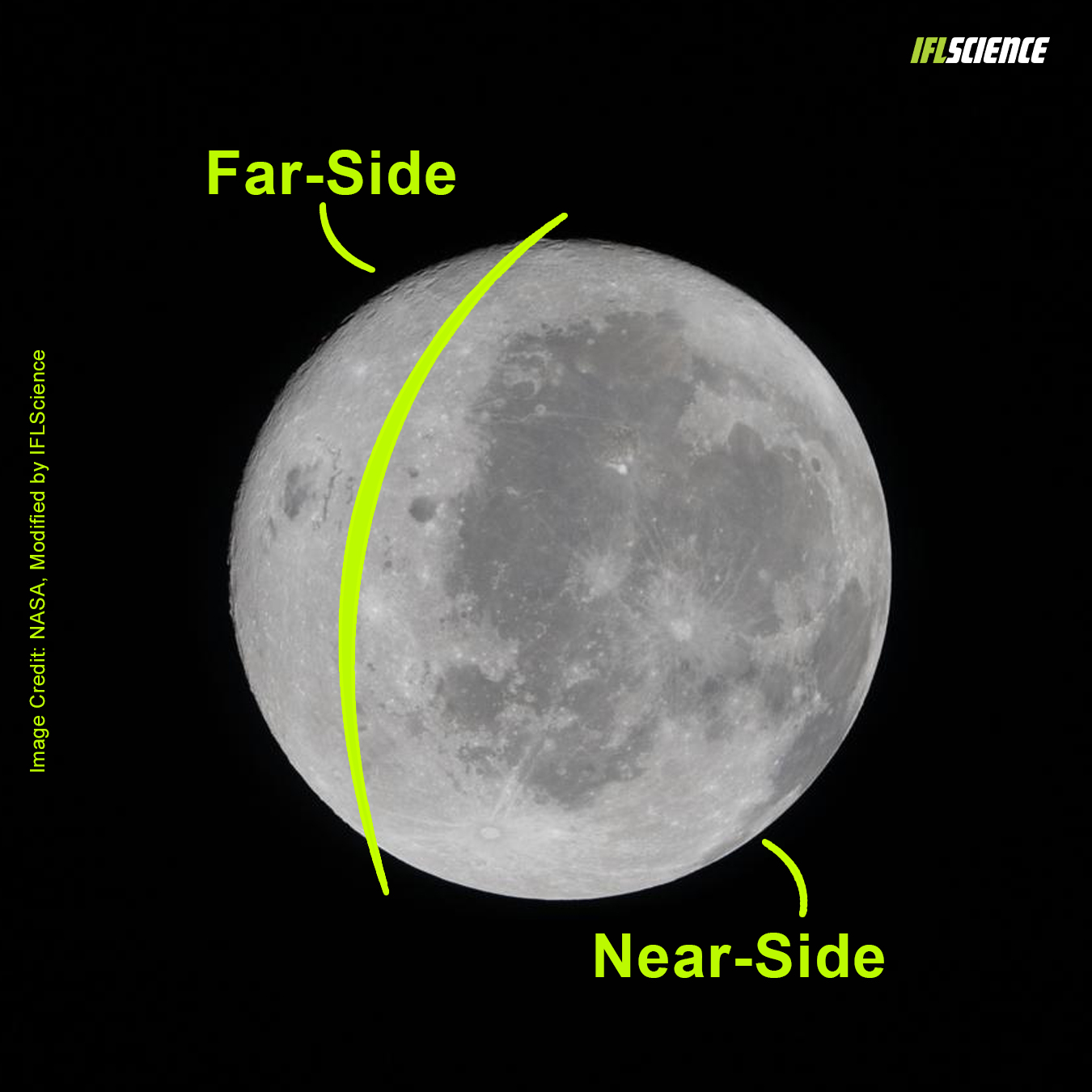
The largest clear feature there is Mare Orientale, the Eastern Sea – "eastern" because it is at the very east of the far side. This is a 930-kilometer-wide (580-mile) crater with a truly unique shape. Its dark basalt floor and multiple ridges create a bullseye shape. This might be the youngest impact basin on the Moon and may be the reason why the Moon has no steep slopes – the event leveled slopes with more than a 35-degree angle around the Moon.
From Earth, we can see the mountain ridges that surround the crater – the Montes Rook and the Montes Cordillera – so the view that NASA astronauts Reid Wiseman, Victor Glover, and Christina Koch have, along with Canadian Space Agency astronaut Jeremy Hansen, is truly special. And every passing second, it’s getting even more special.
The Orion spacecraft entered the sphere of influence of the Moon a few hours ago, at 12:37 a.m. EDT on April 6. Koch, now the woman who has traveled farthest from Earth, said: "We are now falling to the Moon rather than rising away from Earth. It is an amazing milestone!"
Their closest passage to the Moon is only a handful of hours away, and they will see regions of the far side no other human has seen directly with their naked eye. It is not just sightseeing; they will be doing some important science looking at those regions.
The most exciting part of the Artemis II journey is almost here. At 7:05 p.m. EST tonight, they will reach the mission's maximum distance: Orion and its crew will be roughly 406,773 kilometers (252,757 miles) from Earth. They will break the Apollo 13 record – which stood for 56 years – by more than 6,600 kilometers (4,100 miles).