Nature
 PUBLISHED
 1
1


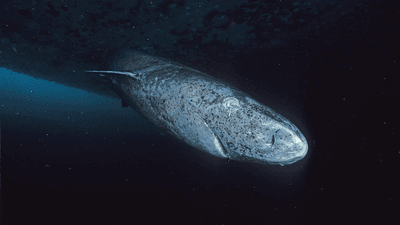


Longevity has got the world in a right tizz of late, as everyone scrambles for the right goop to slather on their face as they wild swim their way to eternal life – but can we learn secrets to long life from nature? And if so, what does the world's longest-living vertebrate have to say about it all?
New experimental research on the topic has found that metabolic activity may be the key to the incredibly long life of Greenland sharks. This increased understanding could help us conserve them on a warming planet, while also possibly informing interventions for human cardiovascular health.
Greenland sharks – known to science as Somniosus microcephalus – have an expected lifespan of at least 270 years, but may live beyond 500 in the most remarkable cases (which, bizarrely, we know thanks to nuclear weapons). It’s long been suggested that the cold environment they inhabit, combined with the minimal effort they put into moving, might be the key – but a team including Ewan Camplisson, a PhD student at the University of Manchester, UK, decided to take a closer look.
In pursuit of the adaptations that allow Greenland sharks to live so long, the team conducted enzyme assays on preserved muscle tissue samples. Such samples are a rare opportunity to study these animals, which are the focus of the University Of Copenhagen’s Old And Cold project.

“While on expedition, a key focus is to catch sharks to tag them with both electronic and physical tags so that we can release them and then either monitor where they swim (via electronic tag) or record how much they grow if they are recaptured and we can identify them via their physical tag,” explained Camplisson to IFLScience.
“Occasionally during this process a shark is wounded and may not survive being released. To avoid the shark suffering needlessly we may decide to not release it back to the water but instead to ethically euthanize it. In this case we collect samples for future work so that the animal is in no way wasted and can still be used for science. Any remains of the shark are also donated to local fishermen or hunters which feed their sled dogs shark meat so that none of the animal is wasted.”
The team used red muscle samples in storage to measure the metabolic activity of the sharks’ enzymes with a spectrophotometer, looking at a range of different shark ages and environmental temperatures. Surprisingly, they observed no significant variation in muscle metabolic activity across the sharks, which indicates their metabolism doesn’t decrease with age – as we see in other animals – and may be a crucial contributor to their extreme longevity.
“For us, this is important as most animals that show traditional signs of aging would show decreases in some enzyme activity and compensating increases in others as they get older,” said Camplisson. “This is all part of natural metabolism as aging causes it to fail and change over time. The fact we don’t see this in the Greenland shark suggests they don’t show this traditional sign of aging.”
The results showed variation across environmental temperatures, indicating the metabolic enzymes were significantly more active where it was warmer. According to Camplisson, this suggests the muscle metabolism isn’t adapted for the polar environment as otherwise there would be less of a temperature-related difference in activity.
The team’s work continues in the hope that a better understanding of Greenland sharks can inform how they may respond to the planet’s rapidly changing climate, while also possibly revealing insights that could be applied to the study of human cardiovascular health as we age.
“I have other projects all focused on studying aging in the Greenland shark,” Camplisson said. “Looking at changes in metabolism Is only a one of these projects. However, within this small project I plan to look at some other tissues in the Greenland shark which may show different metabolic profiles, and also look at some more enzymes which will give even further insight into metabolism in this incredible species.”
The study is being presented at the Society for Experimental Biology Annual Conference in Prague onJuly 2-5, 2024.