Nature
 PUBLISHED
 1
1


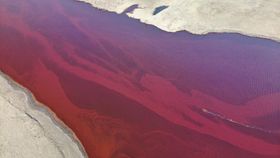


A river within the Arctic Circle has turned an unpleasant shade of red after an industrial accident flooded over 20,000 tons of diesel into the surrounding environment.
The oil spill started on May 29 following an accident at a plant owned by a division of Nornickel, the world's biggest nickel producer, near the Siberian city of Norilsk. According to Russian authorities, the contaminants quickly found their way into the Ambarnaya River about 12 kilometers (~7.5 miles) away from the plant, while 800 tons of diesel was found in the adjacent territory.
Clean up operations have already made progress and authorities insist the oil spill did not reach the Kara Sea, part of the Arctic Ocean north of Siberia, although lab tests are still required to confirm this. Either way, the surrounding waters and soil of Norilsk are expected to remain tainted for decades. As of June 3, over 800 cubic meters of contaminated soil have been removed from the area and 262 tons of diesel fuel was pumped out of the local waters.
"It has been found that the maximum permissible levels [of contaminant] has exceeded in water areas by tens of thousands times," Svetlana Radionova, Head of the environmental watchdog Rosprirodnadzor, said on Wednesday.

Conservationists are worried the incident could have a catastrophic effect on the local wildlife, with WWF-Russia warning the spill is likely to affect the health of fish, birds, and wild mammals living in the area.
“Diesel fuel is more toxic than the oil, and at the moment the circumstances appear to be as massive,” Alexey Knizhnikov, Head of the Program for the Business Environmental Responsibility at WWF-Russia, said in a statement.
Russian President Vladimir Putin was not happy about the situation. Russian authorities only found out about the incident two days after it started through images that were being spread on social media, reports TASS, the Russian state news agency. The delayed response to the crisis led the Russian President to scold local officials of Russia’s Krasnoyarsk Region in a very public lambasting.
“Why did the officials find out about this only two days later? Are we going to find out about emergencies through social networks? Do you have a problem or something?" Putin said in a video conference on Wednesday.
Following the meeting, Putin declared a federal state of emergency to deal with the situation. Three criminal cases have also been launched against staff from the industrial plant on charges of land deterioration, water pollution, and violation of environment protection rules.