


 Nature
 PUBLISHED


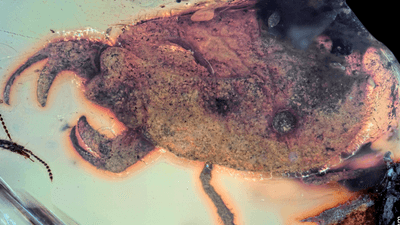


Amber is one of Earth’s most beautiful natural resources, and its beginnings as sticky resin also mean that it has ended up preserving many species – some of which might have otherwise been lost to time. Now, from the Kachin region of Myanmar comes one such creature, a brand new species of true bug with some pretty remarkable claws.
The amber-preserved specimen is thought to represent the first fossil insect with forceps-like legs, a trait that is very unusual in insects. They are known as chelate appendages; these are similar to the legs found on crabs and are rare in the insect world, though have been found in some thrips, solitary wasps, as well as true bugs.
“Previously, such chelae were known from only three insect groups. This fossil therefore represents the fourth known case of these structures evolving independently in insects,” explained study author and zoologist Carolin Haug in a statement.
To learn more about the legs, Haug and the team compared 3D images of the fossil to over 2,000 grasping structures found in other insects, both living and extinct. This revealed that the newly discovered insect has a leg shape not seen in any other fossilized or living species.
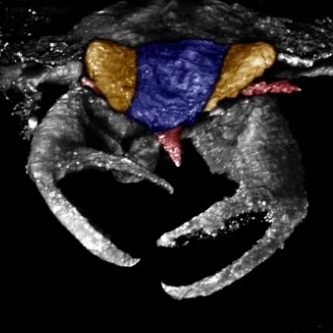
As a member of the true bugs, known as Heteroptera, the morphology of the insect also includes a beak-like mouthpart. Further characteristics such as a short antenna suggest that the specimen might specifically have been part of Nepomorpha, a group within the true bugs known as the water bugs.
The most similar insects to the new species that are still alive today are called Gelastocoridae, or toad bugs. These insects are said to have a warty appearance and some species even hop. They are typically found in sand or mud near waterways.
“The morphology of [the newly discovered bug] suggests that this species had a similar lifestyle,” said Haug. “We can imagine it living in a Cretaceous forest, probably near the coast.”
The team have decided to call the new species Carcinonepa libererrantes, “liberi” and “errantes” being the Latin words for “children” and “wandering”, to reference the K-pop band Stray Kids – and that is down to its fancy claws.
“The species name libererrantes is a Latinization of the highly successful K-pop group Stray Kids,” explained Haug. “The name seemed fitting because the posture of the fossil’s chelae strongly resembles the group’s trademark pose. Stray Kids, I should add, is the favorite band of one of the paper’s authors, Fenja Haug.”
The study is published in Insects.



 1
1