Nature
 PUBLISHED


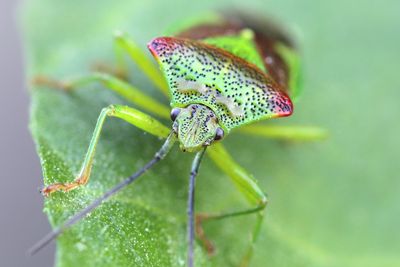


Welcome back to the weird world of animal taxonomy. Whether you’ve seen a spider and mistakenly referred to it as an insect or got caught in the classic ape vs monkey debate, we’re here to set your mind straight. This week’s taxonomy of choice: bugs and insects.
Now it may surprise you to learn that the word “bug” is more than just a catchall term for those creepy crawlies that show up in the backyard. True bugs belong to the insect order Hemiptera and they come with their own set of characteristics. There are thought to be around 40,000 species of true bugs on Earth.
True bugs typically have a long, straw-shaped mouth, often known as a stylet, that they use to slurp up all manner of things from blood to liquid from plants. True bugs also typically have antennas that are segmented and two pairs of wings that go from dark by the body to translucent at the ends.
Bugs also undergo a process known as incomplete metamorphosis, where the offspring look similar to the adults but without wings. By contrast, beetle larvae can look very different from the final form of most adult beetles.
True bugs include common species aphids, planthoppers, bed bugs, and shield bugs. Often, the term is unused incorrectly, such as in the case of ladybugs, which are actually beetles. The group also does not include butterflies, which are in the order Lepidoptera; and bees and ants, which belong to the order Hymenoptera.
Many true bugs are also aquatic, including members of the family Notonectidae, which are commonly known as water boatmen. The confusingly named water scorpions are also true bugs, which belong to the family Nepidae.
By contrast, the term insect is pretty broad and encompasses a class called Insecta, which is the largest class in the phylum Arthropoda. Typically, insects have segmented bodies, external skeletons, and three sets of legs.
If we take a common species like the hawthorn shield bug (Acanthosoma haemorrhoidale), the full taxonomy reveals that the true bug order Hemiptera sits within the wider class of Insecta. This means that all “true” bugs are insects, but not all insects are bugs!