Nature
 PUBLISHED


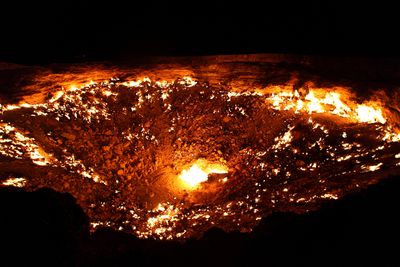


The decades-old flames at Turkmenistan’s so-called “Gates of Hell” are finally starting to dim. But while officials and environmentalists have long wanted its flames to be extinguished, this latest news may not be as good as we might like.
The Darvaza gas crater, as the site is officially known, is a massive pit located in the Karakum Desert, now (in)famous for its ceaseless flames that have been burning since the 1970s. However, there are several unverified stories concerning its origins; the most commonly accepted account suggests that in 1971, the Soviets accidentally drilled into an enormous pocket of natural gas while searching for oil.
In order to prevent it from releasing toxic fumes into the local atmosphere, the Soviets decided to ignite the gas so that it would quickly burn off. However, that was another miscalculation. It caused the ground to collapse, creating a 70.1 meters (230 feet) wide and 20.1 meters (66 feet) deep crater. And five decades later, the pit is still burning as it continues to consume natural methane that seeps from the Earth.
The crater is now a popular, albeit hard-to-reach (you need an invite to enter Turkmenistan), tourist attraction and has even been the backdrop for a Turkmen president’s promotional campaign. But over the last few years, observers have noted that the fires of the “Gates to Hell” are beginning to dim.
In 2025, Turkmenistan stated at an international conference that the fires at the Darvaza gas crater were weakening, becoming less visible. “The reduction [in fires] is nearly threefold,” said Irina Luryeva, director of Turkmenistan's state-owned energy company Turkmengaz, at the conference.
They added that the changes had been confirmed by independent satellite data obtained from Capterio, a British company specializing in project development and advising on reducing flaring in the gas and oil industries.
According to the Turkmenistan government, this reduction in intensity was due to two wells having been drilled near the crater in 2024, which were extracting natural gas from the pocket. But Capterio has other thoughts. According to the New York Times, the monitoring company believes the flames were dimming before the wells were created, and it is not clear whether natural causes have contributed to the whole process.
So, would it be a good thing if the Gates to Hell finally closed?
The New York Times reports that even though the flames may be weakening, it is unlikely that they will be fully extinguished any time soon. Moreover, the crater is still producing a huge amount of methane each year.
Between 2022 and 2025, the crater emitted an average of around 1,300 kilograms of methane per hour, so data from the nonprofit organization Carbon Mapper suggests. In October 2025, the methane emissions rose to 1,960 kilograms per hour.
Although this is less than the gas released by some large oil and gas fields, as the New York Times noted, it is still a significant amount of a potent contributor to climate change. Thankfully, methane is converted into carbon dioxide when it burns off in the crater, making it a little less harmful to the environment. If the fire stopped completely, that raw methane – which is around 30 times more potent than carbon dioxide at trapping heat in the atmosphere – would be released into the atmosphere. While CO2 is the main driver of climate change long-term, methane is the second most abundant greenhouse gas and accounts for about 11 percent of global emissions.
So, while the fires may be dimmer than they have been in the past, there is currently no sign that they will disappear altogether in the near future, which may not be a bad thing.