Nature
 PUBLISHED
 1
1


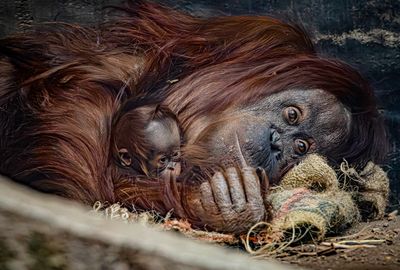


A zoo in the UK has welcomed the arrival of a critically endangered Bornean orangutan. Born in the early hours of October 7, keepers report the newest member is doing well.
The baby orangutan was born to mum Leia and joins more than 500 threatened species that are protected at Chester Zoo. The little one is still keeping close to mum so keepers have not yet learnt the sex of the baby.
“Leia is a wonderful mum. She’s extremely attentive and has spent the first few days holding her baby close, feeding regularly and forming a really strong maternal bond. It’s a huge privilege to witness,” said Chris Yarwood, Assistant Team Manager of Primates at Chester Zoo, in a statement seen by IFLScience.
In the wild, Bornean orangutans are found only on the tropical island of Borneo and have lost more than 40 percent of their population due to logging, poaching, illegal hunting, and the unsustainable production of palm oil.
Bornean orangutans are one of the three orangutan species that are critically endangered. Sumatran orangutans endemic to the island of Sumatra, Indonesia, number around 13,000, while the Tapanuli orangutans number just 800 left in the wild.
“Any birth of a Bornean orangutan is incredibly special given how threatened the species is. It’s an important step forward for the international conservation breeding efforts that are working to prevent this iconic animal from disappearing forever,” continued Yarwood.
The team at Chester Zoo work with an NGO called HUTAN in Borneo to study wild orangutan behavior and look at practical conservation ideas like reforesting a wildlife corridor. The team also looks to promote the use of sustainably sourced palm oil, and how to reduce human-wildlife conflict.
“Chester Zoo has worked with partners in Borneo for more than 20 years to safeguard wild orangutan populations, restore rainforest habitats and tackle the root causes of deforestation," said Cat Barton, Policy Lead on Deforestation-free Commodities at Chester Zoo.
"Through long-term initiatives like wildlife corridors, community engagement and reducing human-wildlife conflict, we've supported efforts that have now helped the area where we work – the Kinabatangan – earn recognition as a UNESCO Biosphere Reserve. This is a huge milestone for our partners at HUTAN and for global conservation.”