Ad

nature-iconNaturenature-iconplanet earth
clock-iconPUBLISHEDDecember 12, 2024
share19

Admire Azerbaijan’s Beautiful "Candy Cane Mountains" – Just Don't Lick Them

They don't smell of peppermint either.

Eleanor Higgs headshot

Eleanor Higgs

Eleanor Higgs headshot

Eleanor Higgs

Digital Content Creator

Eleanor has an undergraduate degree in zoology from the University of Reading and a master’s in wildlife documentary production from the University of Salford.

Digital Content Creator

Eleanor has an undergraduate degree in zoology from the University of Reading and a master’s in wildlife documentary production from the University of Salford.View full profile

Eleanor has an undergraduate degree in zoology from the University of Reading and a master’s in wildlife documentary production from the University of Salford.

View full profile
EditedbyFrancesca Benson
Francesca Benson headshot

Francesca Benson

Copy Editor and Staff Writer

Francesca has an MSci in Biochemistry from the University of Birmingham.

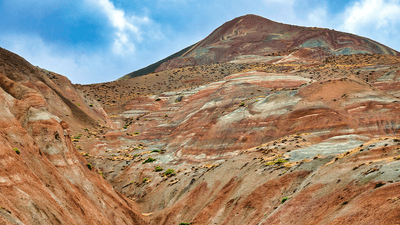
Red and white striped surface on a tall mountain

CANDY MOOOUNTAAIIIN!

Image Credit: Only Fabrizio/Shutterstock.com.


If the yellow brick road leads to the Wonderful Wizard Of Oz, then where pray tell do you end up if you cross Azerbaijan's beautiful candy cane-striped mountains? 

The rest of this article is behind a paywall. Please sign in or subscribe to access the full content.

The "Candy Cane Mountains" (aka Şəkər əsası dağları in Azerbaijani) are part of the Greater Caucasus mountain range and emerge between Baku and Quba in Azerbaijan. The striking red and white stripes are made up of shale, a type of sedimentary rock with many thin layers stacked on top of each other.

A road passes by the bottom of the red and white striped mountains with a blue sky.
The mountains lie about 90 kilometers (56 miles) from Baku.
Image Credit: kosmos111/Shutterstock.com

Travel writer Mark Elliot is said to be the first to nickname this area, the Candy Cane Mountains his 1999 book Azerbaijan: With Excursions to Georgia, and the name has stuck. 

While these candy cane-like stripes and colors might look like something AI-generated this is a totally natural phenomenon. The candy cane colors come from the shale layers that contain iron which has oxidized after coming into contact with groundwater, turning into the classic red candy cane color, while layers without iron remain in shades of white. Check out more colorful geology like the seven-colored sand dunes of Mauritius

The mountains also contain many fossils – particularly belemnites, which were squid-like cephalopods that lived during the Cretaceous period. 

The area is popular for hiking because of its stunning views and birdwatching. Oh, and if you follow the candy cane mountains you get to the village of Altiaghaj – let us know if they have a wizard. 


Written by 

Add us as a Google preferred source to see more of our
trusted coverage in Search