Space and Physics
 PUBLISHED





Every century there are 240 solar eclipses, which makes it roughly two per year. We had a gorgeous total solar eclipse on April 8, which was seen by hundreds of millions of people. On Wednesday, October 2, there will be another eclipse across the Americas, but it will be seen by a lot fewer people.
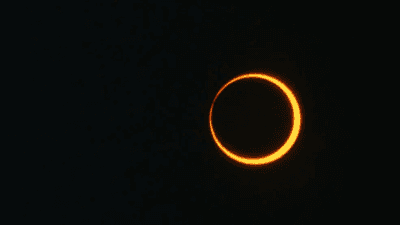
The eclipse is an annular eclipse of the Sun, also known as a ring of fire. The Moon is in an elliptical orbit around the Earth, so when it is at its furthest point, it appears to be smaller in size than the Sun. The Moon can’t cover it completely, leaving a small sliver of light all around it: the eponymous ring of fire.
The path of annularity (it’s not totality) will be mostly over the ocean, passing over Rapa Nui (colonially referred to as Easter Island) and then reaching the southern tip of South America, crossing Chile and Argentina, and the northern tip of the Falklands. Partiality will be enjoyed from Hawai’i, across Oceania, as well as several portions of South and a bit of Central America.
Unlike the April 8 eclipse, there are only 175,000 people living in the path of annularity. If you want to watch it over the internet, the team at Time & Date will have a live stream of the event.