Space and Physics
 PUBLISHED



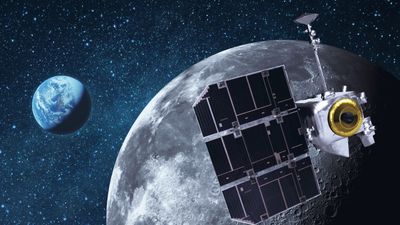


We do not know what time is. Time is an illusion, and lunchtime doubly so, mused Douglas Adams. We know for sure that time passes differently in space, and our clocks are getting so good that they can track the difference between being at the top or bottom of a mountain. We can even measure the difference in clocks on Earth and on the Moon, and actually, the Moon might give us an advantage in making even better timekeepers.
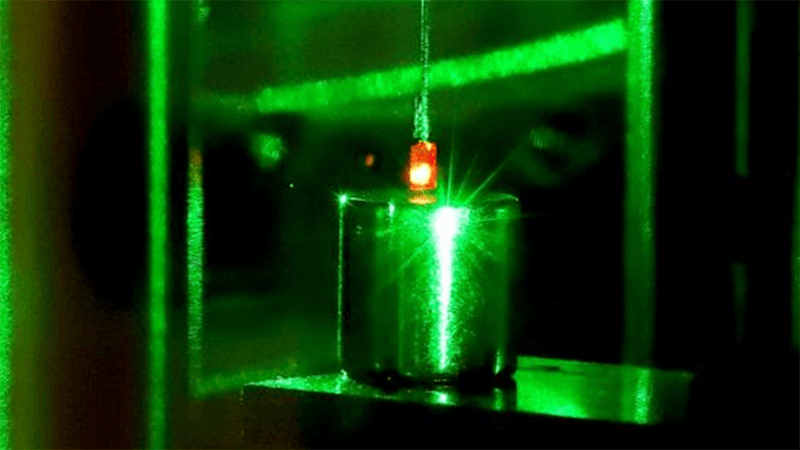
What has the Moon got that Earth doesn’t? Well, permanently shaded craters with an incredibly low temperature, very low seismic activity compared to Earth, and a general quiet environment. A new paper, awaiting peer review and co-authored by two members of Lunetronic, a San Francisco-based startup developing future quantum infrastructures to go in space, argues that this is the perfect place to construct a cryogenic silicon cavity laser, a device that would work as a lunar-based master clock.
On the Moon, near the South Pole, there are permanently shadowed regions, craters whose bottoms never receive sunlight, the craters of eternal darkness. The idea would be to place the silicon cavity there, a system where a laser light can be kept bouncing between two mirrors located inside. That’s the importance of having a quiet, cold place: the size of the cavity doesn’t change, and the whole setup doesn't shake.
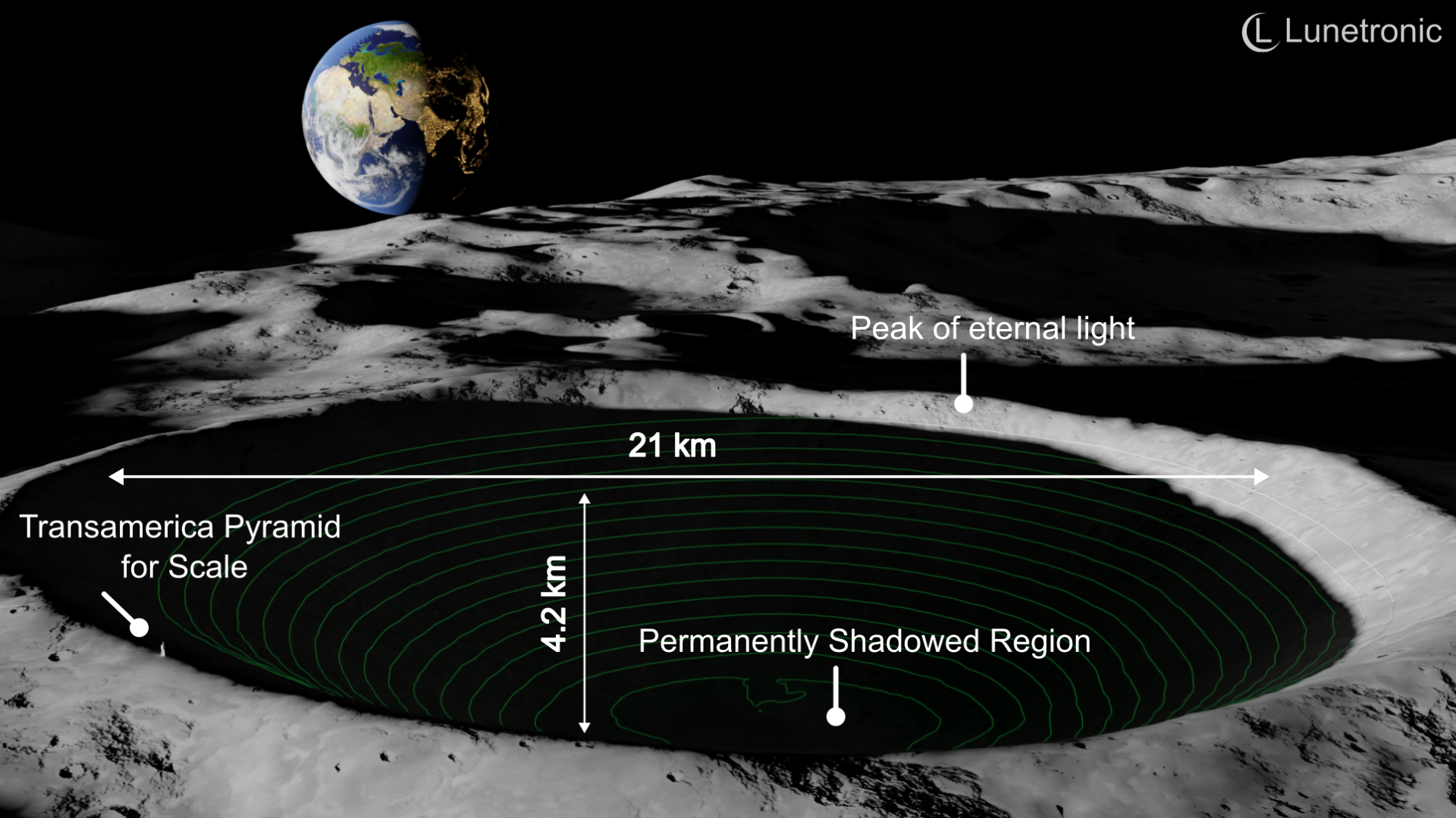
That said, not even the craters on the Moon are cold enough for the system. The temperature there has been estimated at around -223.2 °C (-369.7 °F), while the device needs to be closer to absolute zero. Still, it is feasible to construct shields and insulation that will keep the cavity at exactly the right temperature.
The system is not just an extremely advanced scientific clock; it would have important applications too. Precision timekeeping is important for navigation, such as for positioning systems. This is something extremely useful when it comes to the Moon, especially at the South Pole, where visual navigation is complicated by the Sun being low on the horizon.
It would also be useful for Earth, both to improve navigation on and around our planet (something we also use supermassive black holes for) and for really high-precision time keeping. Recent breakthroughs using optical atomic clocks have improved precision 100-fold, and we are getting closer to a redefinition of a second. The Moon clock could play a role.
There has been an increased interest in lunar timekeeping when it comes to future human exploration of the Moon and the possibility of a permanent base. For example, we know clocks tick differently on the Moon compared to here. Clocks there tick 0.0000575 seconds faster per day than on Earth. That means that every 100,000 days (or about 274 years), someone on the Moon would have aged 5.75 seconds more than somebody on Earth. Until we have a Coordinated Lunar Time, scientists are working on syncing lunar time with Earth's.
A paper describing the Luna Silicon Cavity is available on the ArXiv.