Space and Physics
 PUBLISHED
 1
1


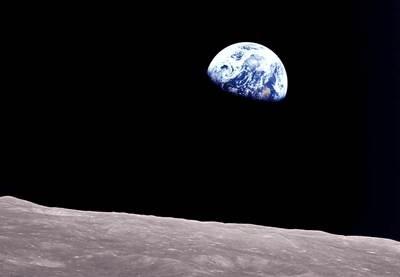


The push to set up a "Lunar Coordinate Time" is gaining traction. The International Astronomical Union (IAU) is the latest organization to call for the Moon to have its own standard clock time in a bid to coordinate future lunar missions.
A motion to establish a standard Lunar Celestial Reference System and Lunar Coordinate Time was passed by the IAU on August 15 at their XXXII General Assembly in Cape Town, South Africa. A follow-up resolution said the new time zone should be reached by “international agreement".
“As we leave Cape Town and reflect on the legacy of this event, let us remember that together we are pushing the frontiers of astronomical knowledge in a collective effort to better understand the Universe we live in, our origins and our future, and to make the world a better place for all,” Willy Benz, incoming President of the IAU, said in a statement.
There’s currently no agreed time zone on the Moon – and that's a growing problem. Uncrewed missions typically use the time zone of the craft's country of origin, while the crewed Apollo missions from 1968 to 1972 used Ground Elapsed Time, counting from the moment of launch.
With humans (hopefully) set to return to the Moon in the near future, plus an increasing number of nations and private companies launching space missions, the need to coordinate the Moon with a unified clock is mounting.
Time dilation throws another spanner into the works. Due to general and special relativity, the duration of a second on the Moon will appear distorted to an observer on Earth because there’s less gravity on the lunar surface and, therefore, time flows faster.
Time on the Moon's surface ticks an average of 57.5 microseconds per Earth-day faster than it does on our planet's surface. This may seem miniscule, but it could make a difference when highly precise experiments are being conducted. Furthermore, these tiny differences can add up; if an astronaut spends 50 years on the Moon, they would be around 1 second older than if they had stayed on Earth.
Discussions about a "Coordinated Lunar Time" have been building in recent times. Back in April 2024, the White House directed NASA and other agencies to put together a plan to establish a new Moon time system by the end of 2026.
While it’s still uncertain how the world might go about doing this, it's apparent that this is the time to do so.
“I think that the community has realized that this needs to be done. And this is the beginning,” Bijunath Patla, a physicist at the National Institute of Standards and Technology, told the Associated Press.