Health and Medicine
 PUBLISHED





What you'll discover in this article
- Vaccines must be refrigerated throughout transit and storage, or they may need to be thrown out. This is called the "cold chain."
- A new phase I trial of a "fridge-free" version of a tetanus and diphtheria vaccine shows it was just as effective as traditional vaccines.
- Dr Karen O'Hanlon of Stablepharma told IFLScience this result could "open up opportunities across a wide range of inactivated, toxoid and other adjuvanted vaccines."
Imagine you’re a vaccine scientist (unless by some chance you actually are, in which case welcome!).
You’ve just been celebrated by your colleagues and the wider world for putting the finishing touches on a new-and-improved vaccine for one of the world’s deadliest diseases – maybe TB, or even Ebola.
Everyone’s having a great day, and rightly so because this is a huge achievement. But the process of designing, trialing, and producing a vaccine – hugely complex though that is – is actually just step one.
Now your vaccine has to get to wherever in the world it is needed and stay viable long enough to get into people’s arms and work effectively.
Let us introduce you to the logistical challenge that is the vaccine cold chain, and a new technological solution that is hoping to meet it head-on.
Playing it cool
“Currently we are not aware of any commercially available vaccines on the market that can be stored at room temperature for an extended period of time,” Dr Karen O’Hanlon tells IFLScience. “The majority of them require refrigerated storage at 2-8°C [35.6-46.4°F].”
O’Hanlon is Chief Operating Officer at Stablepharma, a company whose StablevaX platform promises to make fridge-free vaccines a reality.
If you’re used to getting vaccinated at a doctor’s office or high street pharmacy, the fact that those little vials of lifesaving medicine were kept in the fridge up until just before you sat down for your appointment probably never crossed your mind.
Lots of medications have to be kept chilled, after all.
But if you’re trying to get vaccines to people in rural areas, during extreme weather conditions, in places with limited health infrastructure or unstable access to electricity, the need for refrigeration can pose an insurmountable problem.
The “cold chain” is the concept of keeping the vaccine at refrigeration temperature throughout each step of transit and storage.
“When the cold chain breaks down, vaccines can be exposed to both warm and freezing temperatures which are outside their approved storage range, and as a result their potency can be significantly reduced, meaning that the vaccine will be ineffective and patients may not be protected,” O’Hanlon tells us.
“Whilst heat can cause vaccine components to degrade, accidental freezing can also damage certain vaccines, particularly those containing aluminium-based adjuvants and in most cases, this damage is irreversible leading to vaccines being discarded as waste.”
“[The World Health Organization] WHO have noted that vaccine wastage can be substantial across some immunisation programmes, with estimates in the literature indicating that up to 50 percent wastage may occur across certain vaccines and settings.”
A 2025 article by Stablepharma’s CEO & Executive Director Özgür Tuncer and Chief Business Officer Kenny Simmen cited the statistic that maintaining the cold chain can account for up to 80 percent of the total cost of a vaccine program in some low-resource settings.
This means there is potential for considerable cost-saving here.
Inspired by nature
That’s where StablevaX comes in. The approach takes existing vaccines – ones that have already been tested and approved for use in humans – and reformulates them to make them thermostable.
“These thermostable vaccines can be stored and transported at ambient temperatures without loss of efficacy, dramatically simplifying logistics and cutting cost,” wrote Tuncer and Simmen.
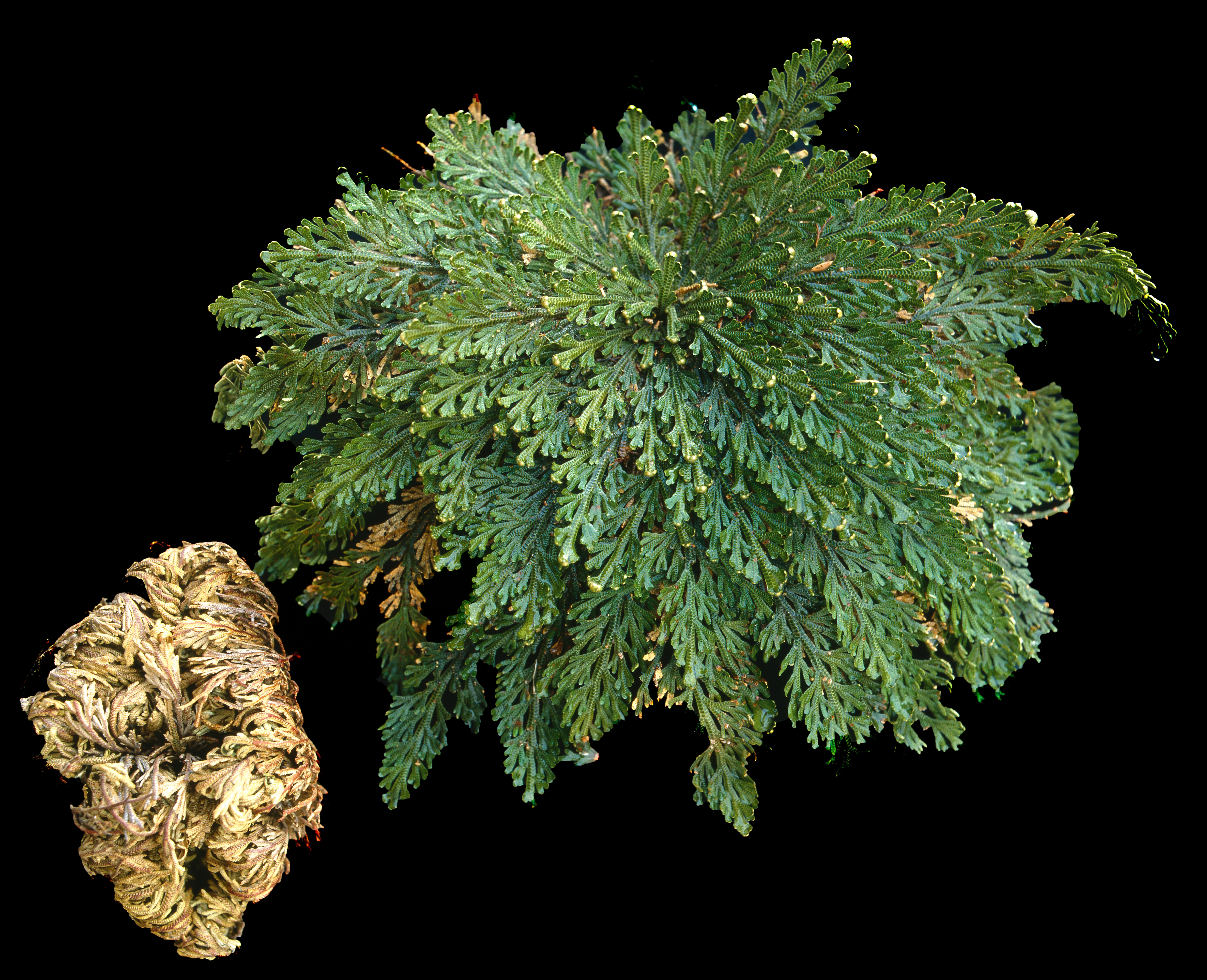
The technology was inspired by an ingenious solution to the problem of drought that evolved in one of planet Earth’s hardiest organisms: the resurrection plant (Selaginella lepidophylla).
Otherwise known as the false rose of Jericho, this plant is native to the Chihuahuan Desert of the southern United States and Mexico, where it can survive without moisture for years at a time.
In dry periods, the plant enters a state of dormancy where its stem curls inwards into a ball that looks, to put it mildly, deceased. But don’t be fooled – a few drops of water and the plant is miraculously revived.
It manages this thanks to a sugar called trehalose, which is also found in various other plants, bacteria, yeasts and other fungi that can tolerate desiccation.
In both its hydrated and dehydrated states, S. lepidophylla accumulates large quantities of trehalose in its tissues, where it protects cells and proteins against dehydration stress, allowing the plant to survive droughts unharmed.
Stablepharma’s founder, Dr Bruce Roser, applied this same principle to vaccines. Re-engineered into a “sugar glass” state, the idea is that they'll remain stable and temperature-resistant until water is added to make up the vaccine injections.
“I met Dr Bruce Roser, inventor & co-founder, over a decade ago and immediately understood the potential impact of his invention,” co-founder Nick Child tells IFLScience. “[T]he decision to start Stablepharma was made easier because the science behind the invention was ‘relatively simple’ to understand – it wasn’t that easy to put into practice however!”
“The most encouraging finding so far […] has been the consistency of the data”
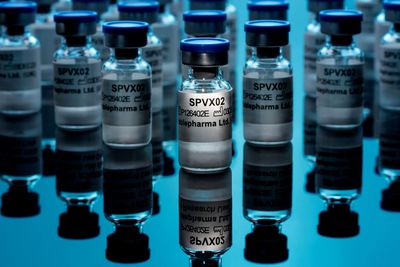
The first reformulated vaccine to go on trial is called SPVX02, a dual vaccine against tetanus and diphtheria (Td vaccine).
These are potentially deadly bacterial infections which remain serious public health concerns in some parts of the world – parts where the effective vaccines we have can’t always reach.
The WHO estimates that nearly 20 million children worldwide are not protected against diphtheria, and 42 countries have no diphtheria boosters in their immunization programs.
For tetanus, vaccine availability is particularly important because natural infection with the bacteria does not confer future immunity, so even if someone has survived the disease once they can become infected again.
A phase I trial of SPVX02 has just concluded, with the results suggesting the reformulated vaccine is just as effective and safe as traditional Td vaccines.
The 60 participants were split between three groups: 20 got an approved Td booster called Tetadif, 20 got a different booster called diTeBooster, and 20 got the new SPVX02.
After 28 days, blood tests were performed to screen for tetanus and diphtheria antibodies. The participants were also followed up during this time to check for any side effects.
“Across all treatment groups, no vaccine‑related serious adverse events were observed, and reactogenicity was predominantly mild to moderate in severity. By day 28, 100 percent of participants receiving SPVX02 achieved protective antitoxin levels for both tetanus and diphtheria,” O’Hanlon said in a press release seen by IFLScience.
This is the first evidence from a human trial that the StablevaX platform can produce a vaccine that is comparable to the original formulation whilst being temperature stable.
“The most encouraging finding so far from our Td vaccine (SPVX02) stability programme has been the consistency of the data,” O’Hanlon tells IFLScience.
“Even after extended storage at 30°C [86°F] for 2 years and under accelerated storage conditions at 40°C [104°F] for 6 months, SPVX02 has maintained potency, antigen integrity and all other key product characteristics.”
“This data gives us confidence that we will be able to significantly extend the shelf-life of our fridge-free vaccines so that they can be stored at room temperature for at least 4 years.”
A phase 2b trial is now in the works, and O’Hanlon told us that Stablepharma is now looking to other vaccines that could be good candidates for the fridge-free treatment, including hepatitis B and HPV.
“SPVX02 has now demonstrated that our StablevaX platform can successfully thermostabilise an aluminium-adjuvanted vaccine and the phase 1 clinical data allows us to now open up opportunities across a wide range of inactivated, toxoid and other adjuvanted vaccines,” adds O'Hanlon.
“Our scientific focus is always on the development of products where a fridge-free formulation can create the greatest benefit both for patients and healthcare systems.”
The phase I trial results are published in eClinicalMedicine.

 1
1