Humans
 PUBLISHED

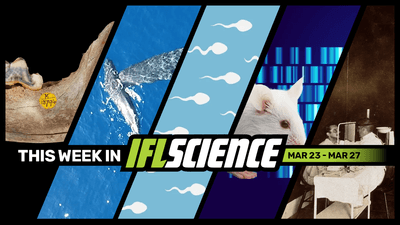


This week, sperm whales have been captured on video headbutting each other for some reason, new research indicates that sperm loses its sense of direction in microgravity, and cases of tuberculosis (TB) have been slowly rising in the US and UK since 2021, but now, it’s back with a vengeance. Finally, we take a look at some of nature’s weirdest eggs.
Create an IFLScience account to get all the biggest science news delivered straight to your inbox every Wednesday and Saturday.
16,000-Year-Old Dog From Türkiye Is World’s Oldest Domesticated Canine
Long before humans developed their love of cats, Paleolithic hunter-gatherers were very much dog people. According to new research that has found the oldest genetic evidence for dog domestication, pre-agricultural populations across Eurasia routinely treated canines as if they were humans, often sharing their food with them and even burying them like they would a family member. Read the full story here
For First Time, Sperm Whales Have Been Captured On Video Headbutting Each Other – We're Just Not Sure Why
Whales make the news for lots of reasons: there are international disagreements about whaling, research groups trying to decode whale language, and even some NSFW whale shenanigans happening in museums. The most recent cause of whale news, however, is that the sperm whales have been filmed headbutting each other for the first time ever. Why? We're not entirely sure, but a team from the University of St Andrews has some ideas. Read the full story here
Sperm Loses Its Sense Of Direction In Microgravity – No Space Babies For Us Just Yet
Knowing which way is up helps sperm find their way to an egg, new research indicates, and they struggle without the guidance of gravity. Consequently, past studies that indicated sperm swim just as well in microgravity as they do on Earth aren’t enough to prove reproduction will be easy in orbit, at least done the old-fashioned way. This raises questions for our hopes of becoming a future spacefaring people. Read the full story here
You Can't Make A Clone Of A Clone, Of A Clone, Of A Clone... At Least Not More Than 57 Times Over
You can’t clone a mouse forever and expect the resulting animals to remain healthy, according to a long-running study that finds sexual reproduction is necessary to prevent large-scale genetic mutations from accumulating in cloned mammals. Read the full story here
After Hopes Of Eradication, The World's Deadliest Infection Is Creeping Back In The US With A Vengeance
The world's top infectious killer, tuberculosis (TB), has plagued humans for thousands of years, and it isn't going anywhere just yet. Since being scientifically identified in 1882, the disease has killed over 1 billion people – that’s more people than smallpox, malaria, HIV/AIDS, cholera, and the flu combined. A few decades ago, some were confident this bacterial burden could be stamped out in the US and beyond, but now, it’s creeping back with a vengeance. Read the full story here
TWIS is published weekly on our Linkedin page, join us there for even more content.
Feature of the week:
What Do Blue Crabs, Spotted Salamanders, And Birds Have In Common? They’ve Got Some Of Nature’s Weirdest Eggs
The egg is a glorious thing. Giver of life. Maker of shelter. And for predators, a conveniently portable snack. At times like spring or Easter, when the egg really has its day, we tend to think of chickens, but in truth, most of life on Earth comes from some kind of egg. It got us thinking, isn’t it high time we pushed the perfect oval to one side and gave the freaks their five minutes of fame? What are some of the weirdest eggs and egg-layers in nature? We spoke to the experts to find out. Read the full story here
More content:
Have you seen our e-magazine, CURIOUS? Issue 44, March 2026, is available now. This month, we asked, “Are We Really More Microbe Than Human?” – check it out for exclusive interviews, book excerpts, long reads, and more.
PLUS, the We Have Questions podcast – an audio version of our coveted CURIOUS e-magazine column – continues. In episode 19, we ask, “Which Animals Have The Worst Table Manners?”
Our Break It Down podcast now has a new monthly format, coming at you in both audio and visual. So tune in each month to hear about some of the wildest science stories and adventures we’ve been on. This month, find out about “The Science Behind 'Project Hail Mary', Ghost Elephants, And Womb Transplants”.
The Big Questions podcast season 5 has now concluded, but here’s one more bonus episode to help see you through to season 6: Can Magic Be Used As A Tool In Science? You can catch up on the whole of season 5 here.