Space and Physics
 PUBLISHED


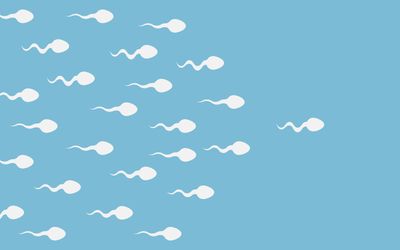


Knowing which way is up helps sperm find their way to an egg, new research indicates, and they struggle without the guidance of gravity. Consequently, past studies that indicated sperm swim just as well in microgravity as they do on Earth aren’t enough to prove reproduction will be easy in orbit, at least done the old-fashioned way. The same research raises questions about whether microgravity may also present problems for other aspects of mammalian reproduction.
While Mars boosters talk confidently about building cities on the Red Planet in decades that will host a million people, we have barely begun to investigate some of the obstacles to space colonization. In particular, self-sufficiency requires a capacity to breed, and we have barely explored the obstacles to that. Unless vegetarianism is to be universal, planning for future colonies also needs to include knowing which species are best suited to space-faring, another under-researched topic.
Dr Nicole McPherson of Adelaide University is seeking to address these questions. The cost of space launches makes testing some aspects of reproduction on the International Space Station (ISS) prohibitive; others would require retraining astronauts in IVF procedures, which so far hasn’t been done. Parabolic freefall, such as performed by the so-called Vomit Comet, has been used to test the effects of microgravity, but is limited to around 30 seconds at a time.
McPherson prefers to use the 3D clinostat machine created by Dr Giles Kirby of Firefly Biotech. Although the clinostat cannot create microgravity on Earth, it flips test subjects repeatedly, as if gravity was constantly changing direction. This, McPherson says, disorients cells, creating what she considers to be a good simulation of conditions in space.
When McPherson put human, mouse, and pig sperm in the clinostat, their swimming capacity (motility) was unaffected, somewhat in contrast to space experiments. However, there’s more to a sperm’s role than to “just keep swimming”; reaching the egg proved far more challenging.
“We observed a significant reduction in the number of sperm that were able to successfully find their way through the chamber maze in microgravity conditions compared to normal gravity,” McPherson said in a statement. “This is the first time we have been able to show that gravity is an important factor in sperm’s ability to navigate through a channel like the reproductive tract.”
The release of progesterone helped sperm overcome their low-gravity disorientation, so it’s possible simple solutions are available. Moreover, this specific problem could be addressed in future space colonies through IVF, but McPherson told IFLScience the finding serves as a warning that there is plenty more to reproduction, and we don’t know how well the rest will go.
Creating human embryos for such an experiment might meet opposition, but McPherson and colleagues made an effort to see how our fellow mammals would cope and found obstacles at different places. Success rates for mouse fertilization were 30 percent lower after four hours in the simulation than under Earth gravity, the team found. “Prolonged exposure appeared to be even more detrimental, resulting in development delays and, in some cases, reduced cells that go on to form the fetus in the earliest stages of embryo formation,” said Dr McPherson
Meanwhile, pig blastocyst development failed more often when fertilization occurred in simulated microgravity, potentially forcing Miss Piggy to choose between motherhood and her astronaut career.
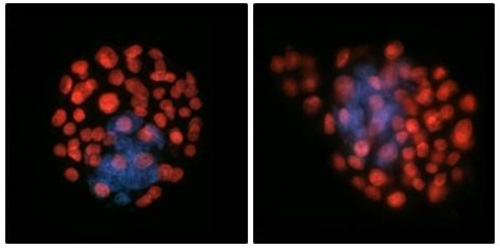
“Prolonged exposure appeared to be even more detrimental, resulting in development delays and, in some cases, reduced cells that go on to form the fetus in the earliest stages of embryo formation,” McPherson said.
Even if colonies are established successfully on other worlds, reproduction in microgravity is unlikely to ever be common. However, McPherson noted that if sperm or embryos struggle without gravity to guide them, the low gravity of Mars, let alone the Moon, may not prove sufficient. “We’re really intrigued by this,” she told IFLScience. “We want to see if there is a gradient [as gravity comes down] or if it is a sharp drop off.” In the latter case, how high must gravity be before reproduction is unaffected?
Likewise, if some animals can breed more easily in low gravity than others, that would be a useful thing to know before we put a pair on a modern ark. Currently, McPherson noted, there is little research on this field, although we do know fertility can recover after a trip to space. Sadly, experiments on space sex for geckos were cut short when communication was lost and the geckonauts died.
The team noted that the few sperm that could navigate a maze in zero gravity appeared to be healthier than those that got lost. However, McPherson told IFLScience this “probably isn’t driven by genetics”, so anyone dreaming of using space to breed a super race, as represented in some of Isaac Asimov’s books, will be disappointed.
“In our most recent study, many healthy embryos were still able to form even when fertilised under these conditions,” McPherson noted. “This gives us hope that reproducing in space may one day be possible.”
The study is open access in Communications Biology