Health and Medicine
 PUBLISHED
 2
2




Two baby twins have smashed a world record after being born from embryos frozen for over 30 years, according to the National Embryo Donation Center (NEDC). The twins are being coined the “world’s oldest babies” and have now found a home with two happy parents.
While it is possible that an older embryo has been used in the past, as the date embryos are frozen is often not tracked, these twins are the oldest recorded to result in a live birth.
Astonishingly, the embryos were created just 5 years after their adopted father was born, a time when Bill Clinton beat George H. Bush as president and Seinfeld was still in its early seasons. The embryos came from a father in his 50s and a 34-year-old egg donor in 1992. This means that the twins beat the previous record holder of Molly Gibson, who was born in 2020 and came from a 27-year-old embryo.
"There is something mind-boggling about it,” said Phillip Ridgeway, new father of the twins, in a statement reported by Sky News. "In a sense, they're our oldest children, even though they're our smallest children."
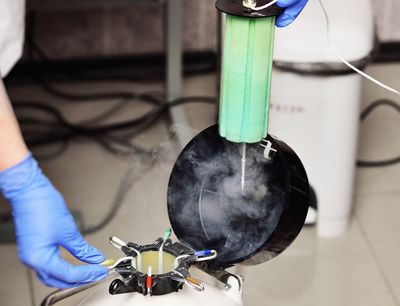
Embryo freezing is typically only done for a period of 10 years or less, though it is clear that they can remain viable for significantly longer. Taken at different developmental stages, the embryos are exposed to a liquid that draws water out of the cells prior to being rapidly frozen, at which point they are stored in liquid nitrogen until fertilization. This way, IVF can happen from embryos taken decades prior.