Nature
 PUBLISHED




Humans are a suggestible species. We see a friend yawn, we yawn. We see a stranger yawn, we yawn. We see an animated blob do something resembling yawning, we yawn. Heck, there’s a fair chance you’re yawning right now just from having read the word a few times.
Now, why this happens is a question we’re not quite sure about – but there may be a clue in the fact that we’re not alone. The dog owners among you might have noticed your pup “catching” yawns from you like this – in fact, dogs can catch yawns off humans but not other dogs, which is weird – and the, uh, chimp and elephant owners among you may have seen the same with your own pets. Many more animals will catch yawns from others of their own species: wolves do it; sheep, too; even budgies have been seen catching yawns from one another, proving it’s not just a mammalian phenomenon.
But one type of animal we’ve yet to see contagious yawning in is ectotherms – that is, cold-blooded animals. Until now.
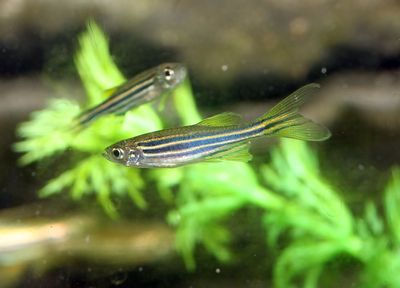
“To understand the evolutionary roots of yawn contagion, we explored [the phenomenon] in the zebrafish,” explains a recent paper from researchers at the University of Pisa and Sant'Anna School of Advanced Studies, which was published this April. “Our data indicate that yawn contagion is present.”
It’s a conclusion that no doubt raises a few questions in the layperson reader, not least of which is likely “wait – fish yawn?” And the answer is, yes, they do – and no, you shouldn’t feel bad for not already knowing that. Even for experts, the researchers point out, “one of the most challenging aspects in the study of yawning […] is the unbiased detection of the behavior.”
It’s so difficult to pick out a yawn, in fact, that rather than just breathing or opening the mouth for some other reason, some researchers choose to always play it safe – referring to “mouth gaping” or “yawn-like” movements. Of course, that’s not really viable in a study that depends specifically on knowing the difference between yawning and other movements – so the researchers took a different tack. They used a computer.
“We employed a deep learning approach to objectively distinguish yawning from breathing events in zebrafish,” the paper reports. “We recorded videos lasting about 30 min for each of three groups of six adult zebrafish […] Then, [the individual] frames were utilized to fine-tune a CNN [convolutional neural network] model (YOLOv8n) for the classification of different behaviors.”
Before long, the team had their very own fish-yawn-detector – and with it came some neat observations. Zebrafish, it turns out, yawn much the same way humans do: they take their time, sometimes stretching out their tail and fins to kind of “wake up” their nervous systems. That alone is “very interesting,” Elisabetta Palagi, a comparative ethologist and co-supervisor of the research, told Science News Explores, and something “we absolutely did not expect to find.”
Oh – and yeah, they totally catch yawns from each other.
“[Z]ebrafish […] were more than twice as likely to yawn while visually detecting others’ yawns,” the paper reports – an incidence which “is very similar to that reported for humans.”
It’s a discovery that probably raises more questions than it answers. “We’ve seen contagious yawning in a lot of mammals and birds – and then we have this one fish study,” Noam Miller, a comparative psychologist at Wilfrid Laurier University in Ontario who was not involved in the new research, told Science News Explores.
The new study is “very interesting,” he said, and its results are “surprising” – but “we need to fill in a lot of these gaps” as to why fish yawn at all, let alone why they might catch it from each other.
These are challenges the team is aware of, however – and they think their zebrafish study is a great first step towards answering them.
“[This study] is the first time this has been demonstrated in [a cold-blooded] species,” Palagi said, but it “opens the floodgates for many more [studies] to come.”
“The presence of yawn contagion in fish raises thought-provoking evolutionary questions, thus inviting deeper reflection particularly regarding the origin of the phenomenon,” the researchers conclude.
The study is published in the journal Nature.
[H/T: Science News Explores]