Nature
 PUBLISHED


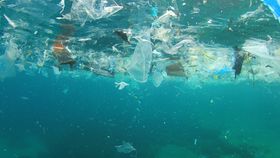


Scientists have found another patch of plastics, human trash, and chemical sludge deep within in a remote pocket of the Pacific Ocean. Much like the more northerly "Great Pacific garbage patch" found between Hawaii and mainland US, it’s definitely not good news.
The new patch was recently confirmed by a project led by oceanographer Charles Moore of the Algalita Research Foundation during a six-month voyage around the Pacific, off the coasts of Chile and Easter Island and within the South Pacific Gyre. Previous research has hinted at the presence of the patch, but this is most concrete evidence to date.
The researchers are still in the process of crunching the data on this new discovery, however Moore estimates it has the potential to be as big as a million square kilometers (386,100 square miles) – that’s four times the size of the United Kingdom.
“We discovered tremendous quantities of plastic,” oceanographer Charles Moore from the Algalita Marine Research Foundation, told ResearchGate. “My initial impression is that our samples compared to what we were seeing in the North Pacific in 2007, so it’s about ten years behind.”
Make no mistake, this patch is huge. However, they’re perhaps not as dense as some images portray. Initial analysis shows that most of the plastics found in this new discovery are the size of a grain of rice, with around a million plastic particles per square kilometer. However, it does also include large pieces such as bottles, caps, fishing nets, etc. So far, most of the trash in the newly confirmed patch looks like it came from commercial enterprises, such as the fishing industry, as opposed to litter from consumers like you and me.
These patches are generally caused by giant systems of circulating currents, known as a gyres, that sweep marine debris up from ports, rivers, harbors, docks, and ships. The debris then becomes trapped in certain areas by oceanic features, like winds or currents, and accumulate in great amounts. Eventually, these “patches” form. The most famous of which is the central North Pacific Ocean discovered in the 1980s.
These fields of plastic debris pose a real threat to marine and terrestrial ecosystems, not to mention damage to ships and infrastructure. For those who know anything about the world’s plastic consumption, this news is depressingly unsurprising. Just recently, researchers calculated that we have created 8.3 billion tonnes (9.1 billion tons) of plastics since the 1950s.