


 Space and Physics
 PUBLISHED



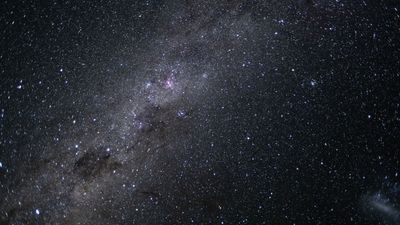


The Artemis II crew has taken some awe-inspiring images of Earth and the Moon during its trip into deep space, and some of them have left us truly speechless. Comments online echo our feelings, but some have caught our attention for a different reason. Several people are surprised we can see stars and planets in the images too.
Since the first pictures taken by astronauts in space, and from the Apollo missions on the Moon, we've gotten used to seeing outer space as a black void. But that's not really what it's like most of the time. In fact, what you’d often be seeing from the Moon's surface or in deep space is a sky full of stars, an extremely clear Milky Way, its companion galaxies, and much more. The reason we don't see them often in photos is to do with what we are trying to photograph, and how we do it.
Let’s consider the classic staples of near-Earth photography. You could take a nice shot of an astronaut wearing their sparkling-white extravehicular activity spacesuit, you could snap one of your spacecraft or the space station; and obviously you could photograph Earth or the Moon! All those subjects have one thing in common: they are bright because they reflect a lot of sunshine. Stars, on the other hand, despite being their own light sources, are so far away that they are relatively dim.
In the case of the Apollo astronauts, they were on the Moon during the lunar day, when the surface of our satellite is brilliantly bright, so they had to take photos with that in mind and wear protective visors. The sky would have appeared like bottomless darkness by comparison.
ⓘ IFLScience is not responsible for content shared from external sites.
On top of that, most space photography is done in spacecraft moving very quickly. So, to produce a good composition, you need to have a high shutter speed and very short exposure relative to how bright your target it. Astronaut Don Pettit actually developed his own star tracker to be able to take second-long exposure images from the International Space Station. He had to come up with something to compensate for the fact that the ISS moves at 8 kilometers (5 miles) per second.
The images from Artemis II that show the stellar and planetary jewels beyond the confines of the Earth-Moon system have one thing in common. They are backlit by the Sun. The now iconic Hello, World photo has a much darker twin. It is only in the higher-exposure picture that we see more features in Earth's night sky, from the aurorae to the coastline, as well as in space: namely the zodiacal light and Venus.
.jpg "The two images of the earth at night next to each other. The one on the right is a lot brighter due to longer exposure")
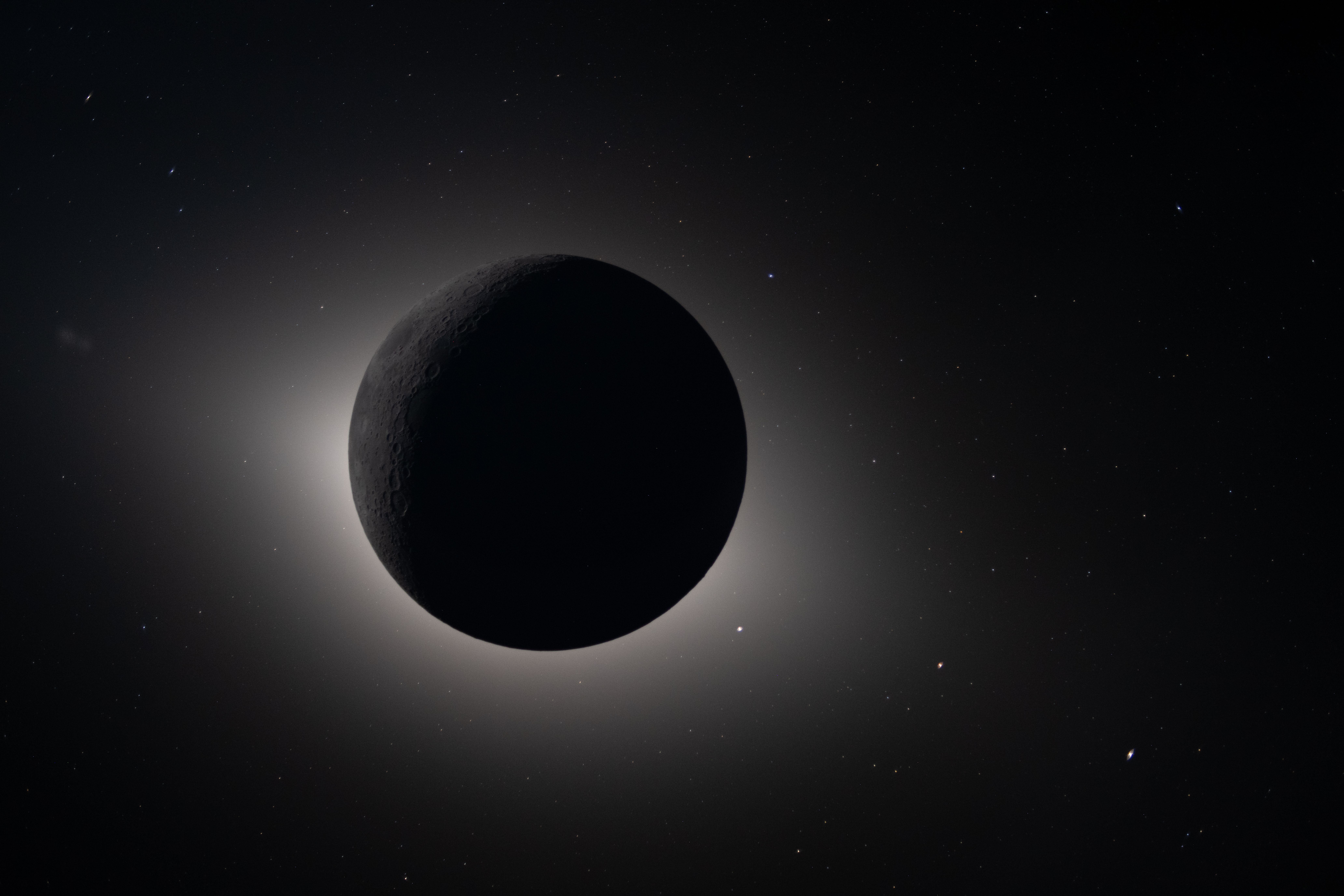
Similarly, it’s in Artemis's picture of the Moon in front of the Sun that planets and stars become visible. The portion of the Moon illuminated in that image is due to Earthshine, light reflected by Earth onto the Moon. So, space is a lot more starry than many images (and fictional depictions) have led us to believe. It’s just really difficult to show it.

 1
1