Nature
 PUBLISHED




The idea of an oasis rising in the middle of a desert to quench the thirst of a stranded soul might sound like something out of a survival movie, but it has become the reality in one of the driest places on Earth.
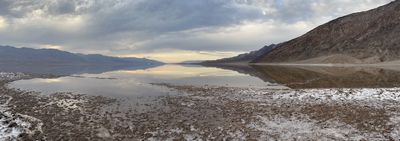
In Death Valley National Park, the aftermath of Hurricane Hilary has created a rare lake in the middle of the park. The storm dropped 5.6 centimeters of rain (2.2 inches) in a 24-hour period, after it struck late on August 19. This is equivalent to an entire year's worth of rain for the area.
Death Valley is one of the hottest places on Earth, with record temperatures recorded here of 54.4°C (130°F) in June. It may have also had the hottest midnight ever recorded.
“This is a really special time,” said Superintendent Mike Reynolds in a news release. “It’s pretty rare to see a lake in Death Valley! Badwater Basin has a temporary lake that is several miles long. The lake is only a few inches deep and may dry up within a few weeks.”
Park rangers took a boat on the newly created lake, measuring the lowest point at the time to be 0.3 meters (1 foot) deep. The Death Valley National Park team posted on their Facebook page, showing another of the short-lived ephemeral lakes.
The park was closed because of the flooding, damage to roads, and lake formations, but reopened on October 15.
“This was the longest closure in Death Valley National Park’s history,” said Reynolds. “I am excited to welcome people back to enjoy their park!”
While this might seem like a rare event, such extreme weather might be becoming more common. In 2022 the area was also struck by heavy rainfall causing devastating flooding, while a lake also formed in Death Valley after heavy rains in 2019.
[H/T: Live Science]