Nature
 PUBLISHED


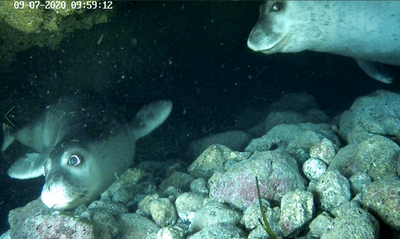


A resident mob of Mediterranean monk seals had been spotted regularly swimming along the shores of Greece's idyllic Ionian Islands, but every time scientists arrived to document them resting, the seals vanished. The beach-side caves were empty, while initial searches in the nearby underwater caves turned up little. It took a hidden remote camera to finally crack the mystery.
Just beyond the entrance of the main cave, researchers from the Tethys Research Institute and the Octopus Foundation discovered a small submerged opening leading to a sealed cavity with a pocket of trapped air at the top. They placed a camera there and, upon reviewing the footage, discovered that the seals had sought refuge here in a secret underwater “bubble cave.”
“When we discovered remotely that several seals were inspecting the waterproof camera less than an hour after we installed it, we were really amazed. Very quickly, we had this ‘eureka moment’ because we were looking at the factual confirmation of the intuition they might be hiding somewhere,” Julien Pfyffer, study author and president of the Octopus Foundation, told IFLScience.
Inside their hidden refuge, the seals were caught doing what seals do best: snoozing. Footage captured them calmly floating at the surface, sleepily napping, or lying motionless on the cave floor in deeper slumber. Some were even observed in the strange suspended state known as "bottling," in which seals float vertically to rest. Occasionally, they would do this upside down, with their nostrils beneath the water, seemingly unbothered by their inability to breathe.
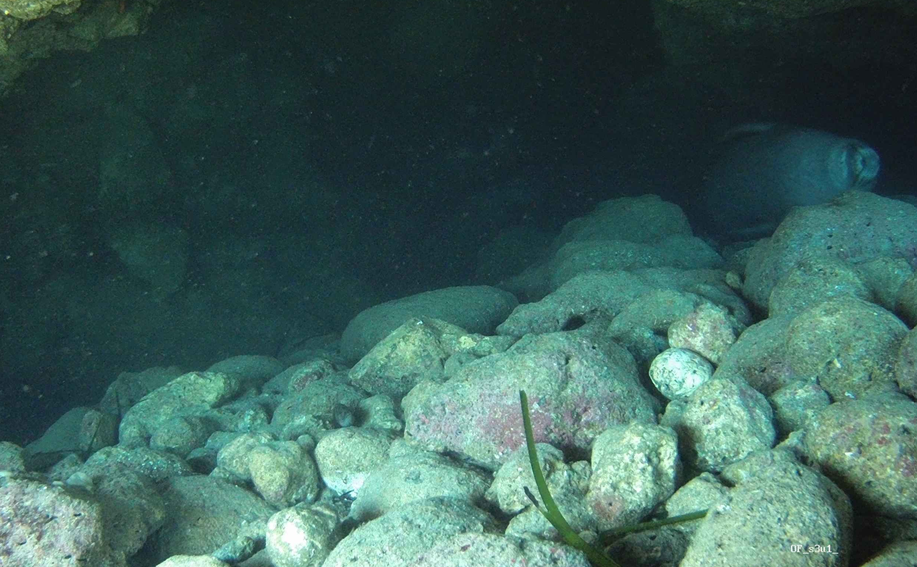
While scientists had previously suspected monk seals might occasionally duck into bubble caves, they didn’t anticipate just how central these hidden chambers were to the seals' lives. Over the 141-day monitoring period, the animals used the main cave on just 21 percent of days, but retreated to the bubble cave up to 84 percent of days, sometimes alone, but occasionally in groups of two or three.
“Before this discovery, I believe some scientists had the intuition that Med monk seals were temporarily using these bubble caves, but not to this extent. Additionally, scientists did not have proof – namely pictures and videos – for such a long time,” Pfyffer added.
As charming as it sounds, this behaviour may hint towards something troubling. The researchers believe the seals are seeking shelter from human activity, particularly during the busy summer tourist season, when the coastline is wracked with beachgoers, boat traffic, and noise.
This is especially concerning since the Mediterranean monk seal is considered to be the rarest pinniped (the group including seals, sea lions, and walruses) in the world, with just a few hundred individuals remaining in the wild.
This study focused on one small part of the Mediterranean, but the researchers say that caves likely play a fundamental role in many seal populations. Pfyffer explained that prior surveys had identified several types of seal-friendly cave habitat: some offering dry ground for resting, others with enough sandy space for females to give birth, plus those — like bubble caves — providing a sheltered place to float and rest briefly underwater. That last category, he noted, had long been considered as a secondary hiding place, yet appears to be far more widely used than anyone previously realized.
“All of the different caves have a common feature: an aquatic access and one or two different access to enter/escape. Bubble caves make no exception,” concluded Pfyffer.
The new study is published in the journal Oryx.