


 Humans
 PUBLISHED




The origins of the Celtic languages are cloaked in mystery. With desperately few written records, its story survives only in scattered fragments and faint traces. That’s why linguists at Aberystwyth University in Wales are striving to build the world’s first dictionary of the ancient Celtic languages.
Today, several Celtic languages are still actively spoken in Europe: Irish, Scottish Gaelic, and Welsh in parts of Great Britain and Ireland, and Breton in Brittany, northwest France. There’s also Cornish and Manx, which did fall into extinction, but have since been brought back from the abyss by revivalist movements.
All belong to the same branch of the Indo-European language family and ultimately trace back to a group of ancestors known as Proto-Celtic. These long-gone languages were once spoken across much of Europe, but we know tantalizingly little about them.
“We don't really know at what point Celtic emerged. The earliest extant texts in a Celtic language date from the early sixth century BCE, from northern Italy, a language that modern scholars call Lepontic,” Dr Simon Rodway, project leader and Senior Lecturer in the Department of Welsh and Celtic Studies at Aberystwyth University, told IFLScience.
To fill in the story, Dr Rodway and his team aim to pull together the scattered evidence of ancient Celtic languages in Britain and Ireland, including everything from Celtic place names and personal names recorded in Greek and Latin texts to the handful of inscriptions left behind in Roman Britain.
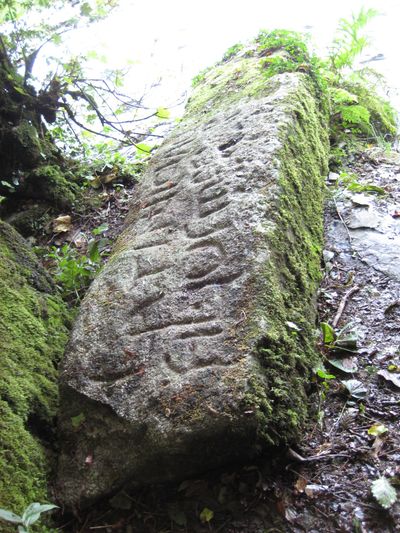
An invaluable source will be the inscriptions carved in the “Ogham” alphabet across Ireland and Britain. Around 400 or so surviving stone monuments bear these markings, believed to express a very early form of Irish uttered around the seventh century CE.
“While it is certain that non-Celtic languages were spoken in these islands before the Celtic languages, and for some time alongside them, we have no uncontroversial direct evidence for those languages, and hypotheses about them range from the cautious to the fanciful. A full collection of the available evidence will allow us to sort the wheat from the chaff,” Dr Rodway told IFLScience.
The findings are set to be published in a physical book that not only documents these ancient languages, but also explores theories about other languages spoken in prehistoric Britain and Ireland that may be linked to early forms of Celtic.
“As well as being of interest to modern speakers and students of the Celtic languages, this sort of research is very useful to prehistorians from other disciplines, such as archaeologists and archaeogeneticists,” explained Dr Rodway.


 1
1