Nature
 PUBLISHED
 4
4


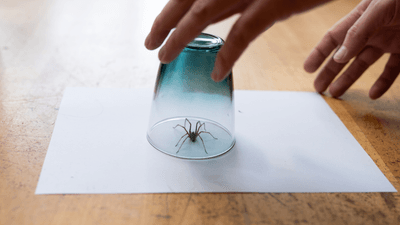


There’s a spider in my bathroom at the moment. Naturally, I’ve fully anthropomorphized it. Given him a gender. A job. I say hello whenever my own business brings me to his place of work, but just what is a spider doing setting up shop in a bathroom? Wouldn’t it be kinder if I were to scoop him up in a glass and put him in the garden with the bugs? No, no it wouldn’t.
In fact, if I were to put this spider outside, its chances of survival would be much lower. That’s because house spiders, so says Rod Crawford – arachnologist at the Burke Museum and social media legend – are called house spiders for a reason.
“The American populations live almost exclusively indoors, and outdoor habitats like yards and forests, they wouldn’t have a chance,” said Crawford in a YouTube video. “They’re just not adapted to it.”
So just how does a spider – a group of arachnids that have existed on Earth for around 400 million years – become adapted exclusively to human-made buildings? Isn’t it a bit bougie for this spider to have claimed my bathroom as its home?
It’s thought that humans having been building things to live inside for hundreds of thousands of years, possibly even millions. According to Crawford, spiders have been moving in with us since at least the days of the Roman Empire. That means we’ve been housemates for at least 1,500 years.
Humans haven’t changed much in that time, but a few millennia is plenty of time for spiders to evolve and adapt because they have much shorter lifespans. That means more generations, which in turn means more opportunities for genetic changes and adaptations to occur.
We have seen this in the wasp spider (Argiope bruennichi), which took only a few decades to expand its range from the Mediterranean to northern Europe in the face of climate change. In so doing, it defied expectations as to how quickly this kind of genetic adaptation could occur.
Thousands of generations of adaptations mean that the house spider in my bathroom is now a perfect fit for its environment. So, if I suddenly dump it into an alien landscape (outside) it’s going to have a hard time. A reminder that, while it’s nice to want to help wildlife, most of the time it’s doing just fine on its own.
The only caveat to that for house spiders is if they crawl into a sink or bathtub for a drink and can’t get out. In that instance, Crawford has some sound advice delivered – ever so coolly – with a touch of perspective.
“My inclination would be, help it out of the bathtub, then just let it go on its merry way,” he said. “Of course, since I have a cat it might end up being the prey of a much larger predator. But that’s the breaks.”
It sure is.