Nature
 PUBLISHED
 3
3


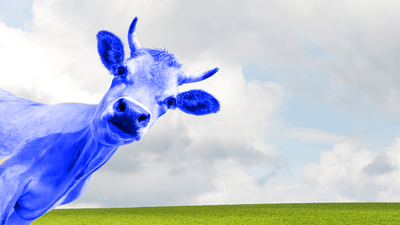


Take a gander at the insect world, or fly with the kingfishers over the stream, and you’ll be met with dazzling blue feathers and scales, and a whole range of other hues besides. But turn your attention to the mammal section of the animal tree and suddenly the color blue becomes a lot rarer. How come fur doesn’t contain the blue shine seen in these other taxonomic groups? We take a closer look.
Color in the animal world is mostly expressed in one of two ways. One is that pigments in the skin, hair, fur, or feathers may express as bright colors.
One such skin pigment is melanin, responsible largely for black pigment; albinism is the absence of that pigment, leading the individual to be totally white.
Other pigments that are common in mammals include eumelanin and phaeomelanin. Eumelanin is responsible for black and brown colors, while phaeomelanin gives a reddish-brown tinge that can be seen in red and yellow fur. Combinations of these pigments can result in different strengths of color, banding, and can even change as the animal ages.
Color can also be expressed in a structural way, where the makeup of the feathers or fur can reflect light in such a way that it appears to be a certain color. This is common in insects such as butterflies and even in bird species like flamingos.
Primates appear to show one of the most diverse and complex ranges of colorations of mammalian groups. The so-called blue monkey (Cercopithecus mitis) has, like other mammals with its name – blue whale, blue wildebeest – a slate grey coat that can look blue under certain lighting conditions. But the coat is sadly not actually blue.
"Just like humans, other mammals are constrained by evolutionary history," Shannon Farrington, Senior Keeper at ZSL London Zoo, UK, told IFLScience's CURIOUS magazine. "Would it be useful to have blue or green skin or pink eyes? Would it help us to survive any better than we already do? Many animals have undergone thousands of years of development to become exactly what they need to be to survive."
In mandrills, their distinctive facial coloring is another consequence of the structures inside cells – the arrangement of the protein fibers within the skin scatters the light to reflect a blue coloration. "Both the face and the posterior of the males are an incredibly striking combination of blue and red to help them attract females and show their dominance," said Farrington.
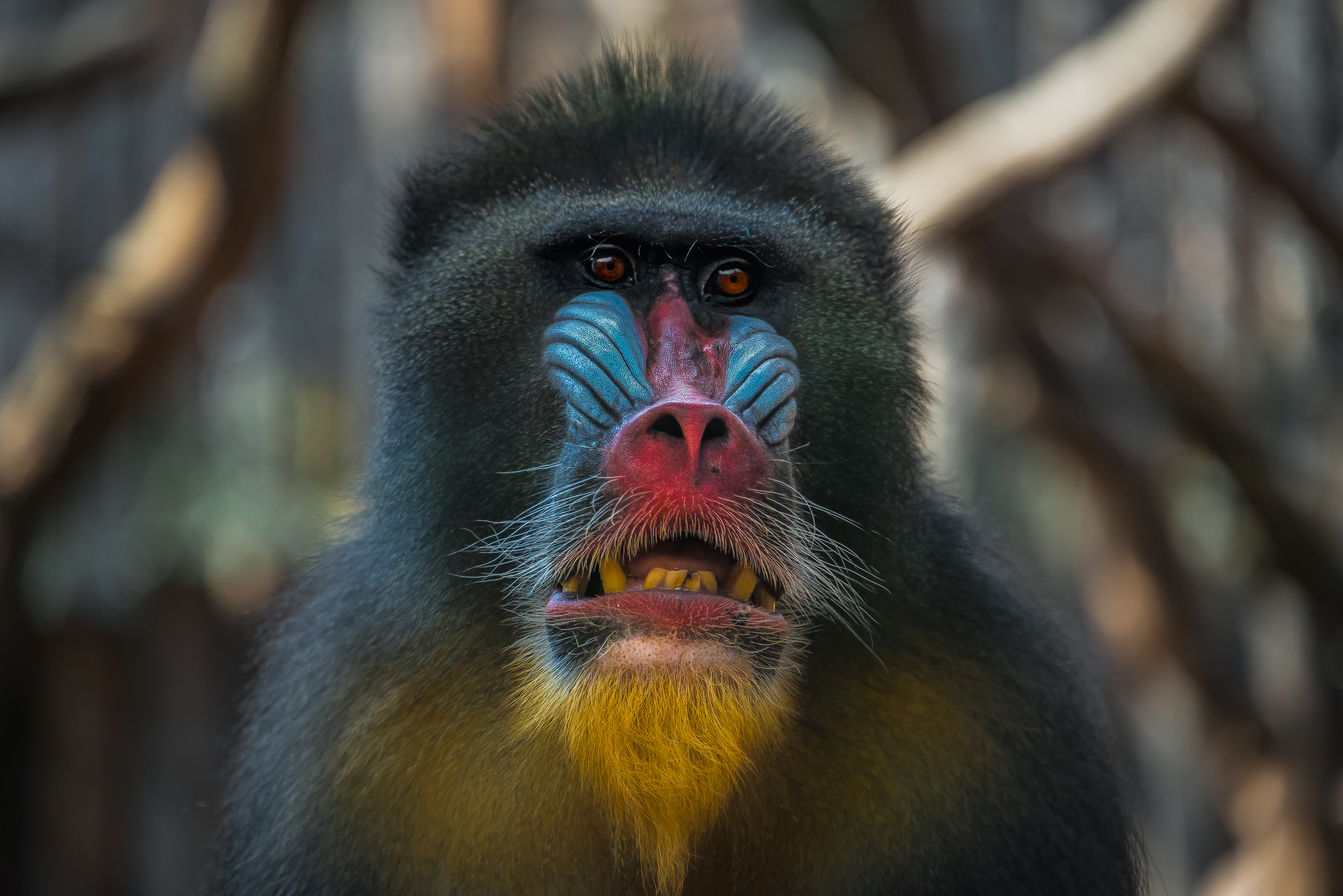
This is also seen in the blue scrota of the vervet monkey, and is known as the Tyndall effect after the person who worked out why the sky looks blue, although that came to be known as Rayleigh scattering after Lord Rayleigh who studied the effect in more detail. The Tyndall effect also explains why people have blue eyes without having any blue pigment.
So it seems that there are not any truly blue mammals out there – and in case you are wondering, Farrington confirmed that there aren't any truly green ones either.