Nature
 PUBLISHED


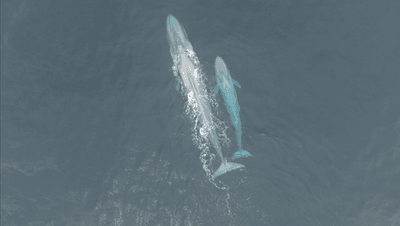


Blue whales might be some of the most iconic creatures on the planet, but for all their impressive features, there’s still plenty we don’t know about them. One particularly confounding mystery is why their calves are so rarely seen – but a new study has come up with an interesting proposal as to why.
Not only is it super rare to see a blue whale give birth – it’s only been recorded twice, once in 1911 and again in 1946 – but it’s also incredibly uncommon to see blue whale calves in general. Out of all the blue whale sightings worldwide, mother-calf pairs make up just 3.1 percent.
This doesn’t make sense; though blue whales are far rarer today than they were before the rise of commercial whaling, scientists know that mature females calve roughly every two to three years. This kind of pregnancy rate is much higher than you’d expect from the number of mother-calf sightings.
There are multiple potential explanations for this, and so Trevor Branch, a University of Washington professor of aquatic and fishery sciences who has previously studied blue whales, set out to determine the most likely one.
Branch used long-term field study and whaling record data on the proportion of blue whale calves seen in different areas of the world to see if they could be explained by any of seven different theories. These included the timing of calving and weaning, but also low birth and calf survival rates.
Finding out why isn’t just a matter of wanting to catch a glimpse of more blue whale babies; it gives scientists a better understanding of what’s going on with blue whale populations, which can help to inform things like future research and conservation strategies.
According to Branch, the most promising explanation was timing; the data showed there were higher proportions of calves in winter regions, and lower proportions in summer regions.
“My conceptual model can explain the mystery of the missing calves: Blue whales produce calves, or give birth, shortly after departing their summer feeding grounds, and wean their calves seven months later, just before they return,” Branch explained in a statement.
So why does this mean we see them less? It turns out that most of the field studies on blue whales take place in their summer feeding grounds, before the mothers have popped their calves out.
"This new idea provides an alternative explanation for why some blue whale populations appear to produce very few calves: It's not a failure of calf production, it's because fieldwork in those populations is understandably concentrated in easily accessible summer feeding areas," said Branch.
Well, blue whale biologists, looks like you’d better grab your wooly hats and scarves for your next study – you’ve got some giant babies to find.
The study is published in Endangered Species Research.