Nature
 PUBLISHED




Some members of the bird world are capable of truly amazing feats from flying without flapping for over five hours, to not stopping flying for over 10 straight months. However, all that time in the air can make even the most seasoned flier weary – so where do birds rest when they are flying over the ocean? Let’s take a look.
For some birds, the best strategy is not stopping at all. A study from 2021 looked at five species that flew long distances during their fall migration and found that these soaring species, which included the peregrine falcon (Falco peregrinus) and the osprey (Pandion haliaetus), relied on stable wind conditions to create uplift that helped them save energy for their long journeys.
“Until recently, uplift was assumed to be weak or absent over the sea surface. We show that is not the case,” lead author Elham Nourani said in a statement. “Instead, we find that migratory birds adjust their flight routes to benefit from the best wind and uplift conditions when they fly over the sea. This helps them sustain flight for hundreds of kilometers.”
It is estimated that 2,000 species – or 20 percent of the total number of birds in the world – are regular migrants, according to the RSBP, though some put the numbers even higher. While some land migrants have designated stopping areas that have been used for generations, researchers are finding a higher number of birds using ships as rest stops than was previously thought.
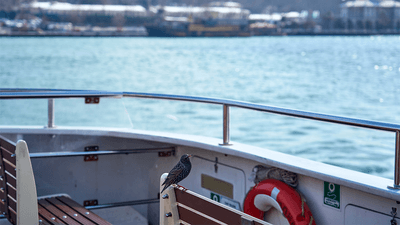
“Stopovers on ships is considered an exceptional and anecdotal event in the ornithological literature,” write the authors of a paper published in 2022. However, these researchers carried out an oceanography campaign within the Mediterranean Sea and recorded 13 different species of bird stopping on their boat during their 25-day expedition.
The team found that the median length of time the birds stopped on their boat was 42 minutes, and think the time may be relatively short because of a lack of food resources that birds could forage on their boat. However, the team believe that most of the birds chose to stop either because they faced bad weather or were in physically poor condition and needed to rest.
By using their data on the birds, they estimate that almost 4 million birds could use ships in the central Mediterranean as stopover sites, suggesting that more research needs to be carried out on the impact of maritime traffic on autumn migration.