Humans
 PUBLISHED


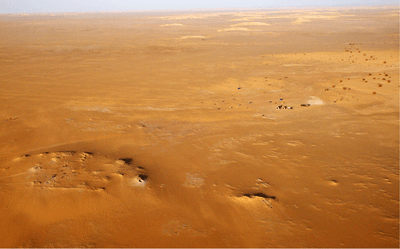


Deep in the Sahara Desert, surrounded by nothing but space and sand, hundreds of ancient human skeletons have lain for thousands of years. Who were they? And what were they doing there? Thankfully, daring bands of archaeologists have ventured to the site and unearthed some answers.
Located in Niger’s Ténéré Desert, often described as a “desert within a desert”, the surrounding landscape is brutal. Nomadic legends call this region “the place where camels fear to go,” a reputation that remains well-earned. Beyond the blinding sandstorms and scorching 49°C (120°F) heat, the area is expansive, barren, and largely roadless. The threat of desert bandits and rebel insurgents also means that modern visitors must be escorted by soldiers toting machine guns on the backs of technicals.
Despite the perils, scientists have been drawn to the Ténéré since the 1950s, knowing it sits atop one of the richest dinosaur beds in Africa.
In 2000, a team led by University of Chicago paleontologist Paul Sereno journeyed into the dunes in search of prehistoric beasts. Sereno was already famous for discovering a string of new dinosaur species in the region throughout the 1990s. But this time, it wasn’t Cretaceous giants that stole the show. Instead, the team had stumbled across the remains of humans, as well as pottery shards, beads, arrowheads, and other stone artifacts.
“It was all there just lying on the sand,” Serano told National Geographic in 2024, “everywhere you looked.”
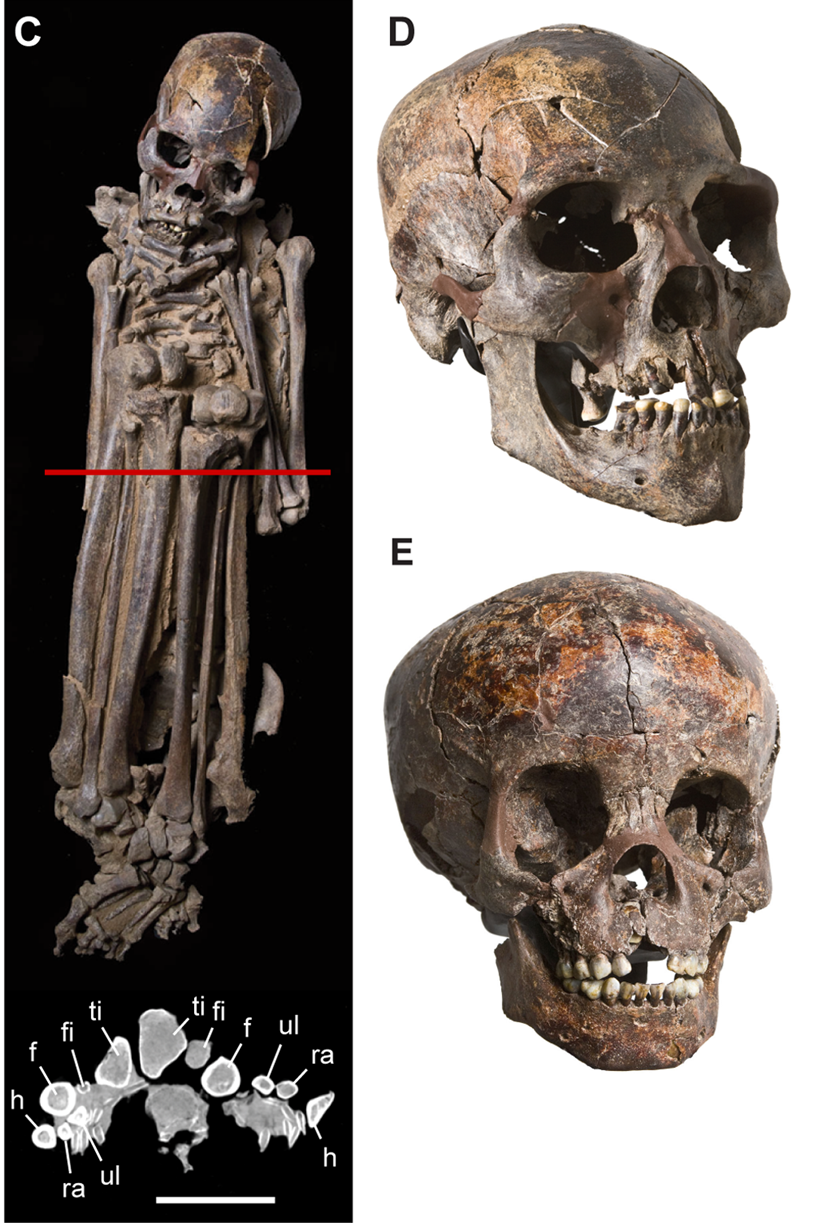
The site became known as Gobero after the local Tuareg name for the region. With further excavations, it became evident that this site was a cemetery containing around 200 human skeletons, as well as thousands of artifacts. Some of the oldest remains date from around 8000 BCE, although the cemetery was used for thousands of years.
The presence of a cemetery in the Ténéré desert, one of the most formidable parts of the Sahara, seems highly unusual in the 21st century. However, its unlikely location makes more sense when you realize it was founded during the era of the “Green Sahara”, a period when monsoons transformed the desert into a lush landscape of lakes, hippos, and crocodiles.
The Sahara is under the spell of a cyclic transformation that changes the area from arid to humid roughly every 21,000 years. The last bout in which the Sahara was a green woodland occurred between 15,000 and 5,000 years ago, slap bang in the middle of when Gobero sprang up. Throughout some of this period, Gobero would have sat alongside a giant freshwater lake, providing the humans that found themselves here with water, fish to eat, and a way of life.
But throughout this period, the climate of the Sahara wavered – and this pattern is reflected in the human cultures that lived at Gobero. Around 7700 BCE, the site was claimed by hunter-fishers who established the Sahara's oldest known cemetery, only to be driven out by a thousand-year drought between 6200 and 5200 BCE. When the rains finally returned, a different group took their place, introducing cattle husbandry to their diverse diet. However, their time was also cut short when aridification swept through the Sahara around 5,000 years ago.
Not only did these two groups have distinct cultures, but they also had striking physical differences. The first were robust and powerfully built, while the second were notably slender. Yet somehow, both chose the same ground to bury their dead.
“At first glance, it’s hard to imagine two more biologically distinct groups of people burying their dead in the same place,” team member Chris Stojanowski, a bioarchaeologist from Arizona State University, said in 2008. “The biggest mystery is how they seemed to have done this without disturbing a single grave.”
Gobero may just be the beginning of the story. The Sahara is an ever-shifting landscape of dunes almost the size of the contiguous United States, and the vast majority of it has never been systematically surveyed. If a site as extraordinary as Gobero could lie undiscovered for millennia, only to be stumbled upon by dinosaur hunters, the desert is almost certainly holding more secrets; the next revelation may only be a sandstorm away.


 4
4