Space and Physics
 PUBLISHED
 32
32


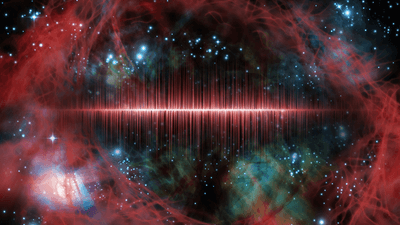


If there are alien civilizations out there close enough to pick up our stray signals, there's a non-zero chance that amongst the first transmissions, they could receive the opening of the 1936 Olympic Games, meaning our first contact with another species (in the unlikely event that they picked them up) could include a speech by Adolf Hitler.
"This wasn't the first broadcast, of course," senior SETI astronomer Seth Shostak explained to RealClearScience. "But it was at a high frequency that might make it through the ionosphere."
In the film Contact, this ended up being the first message humanity received from an alien civilization. The beings sent the signal right back at Earth, not realizing the impact sending broadcasts of Adolf Hitler from space would have on the species they were attempting to initiate contact with. It's a bit like if you said hello to a passing stranger, and in response they accidentally regurgitated a chapter of Mein Kampf.
Thankfully, we likely won't have to go through this scenario, with signal strengths too weak to be detected by alien civilizations.
"It would have been very low power, and with a non-directional antenna," Shostak continued. "The idea that aliens might pick it up is pretty far-fetched."
But, of course, we could end up receiving far more terrifying first transmissions, as people have been discussing over on X (Twitter) and Reddit.
At the moment, likely due to a recent TV series that will not be named, people mainly seem to be focusing on hearing warnings from other civilizations.
According to some solutions to the Fermi Paradox – or the question of "where is everybody?" – the answer is that advanced civilizations are deliberately hiding themselves, out of fear of their own destruction.
Another fear is of an ambiguous message; that aliens will give us few details, other than that they are on their way.
While not enough information is considered terrifying, people also appear to worry about alien civilizations that are overfamiliar with Earth.
There is one theory – known as the Zoo Hypothesis – along these lines. It proposes that aliens are aware of us but keep us isolated in a "zoo" to let us evolve and progress, just as humanity sets aside land as nature reserves and does not contact uncontacted tribes. According to this hypothesis, we could then be contacted when we have achieved sufficient technological and societal maturity, perhaps welcomed into a galactic community.
Despite the fear that contacting an alien civilization will likely involve (even if they are friendly, humans have a pretty solid track record of fearing the unknown), there may be one idea that is scarier.
Perhaps (though we'd bet against it) there are no aliens at all, and Earth contains all sentient life.