Nature
 PUBLISHED
 1
1


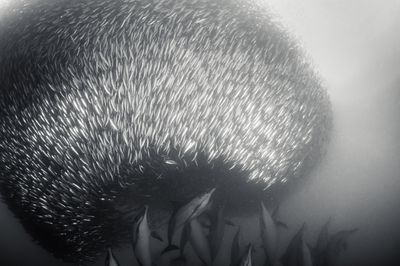


The migration of wildebeest in a massive loop around the plains of the Serengeti is undoubtedly one of the most spectacular events on Earth, but it turns out it may have a rival when it comes to the title of the largest animal migration of all.
Take a look at biomass – in this case, the total mass of one animal species in a particular area – and the annual sardine run gives wildebeest some serious competition.
The sardine run takes place each year along the eastern coast of South Africa, with huge shoals of the fish making their way from the cooler waters off the shores of Cape Agulhas northward toward KwaZulu-Natal and the Indian Ocean.
When we say these shoals are huge, we really do mean huge – they can stretch more than 7 kilometers (4.3 miles) long, 1.5 kilometers (0.9 miles) wide, and 30 meters (98 feet) deep. Combined, there can be billions of sardines participating in the migration.
While this might earn it a place among the largest animal migrations (if not the largest), the sardine run has its downsides – one pretty big downside, in fact. The hordes of sardines don’t go unnoticed, and a feeding frenzy ensues, starring a large cast of predators ranging from dolphins and sharks to seabirds and fur seals.
If they’re only going to end up as a dolphin’s dinner, why do the sardines keep going with this migration year after year? They must benefit from it too, right?
According to one study, apparently not.
Using genetics, the 2021 study’s authors determined that most of the sardines participating in the run have origins in the Atlantic Ocean, where waters are cooler. They suggest that brief upwellings of cold water in otherwise warm southern waters trigger the fish to travel; when the upwelling ends, they find themselves trapped in an area they’re not adapted to and with predators aplenty.
As a result, the authors concluded the sardine run to be “a rare example of a mass migration that has no apparent fitness benefits” and is essentially an ecological trap.
Not everyone agrees – William Sydeman, ecologist and president of the Farallon Institute for Advanced Ecosystem Research in Petaluma told The Scientist that he’s not convinced, suggesting that the sardines “migrate there in order to take advantage of temporarily productive ocean conditions at the western cape.”
“Why don’t they just do the reverse?” if the conditions change, he posed. “Why don’t they move back?”
But if the study’s conclusions are correct, it might not necessarily mean that things have always been this way. In a statement, one of the study’s authors, Professor Peter Teske explained: “We think the sardine migration might be a relic of spawning behaviour dating back to the glacial period. What is now subtropical Indian Ocean habitat was then an important sardine nursery area with cold waters.”
If that’s the case, it suggests that climate change might affect the future of the sardine run too.
“Given the colder water origins of sardines participating in the run, projected warming could lead to the end of the sardine run,” added fellow author Professor Luciano Beheregaray.