Space and Physics
 PUBLISHED




Unless someone happens to have had an unusually extreme early bedtime for the entirety of their life, we’ve all seen plenty of sunsets in our time. Given the wealth of them that end up on Instagram stories, they look pretty great too – but have you ever wondered what they look like from space?
It’s not like most of us can pop up there and find out (although you never know) but thankfully, astronauts aboard the International Space Station (ISS) like to snap a few pictures whilst they’re there, giving us a brand-new perspective on a regular part of day-to-day life on the planet.
One of the most spectacular images of a sunset from space was captured by European Space Agency (ESA) astronaut and geophysicist Alexander Gerst, during his second stint on the ISS as part of the Horizons mission.
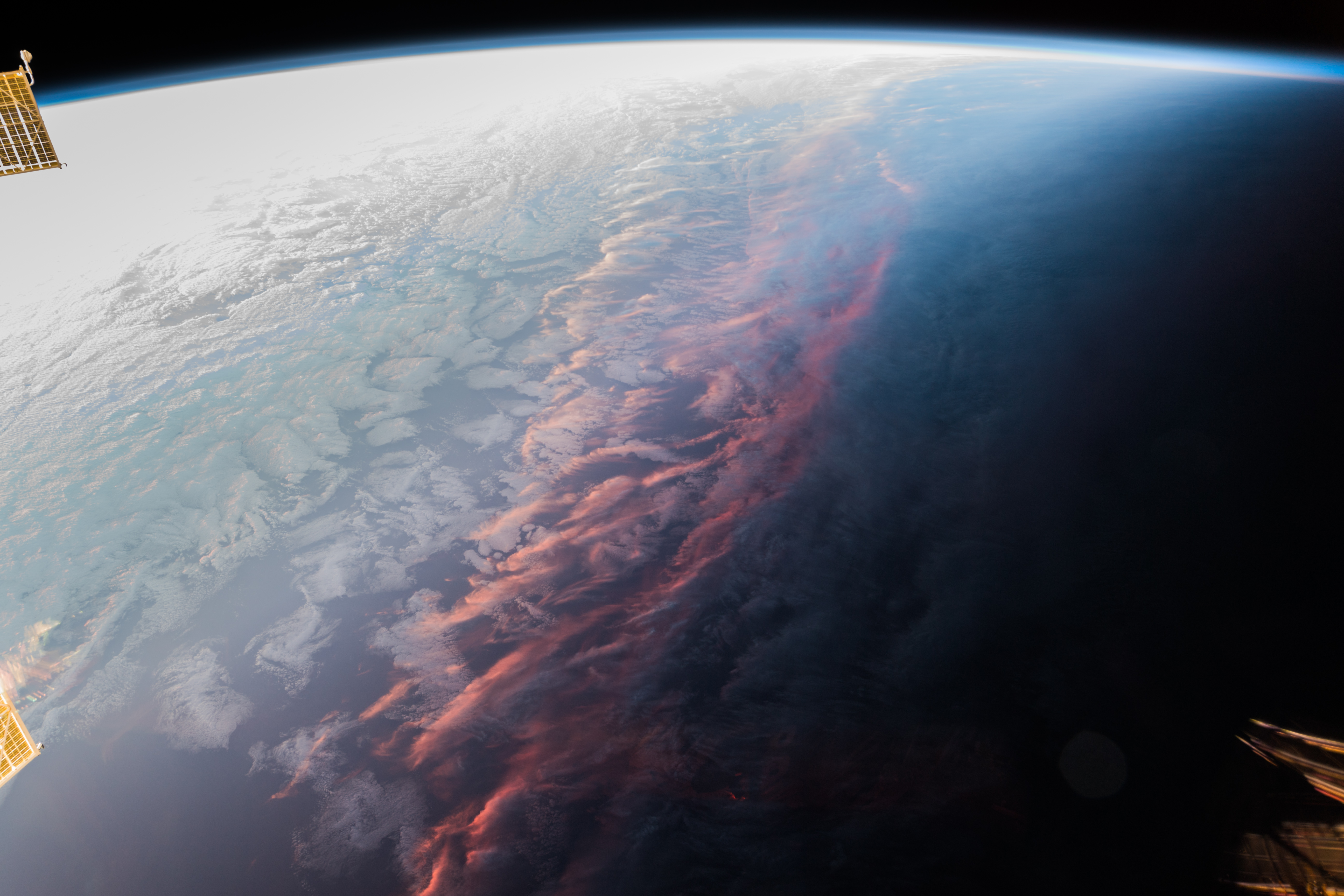
In the image, taken on October 18, 2018, clouds in Earth’s atmosphere can be seen illuminated in that classic sunset pink-ish orange, though the dark night sky is also visible creeping up close behind them.
But that’s not the only view possible – an image snapped by a member of NASA’s Expedition 49 crew back in 2016 also shows a fiery perspective of the layers of Earth’s atmosphere during sunset over South Atlantic.
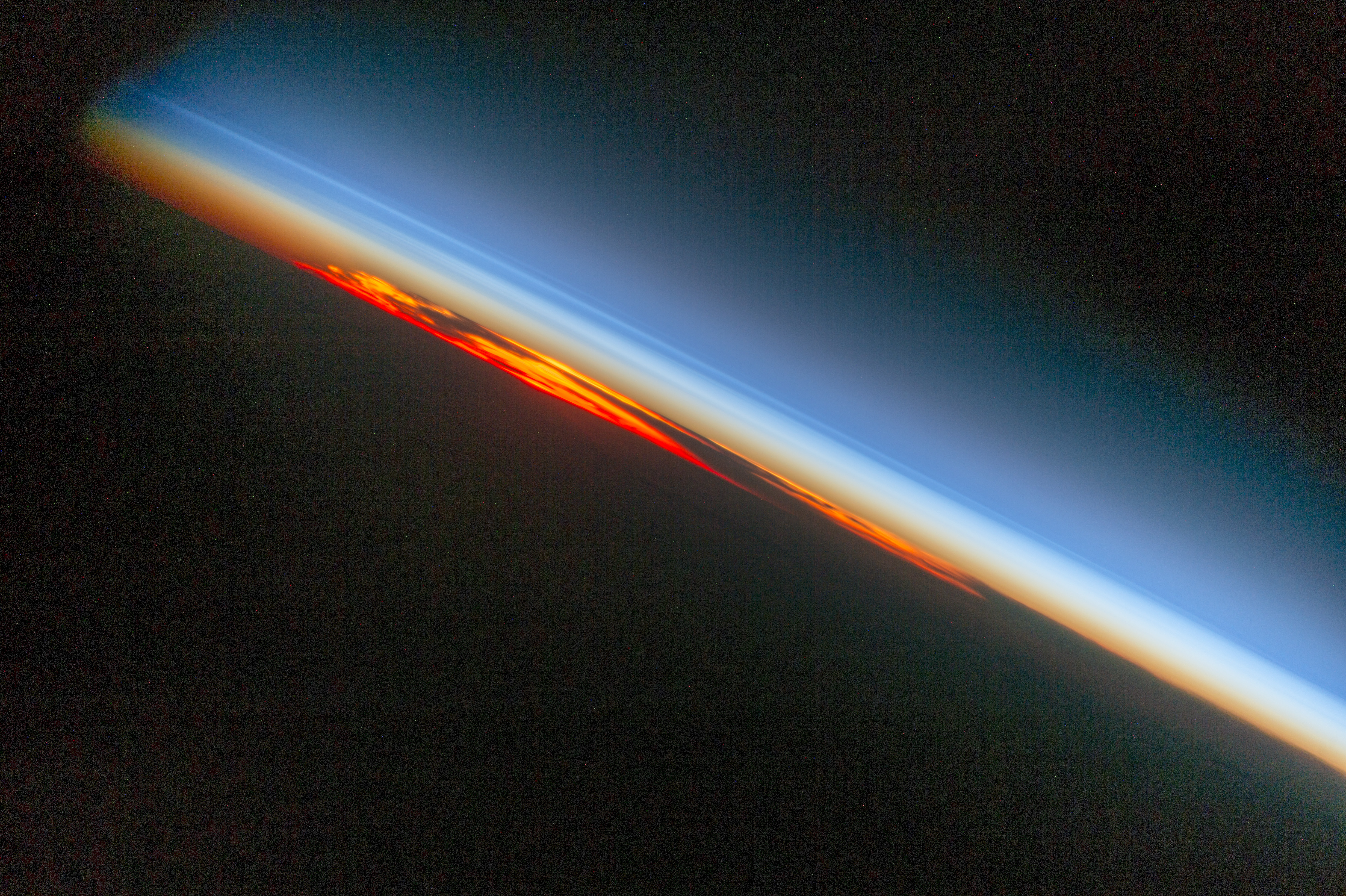
The bright orange-red line is within the troposphere, the lowest layer of Earth’s atmosphere and home to clouds, smoke, and dust particles. It’s the latter two that give sunsets their distinctive color, which explains why the red seen in this image is quite so vivid.
Though the ISS was halfway between South America and South Africa at the time, from the station’s altitude astronauts are able to see over 2,000 kilometers (1,243 miles) to the horizon. Easy enough, then, to capture the influence of Patagonian Desert dust, which is blown out towards the ocean by strong winds.
Since the ISS orbits the planet once every 90 minutes, that means those onboard can witness 16 such striking sunsets a day – and the same goes for sunrises, though most of the time they’re missed by astronauts because of sleep or work.
Thankfully, Gerst’s photography steps up to the plate once again to show what others can’t see. During the Horizons mission, the astronaut captured a timelapse of a sunrise, with two photos taken every second.
The result is somewhat reminiscent of an eclipse at first (at least, the view we have of one on Earth), with a faint line of light growing across the screen until a big burst of light (aka the Sun) comes into view and begins to light up the land below.
And there you have it, now you know what a sunset and sunrise look like from space. Everybody say “thank you astronauts!”