Nature
 PUBLISHED
 4
4


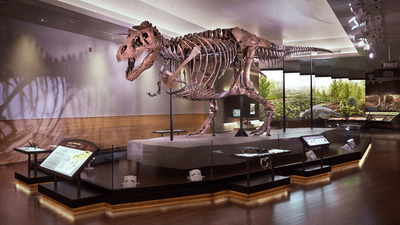


Tyrannosaurus rex was one of the greatest predators planet Earth has ever seen. With around 50 to 60 banana-sized teeth lining their powerful jaws, they could kill and eat animals in just a few chomps. Only downside? They probably had rancid breath.
Yes, if you’ve ever been curious as to what a T. rex’s breath might have smelled like – we have good news! You can smell it for yourself at the Field Museum in Chicago. Why? We asked exhibition developer Ben Miller.
“We were recreating our exhibit about Sue the T. rex, which is our sort of star specimen. It's the most complete, best preserved T. rex yet found, and what we were really interested in doing was giving Sue a lot more context than it had in the past,” he told IFLScience. “So, really doing everything we could to recreate the environment that the T. rex would have lived in and sort of show visitors what it would be like to meet a T. rex in that environment.”
As well as recreating a number of the plant smells that would have existed in T. rex’s environment, they decided to go one step further and figure out what these predators' breath would've smelled like. Something that’s easier said than done.
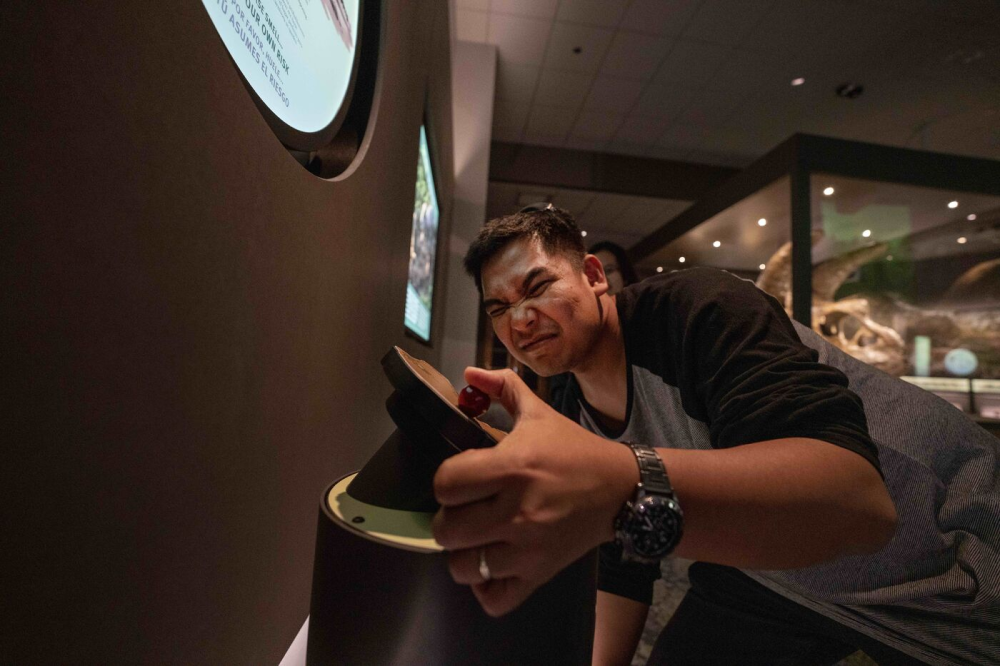
“It's hard to find T. rex breath smell off the shelf, but we did end up finding that there is a synthetic decomposing flesh smell,” said Miller. “The reason that exists is because they use it to train disaster response dogs. So, that smell that we were able to purchase is kind of the main component and the mix that we made for the T. rex breath.”
Scientists have good reason to believe that T. rex’s breath would’ve reeked of rotting meat because of what we know about their diet, behavior, and dentition.
“My predecessor Frank Knight developed a T. rex breath scent for the Natural History Museum's new animatronic T. rex in 2001,” said Liam Findlay, Themed Attraction & Historical Scenting Consultant at AromaPrime, to IFLScience. “He was advised by paleontologists, and the main clue available was fossil evidence.”
“T. rex had teeth like knives, and it had been found that they got meat stuck between them. If scavenged, this meat would have already been rotting, but it would have rotted regardless once stuck. You can imagine what the final scent was like, based on this! It was actually considered too repulsive to diffuse around the display, so a prehistoric swamp scent called Maastrichtian Miasma was developed to replace it.”
The Field Museum came across a similar issue when perfecting their T. rex breath smell, which Miller says staff were encouraged to test over and over again until they hit the sweet spot of disgusting/interesting rather than disgusting/I’m throwing up. By all accounts, the public loves it.
“People enjoy it to this day,” said Miller. “It's been on display like six or seven years now, and every time I'm down there, you see kids daring each other to smell it, or lying to their parents and saying, 'Hey, check out this smell. It smells really good.'”
“There's always people having fun with it. And it just gives people a new way to think about dinosaurs in particular and what we can imagine about the ancient past.”
Though Findlay wasn’t across the 2001 T. rex breath project at NHM London, he did get stuck in on a curious mission to recreate another of these dinosaurs’ bodily functions.
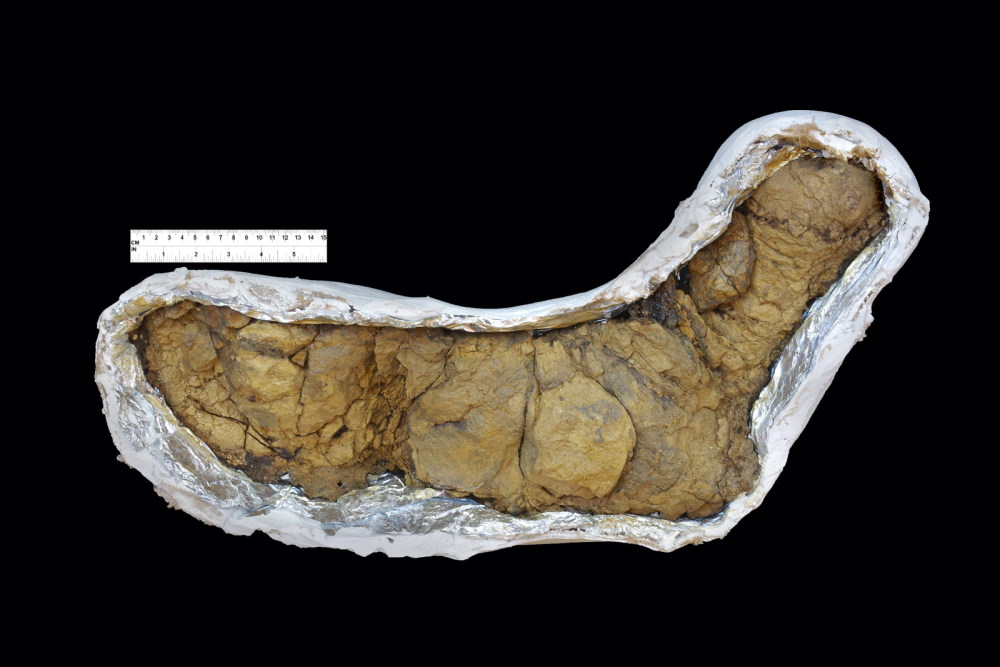
“For the POO! exhibition at Thackray Museum of Medicine, I developed a T. rex poo smell,” Findlay said. “This was accompanied by recreated penguin and rhino poo smells; I was fortunate to have first-hand sniffing experience of the real subjects at Chessington World of Adventures prior to this.”
“Chessington did not have fresh T. rex dung I could sniff, so I went by Meredith Whitfield's suggestion that T. rex poo might have smelt like hyena poo, due to their similar diets. Dr Jack Gann, the curator directing me, suggested that after occasional scavenging for decomposing flesh, the poo might have been especially rancid-smelling. Based on this information, I asked my colleague Catherine to blend oils with particular odours at AromaPrime's olfactory factory, and she produced samples for Dr Gann to approve.”
The human nose can detect one trillion odors, so it's hardly surprising that smell is such a great way to engage visitors. T. rex breath and poo might not go down well as a Yankee Candle, but did you know scientists have identified the most universally pleasing smell?