Nature
 PUBLISHED

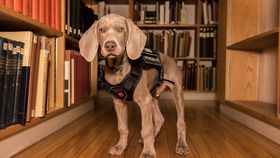


Real talk: The Boston Museum of Fine Arts just hired the cutest security guard and we are totally smitten.
Meet Riley, a 12-week-old Weimaraner puppy being trained to sniff out invasive – ahem – bugs.
Yeah, you read that right. Apparently invasive pests hitchhike rides on museum-goers and new specimens, potentially damaging valuable artwork.
"Weimaraners are very intelligent and have an incredible sense of smell. Riley’s duties as a scent dog at the MFA are well suited to his breed!" said the museum's public relations manager Ashley Bleimes in an email to IFLScience. Riley belongs to Nicki Luongo, director of the museum’s protective services department, who will also be training the pupper.
The museum's deputy director Katie Getchell said to her knowledge Riley is the first pup to take on museum pests.
Insects are a common concern for museums. Using the trojan horse method, they can catch a ride on fabric, wood, plants, textiles, and even books (to name a few). Riley’s keen sense of smell will be adding to an extensive list of measures already in place to prevent infestation.
Museums frequently fall under attack from foreign creepy crawlies. In 2011, some of Britain's biggest museums fell under the siege of webbing clothes moths that chewed through valuable wool, silk, cotton, and other historic fabrics.
It’s not just people that pests hitch a ride on. London’s Natural History Museum opened a state-of-the-art quarantine facility where collectors screen incoming specimens to ensure they are freeloader free.
Curators have a number of clever ways to deal with unwelcome nuisances. Hidden sticky traps allow them to catch and evaluate what type of pest is eating, pooping, or digging its way through the museum. Once identified, specialists will use a combination of climate control methods to kill the bugs.
Here's where Riley comes in.
If you haven’t already learned from your own pooch, dogs’ noses are pretty impressive. They have as many as 300 million olfactory receptors – us measly humans have just 6 million. Not only that, the part of a dog’s brain that is devoted to analyzing smell is 40 times greater than ours. Imagine coffee smelling 40 times better than it already does?
Even though Riley will primarily work behind the scenes and still needs more than a year of training, he’s already a hit in the Twittersphere.

 1
1