Nature
 PUBLISHED
 12
12


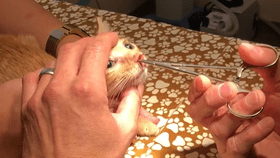


This is the eye-watering moment a large pulsating parasite was removed from the nose of a tiny kitten.
The cat was brought to Animal Care East veterinary hospital in North Carolina suffering from a dripping nose and chronic sneezing. After being sedated, veterinarians poked around the kitten’s nostril and discovered the source of the trouble: an abnormally large Cuterebra botfly larva.
"Usually they are only roughly a centimeter or so in length and found burrowed into the skin – this was the largest one I have ever seen... and it was in the nose!” the person who filmed the footage told Newsflare.
"The kitten is back to better now with no concerns reported by the owner; no more discharge, no more sneezing."
The parasite is the larval stage of a botfly belonging to the Cuterebra genus. The insects will lay their eggs near the burrows of wild mammals in the hopes of getting picked up by a passing critter. However, the parasites are commonly seen in pet cats and dogs, picked up from sniffing around the areas where the eggs are laid. It’s also not unheard of for humans to be infected with this genus either, although it’s only been documented in a handful of medical case reports.
Once attached to their host, the eggs hatch and the larvae enter the body through any opening, whether it’s a wound, an ear, or a nostril. Typically, they migrate through the body into a cavity where they feed on their host and grow. Eventually, they will leave the host and the larva drops into loose soil, developing into a pupa and eventually an adult fly. As adults, the flies live a short life of mating and egg-laying, then – boom – death.
They might look pretty gross, but they are typically harmless. Unfortunately, since a bump on the skin is often the only apparent symptom, the infection can often go undiagnosed. As this kitten shows though, they can typically be treated simply by removing the parasite, although some cases require further treatment.