


 Space and Physics
 PUBLISHED



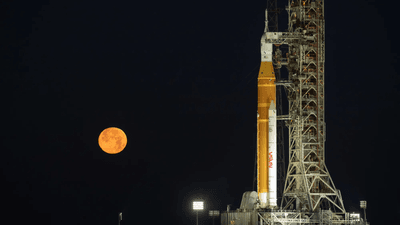


NASA’s Artemis II will take astronauts farther into space than ever, past the far side of the Moon, and back to Earth faster than any other human before. But before that can happen, NASA needs to carry out a wet dress rehearsal, counting down a simulated launch right up until T-30 seconds, with nothing going wrong. After a few issues occurring during the first wet rehearsal earlier this month, the agency is targeting today, February 19, for the next one.
The wet rehearsal will start around 8:30 pm EST (1;30 am UTC), and it is expected to last 4 hours. The mission team will fuel up the Space Launch System, Artemis II’s rocket, with 3,180,000 liters ( 700,000 gallons) of liquid oxygen and liquid hydrogen. One of the issues last time was leaks in the liquid hydrogen fueling, just 5 minutes before the fictional launch time.
The Orion spacecraft will also be powered up, its battery charged, and the craft will be sealed just like it will be when astronauts are in there. The Orion spacecraft had a valve (connected to the hatch pressurization) replaced before the last rehearsal, and during the test, it became apparent that it needed retorquing.
The countdown will go through many stages (you can check the full schedule here), but the focus will be on the last 10 minutes. In the rehearsal, the countdown clock will go down to T-1 minute 30 seconds (1 minute and 30 seconds to launch). It will then stop for up to 3 minutes; in an actual launch, if the pause is less than 3 minutes, then the countdown can continue. If the pause is longer, then the clock goes back to T-10 minutes. In the first test, the clock will resume going down to T-33 seconds before launch and pause again. It will then reset to 10 minutes, and the whole sequence will be tested again.
The full test can be watched live here and on NASA’s various channels, including YouTube, NASA+, NASA TV, X, and the 24/7 live pad camera.
If everything goes well tonight, NASA is targeting the launch on March 6, with 7, 8, 9, and 11 as backup dates. The Artemis II crew is composed of NASA's Reid Wiseman, Victor Glover, Christina Koch, and Canadian astronaut Jeremy Hansen.
These astronauts will break records; there is the possibility that the crew will reach the farthest any human has ever traveled into space, and on their way back to Earth, they should take the title for the fastest humans have ever traveled in space. The mission will last 10 days and will allow astronauts to see portions of the Moon that no other human has seen before with their own eyes.

 1
1