


 Space and Physics
 PUBLISHED


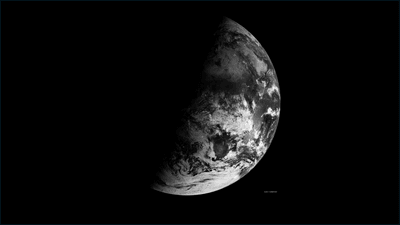


Having the means to see Earth from space is one of science’s greatest achievements and it’s provided us with all sorts of stunning imagery, including an incredible new time-lapse of the line dividing day and night as Earth progresses through the seasons.
Posted to X by ESA Earth Observation, the video is a compilation of single images of the planet taken each day at the same time by Meteosat Second Generation geostationary satellites, captured from September 2023 through to September 2024 – or, very nearly, from one year’s fall equinox to the next.
The result is just 11 seconds long, but it’s a great visualization of how the length of day and night changes in the time frame it represents. The not-so-defined line that marks the transition between the two periods is known as the terminator or “twilight zone”. No relation to the movie and television show they share a name with, but at least it makes the terms easy to remember.
Why does the terminator line move? It’s the same reason why we have seasons, why the days get shorter and longer – the Earth is tilted on its axis, by approximately 23.5°.
This means that – besides the spring and fall equinoxes – the planet is unequally lit by the Sun as it orbits around it. The solstices mark the points at which this is at its most extreme. In the Northern Hemisphere, for example, the June solstice is when the North Pole is tilted closest to the Sun, marking the longest day of the year.
The December solstice, on the other hand, is when the North Pole is tilted furthest from the Sun, marking the shortest day of the year.
However, for a brief time each March and September, around the 21st and 22nd of the month respectively, the Earth’s axis is perpendicular to the Sun. You can tell roughly when in the video this occurs because on these days, the planet is illuminated or in darkness equally, making day and night very nearly 12 hours each back down on the ground.
There are two main reasons why they aren’t exactly equal on the equinox. As the UK’s Met Office explains, the first “is because the Sun appears as a disk in the sky, and the top half rises above the horizon before the centre.”
“As well as this sunlight is refracted by the Earth's atmosphere. The Sun, therefore, appears to rise before its centre at the horizon, giving more daylight than you might expect (12 hours 10 minutes on the equinox).”
The term for when day and night are equal is the equilux, which – if we’re talking about the Northern Hemisphere – happens two to three days before the spring equinox and two to three days after the fall equinox.
Remember to thank us when that comes up in a pub quiz.
[H/T: New Atlas]

 1
1