Humans
 PUBLISHED
 1
1




At Karahan Tepe, which may be the oldest known village in the world, archaeologists have uncovered an 11,000-year-old artifact, and it's a good one, in “a style unlike anything seen before”: a depiction of a human riding on the back of a leopard.
Göbekli Tepe usually gets all the attention. OK, that's for good reason. It was widely thought that complex structures like those seen at Göbekli Tepe could not be built in a time before humanity mastered agriculture around 10,000 to 12,000 years ago. And yet here sits Göbekli Tepe with all its complexities, existing defiantly from around 9600 BCE until today, challenging what we thought. As tepes go, it's pretty up there.
But there is a second tepe (meaning "hill) which deserves a lot more eyeballs as well. Karahan Tepe, also written as Karahantepe, is located around 45 kilometers (27 miles) east of Göbekli Tepe and is thought to have been built at around the same time as its better-known rival.
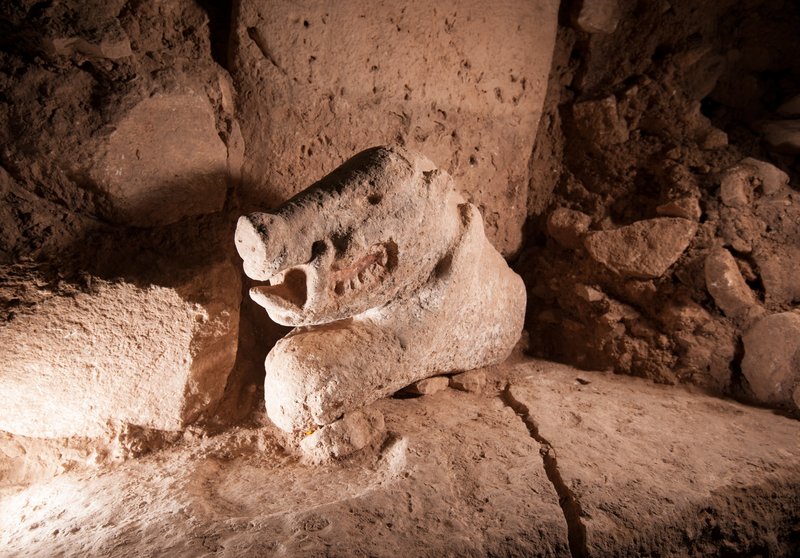
With the proximity in space and (roughly) time, you might expect a lot of similarities between the two sites, but there are a number of key distinctions. While Göbekli Tepe is built from stacked stones, Karahan Tepe's structures are carved from bedrock. And whilst Göbekli Tepe's carvings heavily feature animals, including boars, vultures, and scorpions, Karahan Tepe's sculptures are a lot more human/penis-focused.
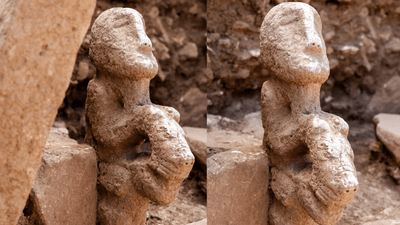
Previous discoveries at the site include a giant statue of a man holding his penis, a second, life-sized sculpture of a man holding his penis, and a third statue of, yes, a man holding his penis. And one Jonny Bravo lookalike.
"The growing number of human sculptures can be read as a direct outcome of settled life," Necmi Karul, the archaeologist leading one dig at Karahan Tepe, told AFP in 2025.
"As communities became more sedentary, people gradually distanced themselves from nature and placed the human figure and the human experience at the centre of the universe."
Animal depictions have been found at the site before too, including a bull and two leopards, none of whom are holding their respective penises. In the latest find, reported by Turkey's Minister of Culture and Tourism, Mehmet Nuri Ersoy, we are treated to a depiction of a human and a leopard, thought to be around 11,000 years old.
Better yet, it depicts a human riding around on the leopard like they were some sort of Neolithic horse.
“We have unearthed a unique 11,000-year-old statue in Karahantepe,” Ersoy said in a statement, describing it as “a composite statue with a style unlike anything seen before.”
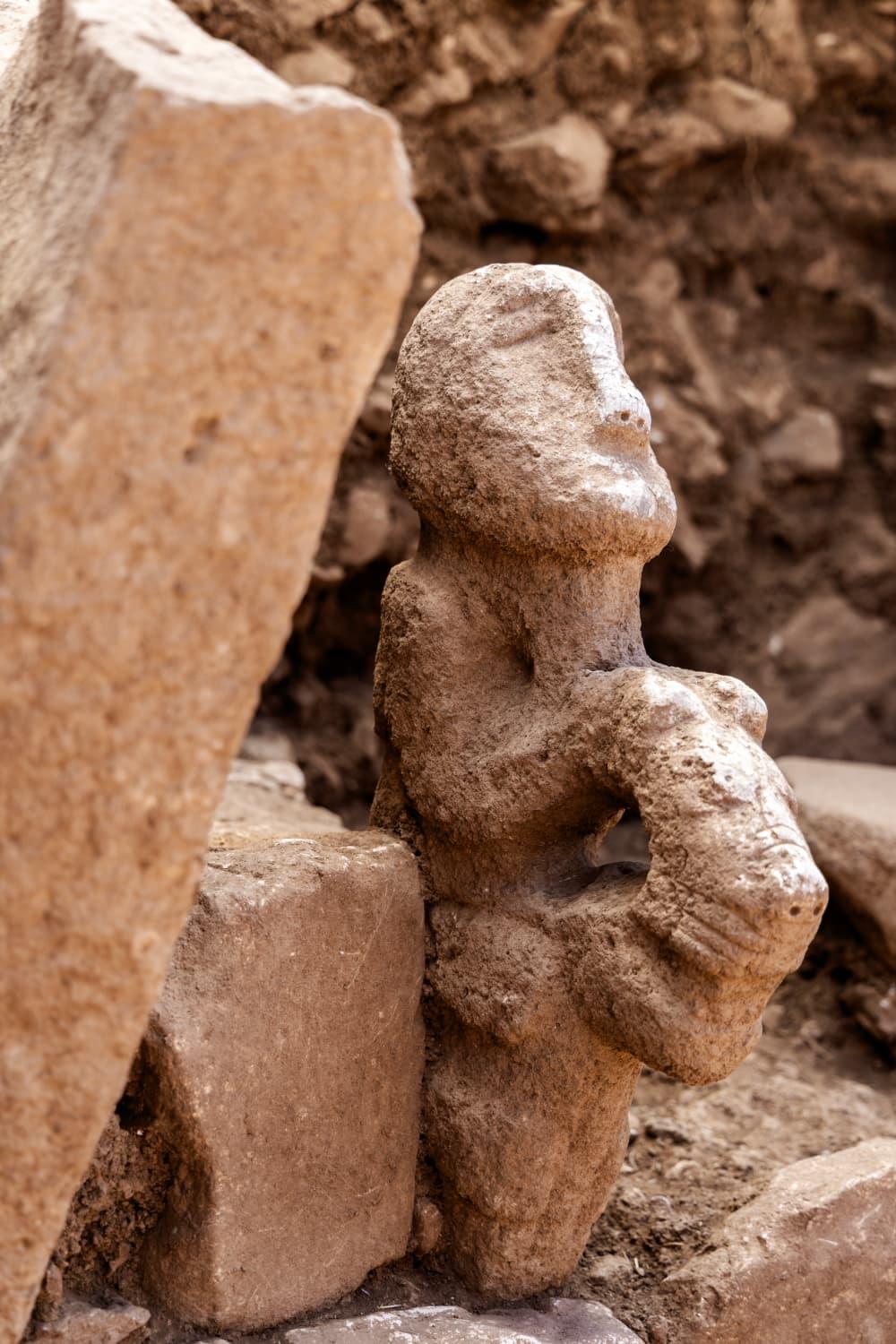
Ersoy described it as 70 centimeters high and having "survived to the present day from where it was left approximately 11,000 years ago."
Interestingly, the exact opposite has also been found depicted at Karahan Tepe: a human with a leopard on their back.
“This special artifact was found on a platform extending along the wall of a structure measuring 3 meters in diameter, with a floor covered in flat stones," Ersoy added. "I believe this discovery, which opens the door to new questions about the earliest periods of human history, will have a wide impact on the scientific community."
Though a very cool find, we will have to wait to hear more as excavations at the site continue, and hopefully more evidence of ancient human activity is uncovered.