Nature
 PUBLISHED


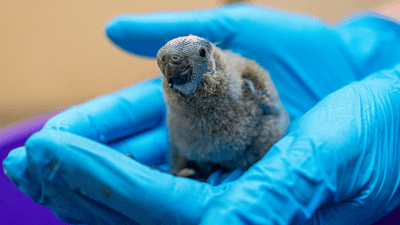


It seems every other day there is a conservation-related problem, with species being declared extinct and lost from the biodiversity of Earth’s natural world. Today however, we bring good conservation news from the bird keepers of Chester Zoo in the UK, where two incredibly rare Mitchell’s lorikeet chicks (Trichoglossus forsteni mitchellii) have hatched.
The first of the precious new arrivals hatched on September 9, with their sibling following just two days later.
These lorikeets are among the most endangered species in the wild, as a subspecies of the scarlet-breasted lorikeet (Trichoglossus forsteni). The remaining few live on the islands of Bali and Lombok in Indonesia, and conservationists found just seven of the subspecies in Bali in 2020.
The population has been decimated because of the illegal wildlife trade that sees these birds hunted and trapped from their habitat on these islands. The market is driven by the idea of giving brightly colored birds as gifts, with more colorful birds seen as more desirable. The IUCN label the scarlet-breasted lorikeet as "endangered", as previous reports suggest a population of around 50 still persist.
“The unrelenting pace of the illegal wildlife trade has pushed the species to the edge of existence, so in 2018 Chester joined an important conservation breeding programme where every new addition is helping to protect the future of the species. We’re now home to 12 of these beautiful parrots, which is sadly more than what has been recorded in the wild in recent years,” said Zoe Sweetman, Parrot Team Manager, in a statement sent to IFLScience.
Fortunately there is a safety-net population in the form of captive individuals across zoos and parks, which is of vital importance to the future survival of the species. In Chad, a successful reintroduction programme from captive bred individuals has seen the scimitar-horned oryx downgraded from "extinct in the wild" to "endangered" after over 500 calves were born.
The team at Chester say the precious new arrivals will one day join the endangered species breeding program, helping to further boost the population. The team is also committed to working in Indonesia, both to protect the birds but also to try and change attitudes around the wildlife trade itself.
“Many of Indonesia’s birds have now largely disappeared from their forest homes. This is why we’ve been working with our partners in Java, the Cikananga Conservation Breeding Centre, for more than a decade to rescue birds and provide the skills to breed them in their own country. Part of this work also includes working with local communities to try and change the culture from trapping birds, to helping protect them, which is a huge task in itself," said Andrew Owen, Head of Birds at Chester Zoo.
The team say that the new pair are being monitored closely, with regular weight checks on the new arrivals, and they plan to determine the sex of the young lorikeets with DNA samples from their feathers.



 1
1