


 Health and Medicine
 PUBLISHED
 1
1


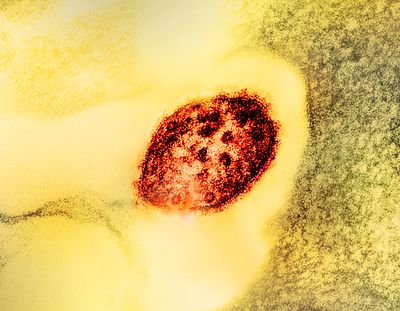


The UK, together with Armenia, Austria, Azerbaijan, Spain, and Uzbekistan, just lost its status as a country that had eliminated measles. With the World Health Organization declaring that the disease is re-established in these nations, and with Canada having met a similar solemn milestone at the tail-end of 2025, all eyes are now turning on the USA to see if it will follow suit.
For UK experts, the news was unsurprising, but no less disappointing for that.
“With thousands of cases of measles in the UK over the last few years, it was entirely expected that the UK would formally lose its measles elimination status before long. To keep measles away we must sustain immunisation of over 95 percent of children, but we haven’t done that,” commented Professor Andrew Pollard, Director of the Oxford Vaccine Group at the University of Oxford, to the Science Media Centre.
“This moment is a miserable reflection of the state of measles vaccination in the UK and a very alarming indication of the risk to our children from this potentially fatal disease.”
In public health terms, a disease is considered re-established when there’s evidence of ongoing transmission of the same strain for at least 12 months. That means there needs to be evidence that different outbreaks within a country are linked and that the disease is circulating within the population, rather than popping up occasionally in short-lived, contained clusters.
The newly reported decisions, taken at the 14th meeting of the European Regional Verification Commission for Measles and Rubella Elimination (RVC), reflect data from 2024 and earlier.
In 2024, the UK saw 2,911 lab-confirmed measles cases, over 60 percent of which were in children aged 10 and under. The most up-to-date figures for 2025 include 957 cases, again primarily in that age group. One child with an underlying health problem affecting their immune system is reported to have died in 2025, as well as one adult due to “late effect of measles infection.”
Measles is highly contagious and leads to symptoms including fever and cough a few days before the characteristic rash appears. Complications such as pneumonia can prove fatal, and the disease can also cause permanent blindness, hearing loss, and other forms of neurological damage.
Measles can also cause death many years after the initial infection due to an insidious complication called SSPE. The UK data reveals that one adult died from SSPE in 2024.
Remember, much of this can be avoided. Measles is a vaccine-preventable disease. But the tide of mis- and disinformation pouring from the antivaccine movement – largely stoked by the retracted and discredited 1997 paper that suggested a link between the MMR and autism, a completely baseless suggestion as far as science goes – has sowed mistrust and hesitancy.
In 1940, the earliest timepoint in the UK government data, there were over 400,000 cases reported and 857 deaths. The first measles vaccine was introduced in the UK in 1968, followed by the combined MMR shot in 1988. The impact of these interventions is clear from the data: in 1996, for example, there were 5,614 cases and no deaths.
In order to sustain the benefits of vaccination, however, you need most of the population to be immunized. There will always be people who, due to other underlying health issues, are unable to get vaccinated; there’s also a small number of people who don’t respond well to vaccines. That’s why it’s so important that everyone else is covered, to protect these vulnerable individuals, as well as babies who are too young for their first vaccines.
For measles vaccines, it’s been calculated that 95 percent coverage within a population is what is required.
Mistrust of vaccines is not the only thing preventing this. Experts have also highlighted a shortage of primary care physicians and other healthcare staff who could reassure parents and answer their questions, a shortage of appointments, and fewer community health resources.
“There is no quick fix for declining vaccination coverage,” said Dr Ben Kasstan-Dabush of the London School of Hygiene and Tropical Medicine in a statement. “If we are to regain our measles elimination status then we must have a coherent, joined-up approach to public health, sadly the opposite to what we are currently seeing across England.”
All eyes turn to the USA
The US, too, has seen firsthand what can happen in areas where vaccine coverage falls below the optimum level. An ongoing measles outbreak in South Carolina has reportedly hit 700 cases, and last year the country broke its record for the most measles cases in one year since 1992.
Many are watching closely to see if this trend will lead to the US also losing its official status as a country that has eliminated measles. The Pan American Health Organization has invited the US and Mexico to a virtual meeting on April 13, 2026, to review their status, so we likely won’t have any official verdict until that has taken place.
Whether or not measles is deemed to be re-established in the US, the Children’s Hospital of Philadelphia warns that parents should still be aware that exposure to measles in the community is much more likely right now than in years past. They also issue a warning that measles could be a bellwether for other, even more worrying, infections: “[M]easles is usually the first infectious disease to return, but if vaccines are cast aside, it will not be the only disease to return.”


