Nature
 PUBLISHED


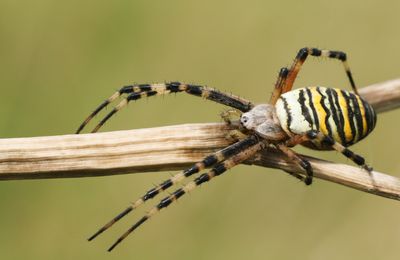


A lot of work has explored the noses of dogs, and rats have even been trained to sniff out illegally tracked wildlife – however, most research on smelling focuses on mammals and insects, not spiders. An orb-weaving spider species was specially chosen as the subject of a new study because the females emit sex hormones to attract males, leading researchers to believe that smell must be important in this spider's world. Surprisingly, the team found that the spiders (but only adult males) are using their legs to smell.
Commonly known as the wasp spider for females' striking striped appearance, Argiope bruennichi males are attracted to females from a sizable distance away due to the females emitting some pretty powerful sex pheromones. The study looked at two types of sensory hairs called sensilla on spiders: ones with a single pore at the tip, and others with lots of pores in the wall of the hair shaft.
For the wasp spider, tip-pore sensilla were found on the ends of the legs, where they are most likely to come into contact with what the spider is walking on. Wall-pore sensilla were found in the walking legs of the spider too, and were found in areas that don’t come into contact with surfaces.
The distribution of both these types makes the researchers think that the wall-pore sensilla are involved with detecting odors in the air. The team also found that these wall pores only occur in adult males, and not in females or male juveniles.
The team also looked at male and female spiders from an additional 19 species. Similarly, they did not find wall-pore sensilla in female spiders, and found sensilla with “putative wall pores” in seven species.
The team thinks that wall-pore sensilla evolved independently many times throughout spider evolution and were even lost in some lineages. Tip-pore sensilla were found in males and females, leading the team to wonder if olfaction is possible through those hairs instead.
The paper is published in the journal PNAS.



 1
1